
Resin ribbons are widely used in industrial label printing because they produce clear, durable prints that can withstand heat, chemicals, and scratches. They are a good choice for labels that need to remain readable for a long time, even in demanding working conditions.
This guide explains what a resin ribbon is, how resin ribbon printing works, its key benefits, and the differences between resin, wax, and wax-resin ribbons. It also covers how to select the right ribbon for your printing needs and maintain your printer for consistent results.
What Is Resin Ribbon?
A resin ribbon is a type of thermal transfer ribbon used to print durable text, barcodes, and images on labels. It contains resin-based ink that transfers onto the label when heat is applied by a thermal transfer printer.
Resin ribbons are known for their strong resistance to scratches, chemicals, heat, and moisture. They are commonly used with synthetic label materials such as polyester and polypropylene, where print durability is important.
Unlike wax ribbons, resin ribbons are designed for applications that require long-lasting prints in challenging conditions. They are often used for product identification, asset tracking, electrical component labels, and industrial applications where printed information must remain clear and readable.
How Resin Ribbon Printing Works
Resin ribbon printing uses heat to transfer resin-based ink onto a label. The printer applies heat to specific areas of the ribbon, allowing the ink to bond with the label surface. The process involves a few key steps.
1. Ribbon and Label Setup
The resin ribbon and label roll are loaded into a thermal transfer printer. Both materials must be compatible to ensure proper ink transfer and print quality.
2. Heat Transfer Process
The printer's thermal printhead heats selected areas of the resin ribbon. The heat melts the resin ink, which transfers onto the label to form text, barcodes, numbers, and other information.
3. Ink Bonding
The resin ink bonds with the label surface as it cools. This creates a durable print that can resist scratches, chemicals, and moisture when the correct ribbon and label combination is used.
4. Final Print Quality
The finished label is checked for clear text, readable barcodes, and consistent print quality. Correct heat settings, printer speed, and regular printhead cleaning help achieve better results.
Key Components and Applications of Resin Ribbon
Resin ribbons are made from different layers that help transfer ink onto labels and keep the printed information clear. Each component plays a role in print quality, ink transfer, and ribbon performance.
Key Components of a Resin Ribbon
Base Film : The base film is usually made from a thin polyester material. It provides support to the ribbon and helps it move smoothly through the thermal transfer printer.
Resin Ink Layer: The resin ink layer contains the material that transfers onto the label when heat is applied. It helps create durable prints that can withstand scratches, chemicals, and other harsh conditions.
Protective Back Coating: The back coating reduces friction between the ribbon and the printhead. It also helps protect the printhead from wear and supports smooth printing.
Common Applications of Resin Ribbon
- Product Identification Labels - Resin ribbons are used to print product names, serial numbers, and identification details on labels. Their durable prints help keep important information readable during storage and handling.
- Asset Tracking Labels - Industries use resin ribbons to print labels for machinery, tools, and equipment. These labels help businesses identify and track assets over time.
- Chemical Labels - Resin ribbons are suitable for certain chemical labels that need to resist exposure to specific chemicals. The ribbon and label material must be compatible with the chemicals involved.
- Electrical and Electronic Labels - Resin ribbons are used to print labels for circuit boards, cables, and electronic components. They help keep part numbers and other identification details clear in demanding environments.
- Barcode and Inventory Labels - Businesses use resin ribbons to print durable barcodes and inventory labels. Clear prints help scanners read product information and support accurate stock tracking.
- Healthcare and Laboratory Labels - Resin ribbons can be used for labels on laboratory containers, medical equipment, and sample identification. The right ribbon and label combination helps keep printed details readable under the required storage and handling conditions.
Key Benefits of Resin Ribbon
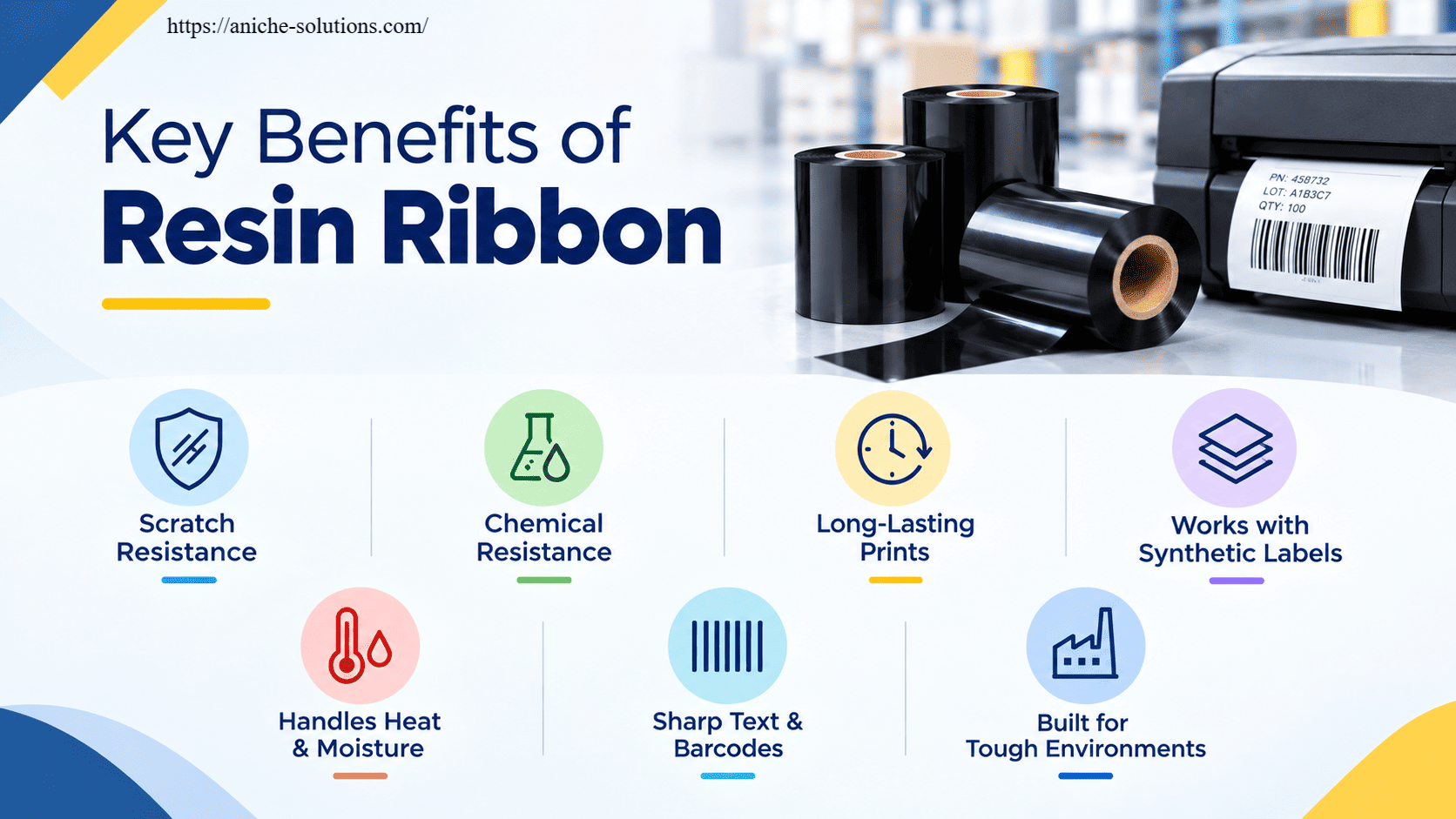
Resin ribbons are a suitable option for businesses that need durable labels for industrial and commercial use. They provide several benefits, especially when labels must remain readable in challenging conditions.
High Scratch Resistance
Resin ribbons produce prints that can withstand regular handling and abrasion when paired with compatible label materials. This makes them useful for equipment labels, product identification, and asset tracking.
Resistance to Chemicals
Resin ribbons are designed for applications where labels may come into contact with certain chemicals, oils, or cleaning agents. The level of resistance depends on the ribbon, label material, and type of chemical exposure.
Long-Lasting Print Quality
Resin ribbons help keep printed text, numbers, and barcodes readable over time. This is useful for labels that need to remain on products or equipment throughout their service life.
Suitable for Synthetic Labels
Resin ribbons work well with compatible synthetic materials, such as polyester and polypropylene. These materials are often used for industrial labels that need greater durability than standard paper labels.
Resistance to Heat and Moisture
Certain resin ribbons are suitable for labels exposed to elevated temperatures or moisture. The exact performance depends on the ribbon grade, label material, and working environment.
Clear Text and Barcode Printing
Resin ribbons can produce sharp text, fine details, and readable barcodes when the printer settings and label material are correct. This helps businesses maintain reliable product identification and tracking.
Suitable for Demanding Environments
Resin ribbons are widely used in industries where labels face frequent handling or exposure to harsh conditions. Their durability makes them a practical option for manufacturing, electronics, automotive, and chemical labelling applications.
Resin Ribbon vs Wax Ribbon: Key Differences
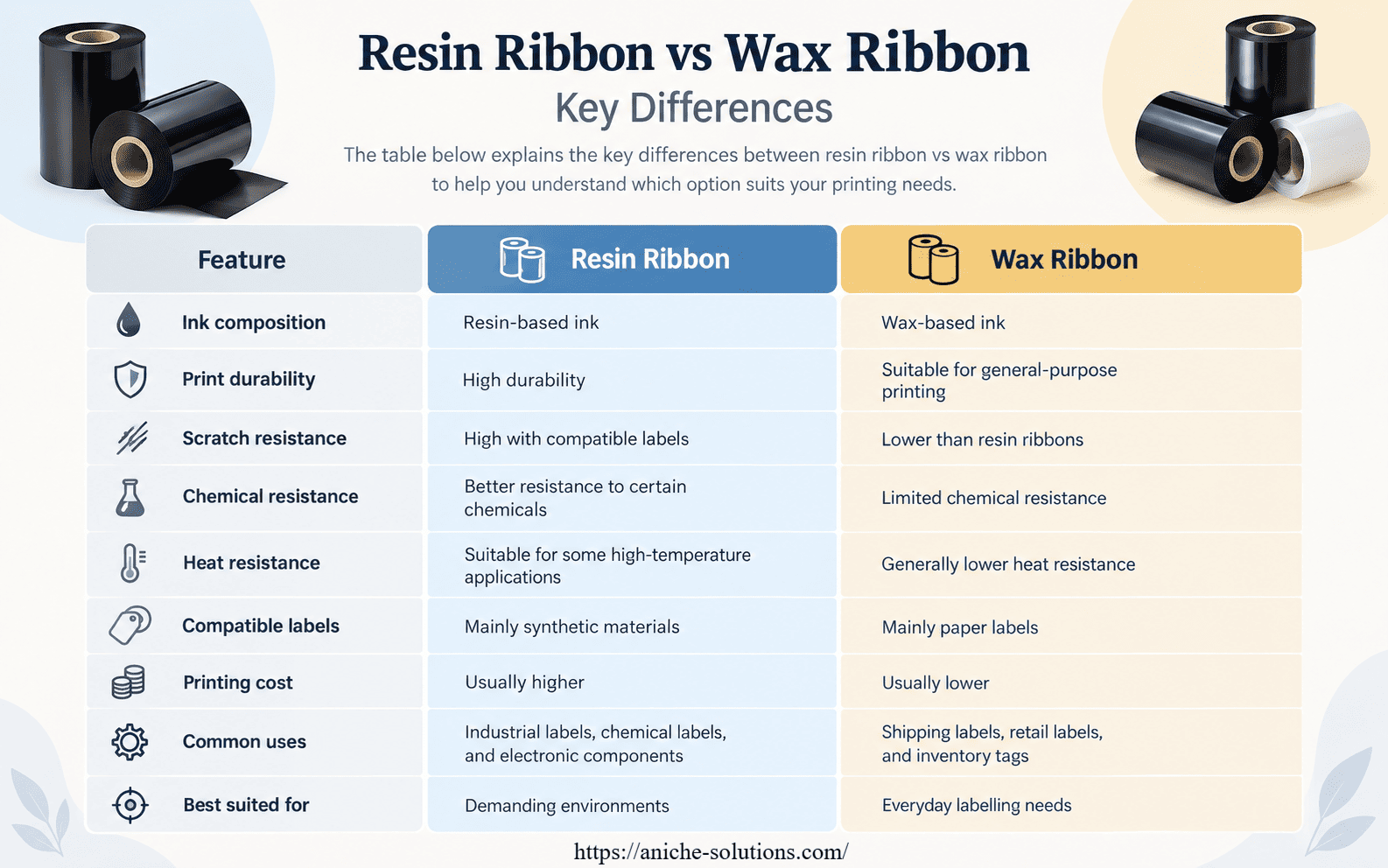
The table below explains the key differences between resin ribbon vs wax ribbon to help you understand which option suits your printing needs.
 How to Select the Right Resin Ribbon for Your Needs
The right resin ribbon depends on your label material and printer compatibility. Resin ribbons are commonly used with synthetic labels made from polyester and polypropylene. Before purchasing, check the ribbon width, length, core size, and winding direction to ensure they match your thermal transfer printer.
Next, consider the working environment and printing requirements. Labels exposed to heat, moisture, chemicals, or frequent handling may need specific resistance properties. The ribbon should also meet your printing needs, whether you are printing barcodes, product details, equipment labels, or chemical labels. Correct printer speed and temperature settings help maintain clear and consistent prints.
Finally, compare the cost, durability, and supplier reliability before making a decision. A low-cost ribbon may not provide the performance required for demanding applications. Check the manufacturer's specifications and choose a reliable supplier who can help you find a resin ribbon that suits your printer, label material, and intended use.
Industries That Use Resin Ribbons for Label Printing
Resin ribbons are used across industries where labels need to remain clear and readable during regular handling or exposure to demanding conditions.
Manufacturing Industry
Manufacturing companies use resin ribbons to print labels for machinery, components, and finished products. These labels carry serial numbers, product codes, and other details that help with identification and quality control.
Automotive Industry
The automotive industry uses resin ribbons for labels on vehicle parts, engine components, and electrical systems. Durable printing helps keep part numbers and identification details readable during production and maintenance.
Electronics Industry
Electronics manufacturers use resin ribbons to print labels for circuit boards, cables, and electronic components. Clear, durable prints help identify small parts and support product tracking.
Chemical Industry
Chemical companies use resin ribbons for labels that need to resist contact with specific chemicals. These labels can carry product names, handling instructions, and safety information when the ribbon and label material are suitable for the application.
Healthcare and Pharmaceutical Industry
Healthcare and pharmaceutical businesses use resin ribbons for laboratory labels, medical equipment identification, and product tracking. The right ribbon and label combination helps keep printed information readable during storage and handling.
Warehousing and Logistics
Warehouses and logistics companies use resin ribbons to print durable barcode labels for inventory, storage locations, and equipment. Clear barcodes support scanning, stock tracking, and product identification.
Tips for Proper Resin Ribbon Printer Maintenance
Regular maintenance helps keep a thermal transfer printer working properly and maintains consistent resin ribbon print quality.
1. Clean the Printhead Regularly
Dust, adhesive residue, and other particles can affect print quality. Clean the printhead with a recommended cleaning solution and lint-free materials according to the printer manufacturer's instructions.
2. Check Ribbon and Label Compatibility
Always use a resin ribbon that matches your label material and printer specifications. Incorrect combinations can cause poor ink transfer, unclear barcodes, and printing defects.
3. Use the Correct Printer Settings
Set the appropriate printhead temperature and printing speed for the selected ribbon and label material. Excessive heat can increase printhead wear, while insufficient heat may result in faint or incomplete prints.
4. Inspect the Ribbon Before Printing
Check the resin ribbon for wrinkles, tears, or damage before starting a print job. Make sure it is loaded correctly and aligned properly to prevent uneven printing and ribbon breakage.
5. Keep the Printer Free from Dust
Dust and debris can affect the printhead, rollers, and sensors. Keep the printer in a clean environment and follow the manufacturer's recommended cleaning schedule to maintain reliable performance.
6. Store Resin Ribbons Properly
Store unused ribbons in their original packaging in a cool, dry place away from direct sunlight, excessive heat, and moisture. Follow the supplier's storage guidelines to maintain ribbon quality.
7. Inspect Printer Components
Check the printhead, platen roller, and other printer parts for signs of wear or damage. Replace worn components as recommended by the manufacturer to prevent printing problems and maintain consistent results.
FAQ
1. Is a resin ribbon better than a wax ribbon?
Resin ribbons are generally better for applications that require high scratch resistance and resistance to certain chemicals. Wax ribbons are more suitable for everyday printing on paper labels at a lower cost.
2. Can resin ribbons print on paper labels?
Some resin ribbons may work with specific coated paper labels, but they are primarily designed for compatible synthetic materials. Always check the ribbon manufacturer's recommendations before use.
3. How do I know when to replace a resin ribbon?
Replace the ribbon when it runs out, becomes damaged, or no longer provides consistent print quality. Regularly checking the ribbon helps prevent printing interruptions and unclear labels.
4. Which printer is required for resin ribbon printing?
A thermal transfer printer is required for resin ribbon printing. The printer must support the ribbon's dimensions and work with the selected label material to produce clear, durable prints.
Conclusion
Resin ribbons are a reliable choice for industrial label printing when durability and long-lasting print quality are important. They help businesses print clear text and barcodes on compatible label materials for applications such as manufacturing, electronics, automotive, and chemical labelling.
The right resin ribbon depends on your printer, label material, and working conditions. Proper ribbon selection and regular printer maintenance help maintain print quality and reduce printing issues. By understanding these factors, businesses can select a suitable resin ribbon for their labelling requirements.