
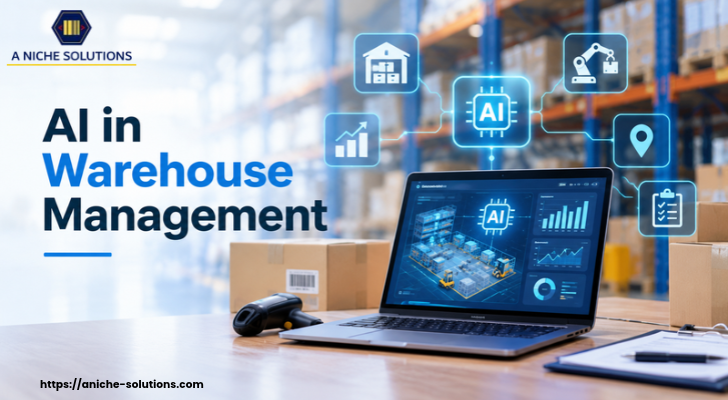
Artificial intelligence (AI) in warehouse management refers to the use of smart technology to manage daily warehouse activities, such as inventory tracking, order processing, stock planning, and product movement. It helps businesses complete these tasks with better speed and accuracy.
AI analyses warehouse data to identify patterns, predict product demand, and support better decisions. For example, it can predict which products may be needed in the coming weeks and help businesses avoid overstocking or running out of stock.
The use of AI in warehouse management also helps reduce manual work and minimise errors. When combined with a warehouse management system (WMS), barcode scanners, and RFID technology, AI helps businesses track inventory, manage orders, and keep warehouse operations running smoothly.
The Role of AI in Modern Warehouse Management
AI plays an important role in modern warehouses by helping businesses manage inventory, process orders, and plan daily operations. Here are some key ways AI supports modern warehouse management:
Inventory Management
AI helps businesses track stock levels and predict when products may run out. It can analyse past sales, current inventory, and demand patterns to help maintain the right amount of stock.
Order Processing
AI helps warehouse teams process orders more efficiently by identifying the best ways to pick, pack, and dispatch products. This can reduce delays and help businesses fulfil customer orders on time.
Demand Forecasting
AI analyses past sales and market trends to estimate future product demand. These predictions help businesses plan stock purchases, manage seasonal demand, and avoid unnecessary inventory costs.
Warehouse Automation
AI can work with robots and automated systems to move products, sort packages, and support picking activities. This reduces repetitive manual tasks and allows warehouse staff to focus on other important work.
Error Detection
AI can identify unusual stock movements, incorrect inventory records, and possible order errors by analysing warehouse data. Early detection helps teams correct problems before they affect deliveries or customer satisfaction.
How AI Technologies Work in Warehouses
AI technologies work by collecting warehouse data, analysing it, and using the results to support daily operations. They help warehouse teams understand stock movement, predict demand, identify errors, and plan tasks based on current business needs.
Data Collection
AI systems collect data from warehouse management systems (WMS), barcode scanners, RFID readers, sensors, and order records. This information helps businesses understand stock levels, product locations, order status, and warehouse activity.
Data Analysis
AI analyses the collected data to identify patterns and problems. For example, it can identify products that sell quickly, detect unusual stock changes, and find delays in order processing.
Prediction and Planning
AI uses past and current data to predict future demand and help businesses plan their warehouse activities. It can suggest when to reorder products, where to store fast-moving items, and how to manage workloads during busy periods.
Automated Actions
AI can work with warehouse software, robots, and automated equipment to complete certain tasks. For example, an AI-powered system may direct a robot to move products or recommend the best picking route for warehouse staff.
Continuous Improvement
AI systems can use new data to improve future predictions and recommendations. As warehouse activity changes, businesses can use these insights to adjust stock levels, reduce delays, and improve operational efficiency.
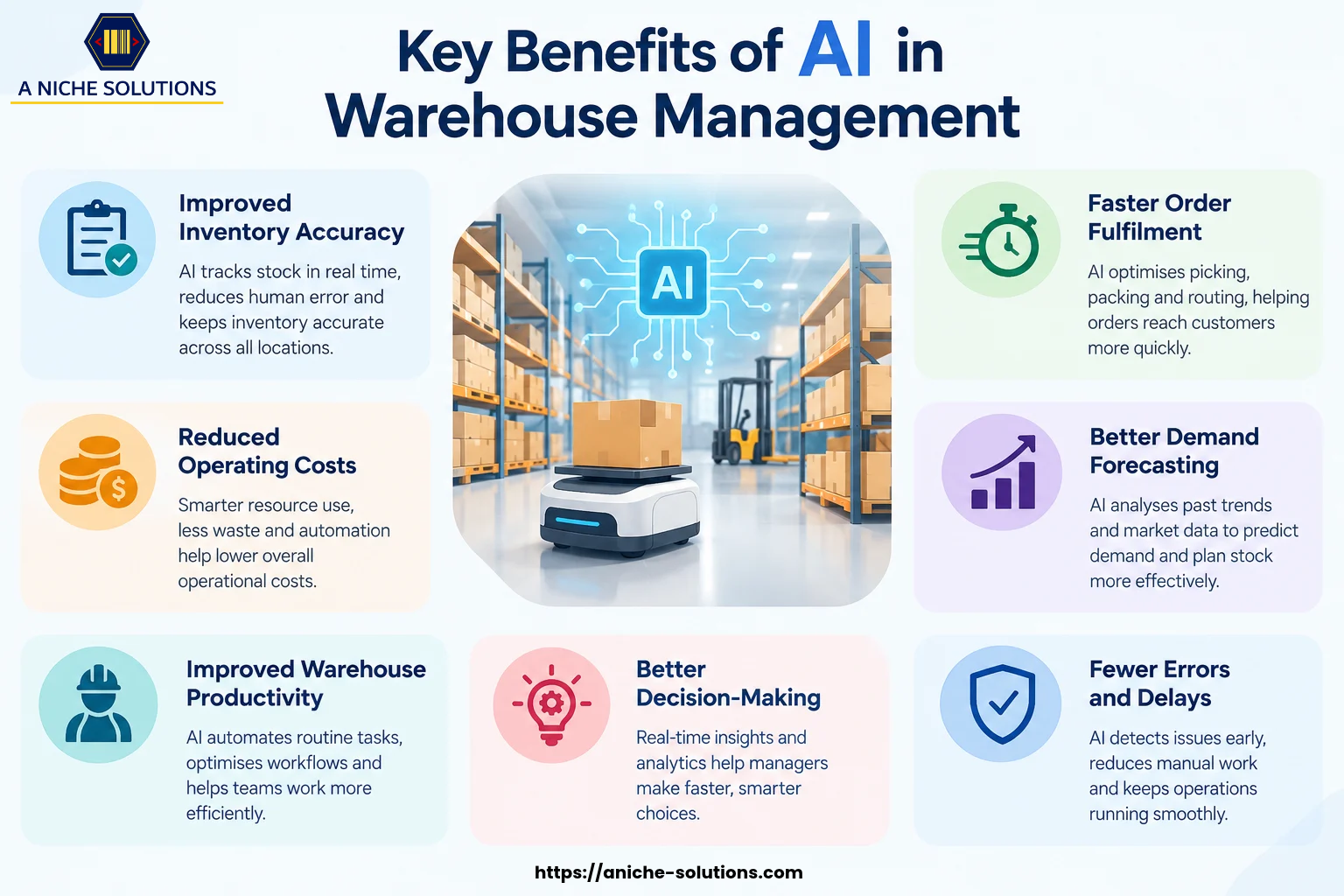
Key Benefits of AI in Warehouse Management
AI helps businesses manage warehouse operations with better accuracy, speed, and control. Here are some key benefits of using AI in warehouse management.
Improved Inventory Accuracy
AI helps businesses keep inventory records accurate by analysing stock data and identifying possible errors. It can flag differences between recorded stock and actual stock movement, helping teams correct issues before they affect order fulfilment.
Faster Order Fulfilment
AI can suggest suitable picking routes, organise warehouse tasks, and help teams prioritise orders. This reduces the time spent locating products and preparing shipments, allowing businesses to process more orders efficiently.
Reduced Operating Costs
AI helps businesses identify wasted time, unnecessary product movement, and inefficient use of warehouse space. These insights can reduce labour costs, minimise inventory waste, and improve the use of available resources.
Better Demand Forecasting
AI analyses sales history, seasonal changes, and current demand patterns to estimate future stock requirements. This helps businesses maintain suitable inventory levels and avoid excess stock or unexpected shortages.
Improved Warehouse Productivity
AI helps warehouse teams organise their work and focus on tasks that need human attention. Combined with automation, it can reduce repetitive manual tasks and help employees complete more work in less time.
Better Decision-Making
AI provides useful insights into stock movement, order status, and warehouse performance. Managers can use this information to spot delays, plan resources, and make data-driven decisions instead of guessing.
Fewer Errors and Delays
AI can identify unusual inventory changes, potential picking mistakes, and delays in warehouse processes. Early alerts give teams time to fix these issues and reduce their impact on deliveries and customer satisfaction.
 Types of AI Technologies Used in Warehouse Management
Different AI technologies help warehouses manage inventory, automate tasks, and improve daily operations. The right technology depends on the warehouse size, business needs, and level of automation required.
Machine Learning
Machine learning helps warehouse systems learn from past and current data to make predictions. It can forecast product demand, identify stock patterns, and help businesses plan inventory levels based on changing requirements.
Computer Vision
Computer vision uses cameras and AI to analyse images and videos. In warehouses, it can help identify products, check package conditions, detect misplaced items, and support quality checks during packing and dispatch.
Robotics and Autonomous Mobile Robots
AI-powered robots can help move goods, transport items between warehouse zones, and support picking activities. Autonomous mobile robots can follow planned routes and adjust their movement based on warehouse conditions, reducing the need for manual material handling.
Natural Language Processing (NLP)
Natural language processing allows computers to understand human language. Warehouse teams can use AI-powered chatbots or voice systems to check inventory information, ask questions about orders, and access warehouse data without searching through multiple screens.
Predictive Analytics
Predictive analytics uses historical and current data to estimate future outcomes. Warehouse managers can use it to predict demand, identify possible equipment failures, and plan maintenance before a breakdown affects operations.
Intelligent Warehouse Management Systems
AI-powered warehouse management systems use data analysis and automated recommendations to support inventory control, order fulfilment, and warehouse planning. They can help businesses identify stock shortages, prioritise orders, and improve the use of warehouse space.
Common Challenges of Implementing AI in Warehouses
AI can improve warehouse operations, but businesses may face a few challenges when introducing this technology. Proper planning, suitable software, and employee training can help make the implementation process easier.
High Initial Costs
AI implementation may require investment in software, sensors, automated equipment, system upgrades, and employee training. Small and medium-sized businesses may find these costs difficult to manage. A gradual implementation based on business needs can help control expenses.
Data Quality Issues
AI depends on accurate and updated data to provide useful results. Incorrect inventory records, missing product details, or outdated information can affect predictions and recommendations. Businesses need to maintain clean and reliable warehouse data for better results.
Integration with Existing Systems
Many warehouses already use warehouse management systems (WMS), ERP software, barcode scanners, or RFID solutions. Connecting AI with these existing systems can be difficult if the technologies are not compatible. Proper system planning helps avoid data gaps and operational disruptions.
Employee Training and Resistance
Employees may need time to understand new AI tools and automated processes. Some may also worry that automation will replace their jobs. Clear communication and practical training can help employees understand how AI supports their work and improves daily tasks.
Data Security Risks
AI systems handle important business information, including inventory records, supplier details, and order data. Weak security controls can increase the risk of unauthorised access or data loss.
Maintenance and Technical Support
AI systems and automated equipment need regular monitoring, updates, and maintenance. Technical problems can affect warehouse operations if businesses lack skilled staff or reliable support.
Future Trends in AI-Powered Warehouse Management
AI is expected to play a bigger role in warehouse management as businesses look for better ways to manage stock, process orders, and reduce operating costs. New technologies will help warehouses respond to changing customer demand, improve planning, and manage daily tasks with less manual effort.
AI-powered robots and automated systems will handle more repetitive tasks, such as moving goods, sorting packages, and supporting order picking. At the same time, AI combined with barcode and RFID technology will help businesses track inventory movement and identify stock shortages more quickly.
Another important trend is the use of digital twins, which create virtual models of physical warehouses. Businesses can use these models to test different layouts, improve workflows, and identify possible delays before making actual changes.
In the future, warehouse employees will work more closely with AI systems and automated equipment. AI will support data analysis, demand forecasting, and task planning, while employees will focus on supervision and decision-making.
Boost Warehouse Efficiency with A’Niche Solutions
A well-managed warehouse needs accurate inventory records, smooth order processing, and clear visibility of stock movement. AI can support these activities by helping businesses analyse data, plan operations, and identify areas that need improvement.
A’Niche Solutions provides warehouse management and inventory tracking solutions that help businesses manage their day-to-day operations. Its solutions support stock visibility, inventory control, and warehouse processes through technologies such as barcode scanning, RFID, and software integration.
Businesses can combine these technologies with suitable AI tools to improve inventory accuracy, reduce manual work, and make better decisions based on warehouse data. The right approach depends on existing systems, operational requirements, and business goals.
A’Niche Solutions helps businesses build more efficient and connected warehouse operations through technology-driven inventory and warehouse management solutions. Contact the team to discuss a solution that fits your warehouse requirements.
FAQ
1. Can AI reduce warehouse operating costs?
Yes, AI can help reduce operating costs by minimising errors, improving stock planning, reducing wasted movement, and making better use of warehouse resources.
2. Is AI suitable for small warehouses?
Yes, small warehouses can use AI for specific tasks such as demand forecasting, inventory analysis, and order planning. Businesses can start with affordable tools and expand as their needs grow.
3. Does AI replace warehouse employees?
AI does not have to replace warehouse employees. It can handle repetitive tasks and support decision-making, allowing employees to focus on supervision, problem-solving, and other important activities.
Conclusion
AI in warehouse management helps businesses improve inventory control, speed up order processing, reduce errors, and manage daily operations more efficiently. Technologies such as machine learning, computer vision, and AI-powered automation allow warehouse teams to make better decisions based on accurate data.
The successful use of AI depends on choosing the right technology, maintaining reliable data, and integrating it with existing warehouse systems. Businesses can start with specific tasks, measure the results, and expand their use of AI as their requirements grow.
With suitable warehouse management and inventory tracking solutions from A’Niche Solutions, businesses can build more organised and efficient warehouse operations while preparing for future technological changes.