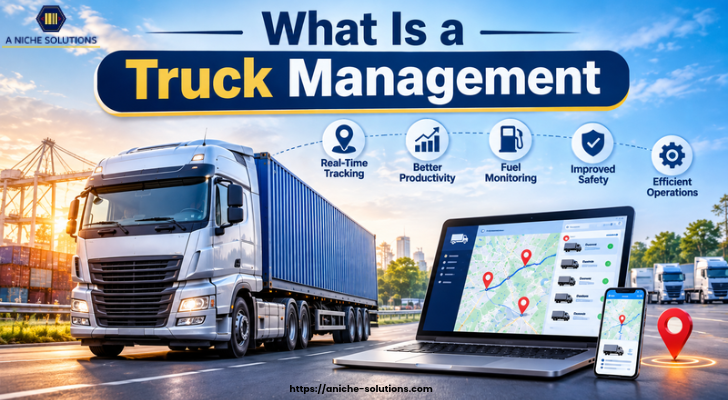
A truck plays an important role in moving goods from one place to another. For businesses involved in transportation, logistics, and supply chain operations, managing trucks, drivers, delivery schedules, and routes every day can be challenging. Poor coordination can lead to delivery delays, higher fuel costs, and difficulty tracking vehicles.
A truck management system helps businesses manage these activities from one platform. It allows them to monitor vehicles, plan routes, track deliveries, manage drivers, and keep transportation operations organised. With better control over daily activities, businesses can reduce manual work and manage their fleet more efficiently.
In this guide, we will look at what a truck management system is, its key features, how it works, and the benefits it offers to businesses.
What Is a Truck Management System?
A truck management system (TMS) is a software solution that helps businesses manage and monitor their trucks and transportation activities. It brings important tasks such as vehicle tracking, driver management, route planning, fuel monitoring, and delivery tracking into one system.
Businesses can use this system to check vehicle status, assign trips, monitor deliveries, and maintain transport records. Instead of managing everything through phone calls, spreadsheets, or paperwork, teams can access important information from a central platform.
A truck management system also helps managers keep track of daily fleet activities and make better decisions. It is useful for logistics companies, transport businesses, manufacturers, distributors, and other organisations that depend on trucks to move goods.
Key Features of a Truck Management System
A truck management system comes with different features that help businesses manage their fleet and transportation activities. These features make it easier to track vehicles, manage drivers, plan trips, and keep delivery operations on schedule.
Here are some important features of a truck management system:
1. Real-Time Truck Tracking
Real-time truck tracking helps businesses know where their vehicles are during a trip. Managers can check vehicle locations, monitor movement, and get updates on delivery progress. This makes it easier to handle delays and keep customers informed.
2. Route Planning and Optimisation
The system helps plan suitable routes based on delivery locations, distance, and travel time. Drivers can follow planned routes instead of choosing them manually. Better route planning can reduce unnecessary travel, save fuel, and support timely deliveries.
3. Driver Management
Driver management allows businesses to maintain driver details, assign trips, and monitor daily driving activities. Managers can also keep records of driver schedules, working hours, and assigned vehicles. This helps maintain better coordination between drivers and transport teams.
4. Fuel Management
Fuel is one of the major expenses in transportation. A truck management system helps businesses record fuel usage, monitor consumption, and identify unusual fuel expenses. These records help managers understand fuel costs and control unnecessary spending.
5. Vehicle Maintenance Management
Regular vehicle maintenance is important to keep trucks in good working condition. The system helps maintain service records, track maintenance schedules, and set reminders for upcoming vehicle inspections. This can reduce unexpected breakdowns and avoid delays.
6. Delivery and Trip Management
Businesses can create trips, assign trucks and drivers, and track delivery status through the system. Managers can check whether a delivery is pending, in transit, or completed. This gives the team a clear view of ongoing transportation activities.
7. Reports and Analytics
A truck management system generates reports related to vehicle usage, fuel consumption, trip details, delivery status, and maintenance expenses. These reports help businesses review fleet performance and identify areas that need attention.
Understanding the Working Process of a TMS
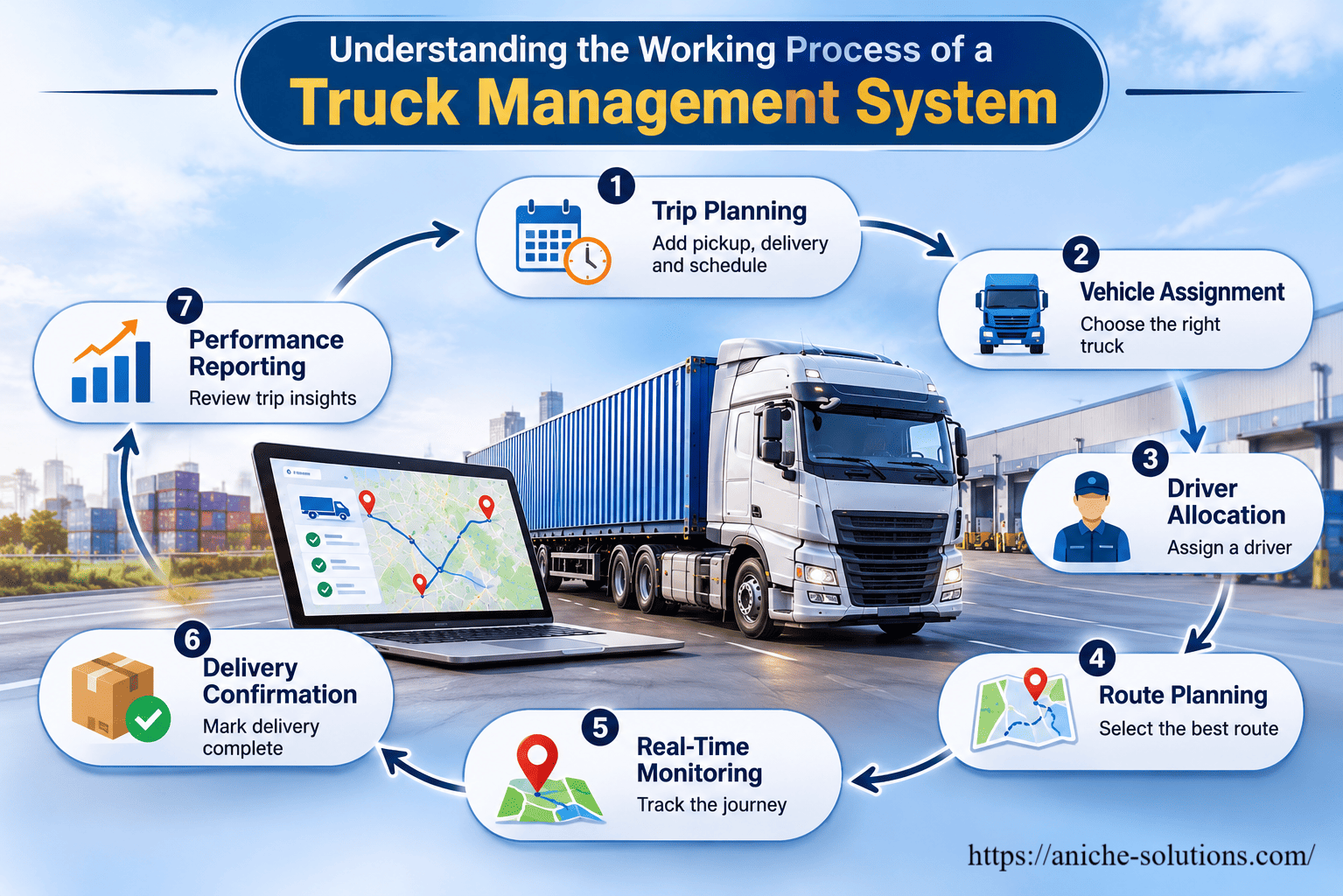
A truck management system works by connecting different transportation activities through a single platform. It helps businesses manage each stage of a truck's journey, starting from trip planning to final delivery.
Here is how a truck management system works step by step:
Trip Planning
The process starts when a business receives a delivery order. The transport team enters details such as the pickup location, delivery destination, goods information, and delivery schedule into the system. Based on these details, a trip is created.
Vehicle Assignment
Once the trip is created, the manager assigns a suitable truck based on vehicle availability, load capacity, and delivery requirements. This helps avoid scheduling conflicts and ensures the right vehicle is selected for each trip.
Driver Allocation
The system helps managers assign drivers based on their availability and work schedules. Driver details are linked with the assigned vehicle, making it easier for the transport team to manage trip responsibilities.
Route Planning
The system helps select suitable routes based on delivery locations, distance, and travel time. A planned route helps drivers follow the correct path and reduces unnecessary travel during the journey.
Real-Time Monitoring
Once the truck starts its journey, managers can monitor its location and check delivery progress. They can also identify delays or unexpected route changes and take action when required.
Delivery Confirmation
After reaching the destination, the driver or transport team updates the delivery status in the system. Delivery confirmation is recorded, and the trip is marked as completed. This keeps delivery records updated.
Performance Reporting
After the trip is completed, the system stores details such as travel distance, fuel consumption, delivery time, and vehicle usage. Managers can review these reports to understand fleet performance and plan future trips.
Important Benefits of a Truck Management System
Here are some important benefits of using a truck management system:
Better Fleet Visibility
A truck management system gives managers a clear view of their fleet activities. They can check vehicle locations, trip status, and delivery progress from one platform. This makes it easier to monitor multiple trucks without depending on regular phone calls.
Reduced Fuel Costs
Fuel expenses can affect the overall transportation budget. The system helps businesses monitor fuel consumption, track vehicle usage, and identify unusual fuel expenses. These records help managers find ways to reduce unnecessary fuel costs.
Faster Delivery Operations
Proper trip planning and route selection help drivers reach delivery locations on time. Managers can monitor ongoing trips and respond quickly if delays occur. This supports smoother delivery operations and better customer service.
Better Driver Performance
The system helps managers monitor driver assignments, trip details, and driving activities. They can review driver performance and identify areas where improvements are needed. This also helps maintain better coordination between drivers and transport teams.
Why Choose A’Niche Solutions Truck Management System?
Managing trucks, drivers, trips, and deliveries becomes easier when all transportation activities are handled through one system. A’Niche Solutions offers a truck management system that helps businesses manage their fleet operations with better visibility and control.
The solution helps businesses keep track of truck movements, manage trip details, monitor deliveries, and maintain important transportation records. Managers can access the required information from a central platform instead of depending on manual records or separate tools.
A’Niche Solutions understands that every business has different transportation needs. Its truck management system helps businesses manage daily fleet activities, reduce manual work, and keep transport operations organised. It is a suitable solution for businesses looking to improve fleet management and gain better control over their transportation processes.
FAQ
1. Why is truck tracking important for businesses?
Truck tracking helps managers know the location of their vehicles during a journey. It also provides updates on delivery progress, helps identify delays, and improves coordination between drivers and transport teams.
2. Can a Truck Management System manage multiple trucks?
Yes. Businesses can manage multiple trucks through a single platform. Managers can check vehicle details, monitor trips, assign drivers, and track delivery progress from one place.
3. How does a Truck Management System help in route planning?
It helps businesses select suitable routes based on delivery locations, distance, and travel time. This can reduce unnecessary travel and support timely deliveries.
4. Is a Truck Management System suitable for small businesses?
Yes. Small businesses involved in transportation or goods delivery can use it to manage their vehicles, trips, drivers, and delivery records in an organised way.
5. Can a Truck Management System track delivery status?
Yes. It allows businesses to check whether a delivery is pending, in transit, or completed. This helps transport teams stay updated about ongoing orders.
Conclusion
Managing trucks and transportation activities requires proper planning, regular monitoring, and accurate information. A truck management system helps businesses handle these tasks through one platform. From vehicle tracking and trip planning to delivery monitoring and maintenance records, it makes daily fleet operations easier to manage.
For businesses looking to bring better control to their transportation activities, A’Niche Solutions truck management system offers a way to manage fleet operations in a more organised manner. It helps teams reduce manual work, monitor daily activities, and keep transportation processes running smoothly.