
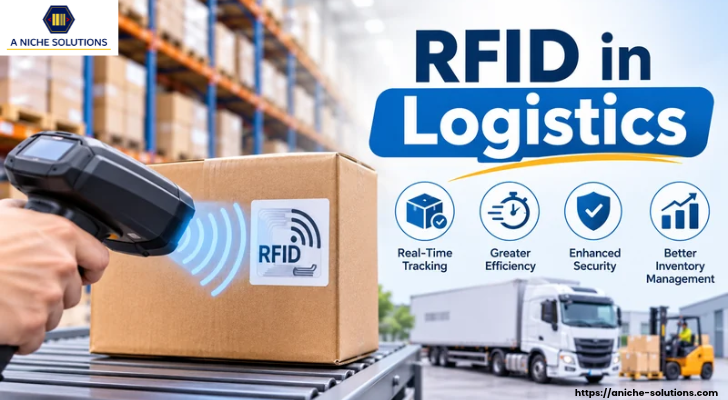
Logistics companies handle a large number of goods every day. From warehouses and storage facilities to transportation and final delivery, tracking products at every stage is important. A small mistake in inventory records or shipment tracking can lead to delays, misplaced goods and extra costs.
This is where RFID in logistics becomes useful. RFID (Radio Frequency Identification) technology uses radio waves to identify and track goods through RFID tags and readers. It allows businesses to collect product information without scanning each item manually.
With RFID, logistics companies can track shipments, monitor inventory, manage warehouse operations and improve the movement of goods across the supply chain. It also reduces manual work and helps teams get more accurate information in less time.
Today, RFID in logistics and supply chain operations is becoming an important part of modern logistics management. Businesses use this technology to improve visibility, reduce tracking errors and manage goods more efficiently from the warehouse to the final destination.
What Is RFID in Logistics?
RFID in logistics refers to the use of Radio Frequency Identification technology to identify, track and manage goods during storage, handling and transportation. It uses small electronic tags attached to products, boxes, pallets or containers. These tags store product information that can be read by an RFID reader through radio waves.
Unlike traditional barcode systems, RFID does not require direct contact or a clear line of sight to read the tag. An RFID reader can identify multiple tagged items within its reading range at the same time. This makes product tracking faster and reduces the need for manual scanning.
In logistics operations, RFID helps businesses know where their goods are, how much stock is available and when shipments move from one location to another. It also gives warehouse and supply chain teams better visibility of their daily operations.
RFID technology in logistics is commonly used in warehouses, distribution centres, transportation facilities and inventory management systems. It helps businesses maintain accurate records, reduce misplaced shipments and manage the movement of goods more effectively.
How Does RFID Work in Logistics?
RFID works by using radio waves to transfer information between an RFID tag and an RFID reader. In logistics, tags are attached to products, cartons, pallets or shipping containers. When these tagged items pass near an RFID reader, the reader collects the stored information and sends it to a connected software system.
The system updates the tracking records, allowing logistics teams to check the movement and status of goods without scanning each item individually.
The working process of RFID in logistics involves four main components:
RFID Tags
RFID tags are small devices attached to products, boxes, pallets or containers. Each tag contains a unique identification number and may store additional product details. These tags help businesses identify goods throughout the supply chain.
RFID Readers
RFID readers use radio waves to detect information stored in nearby RFID tags. They can be installed at warehouse entry and exit points, loading docks, storage areas and transportation facilities.
Antennas
RFID antennas help transmit and receive radio signals between tags and readers. Their placement and reading range play an important role in collecting information accurately.
RFID Software
The RFID software receives the collected data and updates the inventory or warehouse management system. It helps businesses view stock levels, track shipments and check the movement of goods in real time or near real time, depending on the system setup.
Step-by-Step RFID Working Process in Logistics
Tagging the goods: RFID tags are attached to products, cartons or pallets with unique identification details.
Reading the tags: When goods pass through an RFID reading zone, the reader detects the tags using radio waves.
Collecting information: The reader captures the identification data and sends it to the connected software.
Updating records: The software updates inventory and shipment records automatically.
Tracking goods: Logistics teams can check the location and movement of goods at different stages of the supply chain.
Key Benefits of RFID in Logistics
RFID technology offers several benefits to logistics companies by making inventory tracking, warehouse management and shipment handling easier.Here are some important benefits of using RFID in logistics:
Real-Time Inventory Tracking
RFID helps businesses track products as they move through warehouses and distribution centres. RFID readers automatically collect information from tagged items, making it easier to check stock levels and product locations. This helps teams maintain updated inventory records and avoid stock-related issues.
Improved Inventory Accuracy
Manual inventory counting can lead to errors, especially when businesses handle thousands of products. RFID can read multiple tags at once, reducing the chances of missed scans and incorrect entries. This helps companies maintain more accurate inventory records.
Faster Warehouse Operations
RFID reduces the time required to identify, count and locate goods. Employees do not need to scan every barcode individually. This makes activities such as receiving, picking, packing and dispatching faster and helps warehouses handle more orders.
Better Shipment Visibility
RFID allows logistics teams to track goods at different stages of transportation. When tagged shipments pass through RFID reading points, their movement can be recorded automatically. This gives businesses better information about shipment status and helps them identify delays.
Reduced Manual Work and Labour Costs
Traditional tracking methods often require employees to scan products and update records manually. RFID automates many of these tasks, allowing staff to spend less time on repetitive work. Businesses can use their workforce more effectively and reduce operational expenses.
Fewer Errors and Misplaced Goods
RFID helps identify products, cartons and pallets during warehouse handling and transportation. It can reduce errors such as sending the wrong product, missing items during dispatch or placing goods in the wrong storage area. This supports smoother logistics operations.
Applications of RFID in Logistics Industries
RFID technology is used across different industries to manage the movement, storage and tracking of goods. Here are some common applications of RFID across different industries:
Warehouse Management
Warehouses handle products from multiple suppliers and send them to different destinations. RFID helps track goods during receiving, storage, picking, packing and dispatch.
RFID readers can capture product information when tagged items enter or leave a warehouse. This helps warehouse teams maintain updated stock records, locate products faster and reduce errors during order processing.
Retail Inventory Tracking
Retail stores and e-commerce businesses manage a large number of products across warehouses, stores and fulfilment centres. RFID helps track stock movement and check product availability at different locations.
It also supports faster stock counting, order fulfilment and returns management. Businesses can use RFID data to reduce inventory mismatches and improve order accuracy.
Manufacturing Operations
Manufacturing companies need to track raw materials, components and finished products throughout production. RFID tags can be attached to containers, pallets and work-in-progress items to monitor their movement between different production areas.
This helps manufacturers keep track of material availability, manage stock and ensure that the required components reach the right production line on time.
Transportation Management
Transportation companies use RFID to identify vehicles, track shipments and record goods moving through checkpoints. RFID readers installed at gates, loading areas and transport facilities can automatically capture tag information.
This helps businesses maintain shipment records, monitor vehicle entry and exit and improve coordination between warehouses and transportation teams.
Cold Chain Monitoring
Cold chain logistics involves transporting temperature-sensitive products such as food, medicines and vaccines. RFID can help identify and track shipments as they move through storage and transportation facilities.
When RFID is combined with temperature sensors, businesses can also monitor temperature conditions and receive alerts if readings go beyond set limits. This helps protect product quality during transportation.
Pharmaceutical Tracking
Pharmaceutical companies and healthcare suppliers need proper tracking of medicines, medical equipment and other healthcare products. RFID helps identify products, monitor stock movement and maintain better inventory records.
It can also support product traceability, batch identification and expiry-date management when integrated with suitable software systems.
Automotive Parts Tracking
The automotive industry manages thousands of components and spare parts that move between suppliers, manufacturing plants and distribution centres. RFID helps track these items during storage, production and transportation.
It makes it easier to identify parts, monitor stock availability and ensure that the correct components reach the required location.
Food Distribution
Food and beverage companies need to manage product movement while maintaining proper storage and delivery conditions. RFID helps track cartons, pallets and containers from production facilities to warehouses and retail outlets.
When integrated with inventory and monitoring systems, it supports product traceability, stock management and better control over goods throughout the distribution process.
Real-World Use Cases of RFID in Logistics
RFID is used in many logistics operations to solve everyday tracking and inventory problems. Here are some practical examples of how companies can use RFID in their logistics operations.
Automated Goods Receiving
A warehouse receives hundreds or thousands of products from different suppliers every day. Manual barcode scanning can take time, especially when shipments contain multiple cartons or pallets.
With RFID, tags attached to incoming goods can be read automatically when they pass through an RFID-enabled receiving gate. The system captures product details and updates inventory records. This helps warehouse staff verify incoming shipments faster.
Pallet Tracking in Warehouses
Pallets carry large quantities of goods between storage areas, loading docks and distribution centres. RFID tags attached to pallets help identify and track their movement within a facility.
For example, when a pallet moves from the receiving area to a storage location, RFID readers can record the movement. Warehouse teams can use this information to locate pallets and reduce the chances of misplaced stock.
Shipment Verification Before Dispatch
Sending the wrong products or missing items can create delivery problems and additional costs. RFID helps businesses verify shipments before they leave the warehouse.
When tagged cartons pass through an RFID reading zone, the system can compare the scanned items with the order details. If an item is missing or does not match the order, staff can identify the issue before dispatch.
Tracking Goods During Transportation
Logistics companies move goods between warehouses, distribution centres and customer locations. RFID readers installed at selected checkpoints can record when tagged shipments pass through these locations.
For example, when a delivery truck enters or leaves a distribution facility, RFID can capture shipment or vehicle identification details. This creates a digital record of goods movement and helps teams monitor transportation activities.
Inventory Counting in Large Warehouses
Large warehouses may store thousands of products across multiple shelves and storage areas. Manual stock counting can take several hours or even days.
RFID handheld readers allow employees to identify multiple tagged items without scanning each product individually. This makes stock verification faster and helps businesses identify differences between physical inventory and system records.
Return Shipment Management
Retail and e-commerce businesses regularly receive returned products from customers. Each returned item needs to be identified, checked and added back to the correct inventory records.
RFID helps identify tagged products during the return process. Staff can check product details, verify the returned item and update stock records more efficiently. This also helps reduce errors during product handling.
Barcode vs RFID in Logistics: Understanding the Difference
Barcodes and RFID are two common technologies used to identify and track products in logistics operations. The table below highlights the key differences between barcode and RFID technology across important factors used in logistics operations.
Challenges of Implementing RFID in Logistics
RFID offers several advantages for logistics operations, but businesses may face some challenges during implementation.Here are some common challenges businesses should consider before implementing RFID in logistics.
High Initial Investment
RFID implementation requires tags, readers, antennas, software and other supporting equipment. The initial investment can be higher than a traditional barcode system, especially for businesses with multiple warehouses or large storage facilities.
Integration With Existing Systems
Many logistics companies already use warehouse management systems (WMS), enterprise resource planning (ERP) software and inventory management systems. RFID needs to work with these existing platforms to provide useful tracking information.
Poor integration can lead to data gaps, duplicate records and delays in updating inventory information. Businesses should check software compatibility before implementation.
Reading Accuracy Issues
RFID performance can be affected by the surrounding environment. Metal surfaces, liquids, signal interference and incorrect reader placement may affect how accurately tags are detected.
A proper site assessment and suitable RFID equipment can help reduce these problems.
Choosing the Right RFID Tags
Different logistics environments require different types of RFID tags. Some products need tags that can handle heat, moisture, dust or rough handling.
For example, metal containers may require special on-metal RFID tags. Choosing an unsuitable tag can lead to poor reading performance and tracking issues.
Employee Training
Employees need to understand how RFID equipment works and how to use it during daily warehouse activities. Without proper training, staff may face difficulties operating readers, handling tags and managing system records.
Businesses should provide practical training before introducing RFID across their operations.
Data Management
RFID readers can collect large amounts of information, especially in busy warehouses and distribution centres. Businesses need suitable software to process, organise and use this data properly.
Without proper data management, companies may face unnecessary records, duplicate entries and difficulty finding useful information.
Infrastructure Requirements
RFID implementation may require changes to warehouse layouts, reader placement, network connectivity and equipment installation. Large facilities may need multiple readers and antennas to cover important tracking points.
Businesses should plan their infrastructure requirements carefully to avoid coverage gaps and unnecessary expenses.
How to Choose the Right RFID Solution for Logistics
The right RFID solution depends on the type of goods a business handles, its warehouse environment and its tracking requirements. Businesses should first identify whether they need to track individual products, cartons, pallets or shipping containers. This helps them select suitable RFID tags, readers and antennas.
Software compatibility is another important factor. The RFID system should work smoothly with existing Warehouse Management Systems (WMS), ERP platforms and inventory management software. Companies should also consider warehouse conditions, reading range, equipment quality and total implementation costs before making a decision.
A reliable RFID solution provider can help with equipment selection, system integration, installation and technical support. Businesses should also choose a scalable system that can support future growth. The right RFID technology in logistics can improve tracking accuracy, reduce manual work and make warehouse operations more efficient.
Future of RFID Technology in Logistics
RFID technology is expected to play a bigger role in logistics as businesses focus on faster operations, accurate tracking and better supply chain visibility. More companies are adopting automated systems to manage inventory, monitor shipments and reduce manual work.
In the coming years, RFID will work more closely with technologies such as Artificial Intelligence (AI), the Internet of Things (IoT) and cloud-based platforms. These integrations can help businesses analyse tracking data, monitor goods more effectively and make better decisions. RFID sensors can also support condition monitoring for temperature-sensitive products during transportation.
The future of RFID in logistics and supply chain operations will focus on greater automation, improved product traceability and better control over goods. As RFID equipment and software become more accessible, businesses of different sizes may find it easier to adopt this technology for their logistics operations.
FAQ
1. What is the range of an RFID reader?
The reading range depends on the RFID frequency, tag type and reader. UHF RFID systems can typically read tags from several metres away.
2. Can RFID work without the internet?
Yes. RFID readers can collect tag information locally without an internet connection. Internet access may be required for cloud-based data sharing and remote monitoring.
3. What is the difference between active and passive RFID tags?
Active RFID tags use an internal battery, while passive RFID tags get power from the reader's radio signal.
4. Can RFID track individual products?
Yes. RFID tags can carry unique identification numbers that help businesses identify and track individual products, cartons or pallets.
Conclusion
RFID technology has become a useful tool for modern logistics operations. It helps businesses track goods, manage inventory, reduce manual work and improve shipment visibility. From warehouse management to transportation, RFID supports better control over products throughout the supply chain.
The right RFID solution depends on business requirements, warehouse conditions and tracking needs. With suitable tags, readers and software, companies can improve operational accuracy and manage goods more efficiently.
As logistics operations continue to adopt automation, RFID in logistics will remain an important technology for businesses looking to improve tracking, inventory management and supply chain operations.