
Healthcare organizations handle thousands of patients, medical devices, medicines, and records every day. Managing all these resources manually can lead to errors, delays, misplaced equipment, and higher operational costs. To improve efficiency and patient safety, hospitals are increasingly adopting smart technologies like RFID.
RFID technology in healthcare helps hospitals and healthcare providers track medical equipment, monitor inventory, identify patients, and automate many daily processes. By using RFID tags and readers, healthcare organizations can access real-time information, reduce manual work, and improve the accuracy of their operations.
Today, RFID in the healthcare industry is being used in hospitals, clinics, laboratories, pharmacies, and blood banks to improve patient care while making healthcare operations more efficient. In this guide, we'll explain what RFID is in healthcare, its working process, major applications, benefits, challenges, and future trends shaping the healthcare sector.
What is RFID in Healthcare?
RFID in healthcare refers to the use of Radio Frequency Identification (RFID) technology to identify, track, and manage patients, medical equipment, medicines, staff, and other hospital assets in real time. It helps healthcare organizations improve operational efficiency, reduce manual errors, and ensure that critical resources are always available when needed.
An RFID system uses small electronic tags attached to people or objects. These tags communicate with RFID readers using radio waves, allowing hospitals to automatically collect information without requiring direct contact or a clear line of sight, unlike traditional barcode systems.
A typical RFID system in healthcare consists of three main components:
RFID Tags: Attached to medical equipment, patient wristbands, medicine packages, laboratory samples, or hospital assets. These RFID tags in healthcare store unique identification information.
RFID Readers: Installed at hospital entrances, storage rooms, wards, pharmacies, or other locations to read information from RFID tags automatically.
Management Software: Collects data from RFID readers and displays real-time information about the location, status, and movement of tagged items through a centralized dashboard.
Healthcare facilities use RFID technology for various purposes, including asset tracking, patient identification, inventory management, medication tracking, laboratory sample management, and staff monitoring. By providing accurate, real-time visibility into hospital operations, RFID technology in healthcare helps reduce delays, improve patient safety, and support better decision-making.
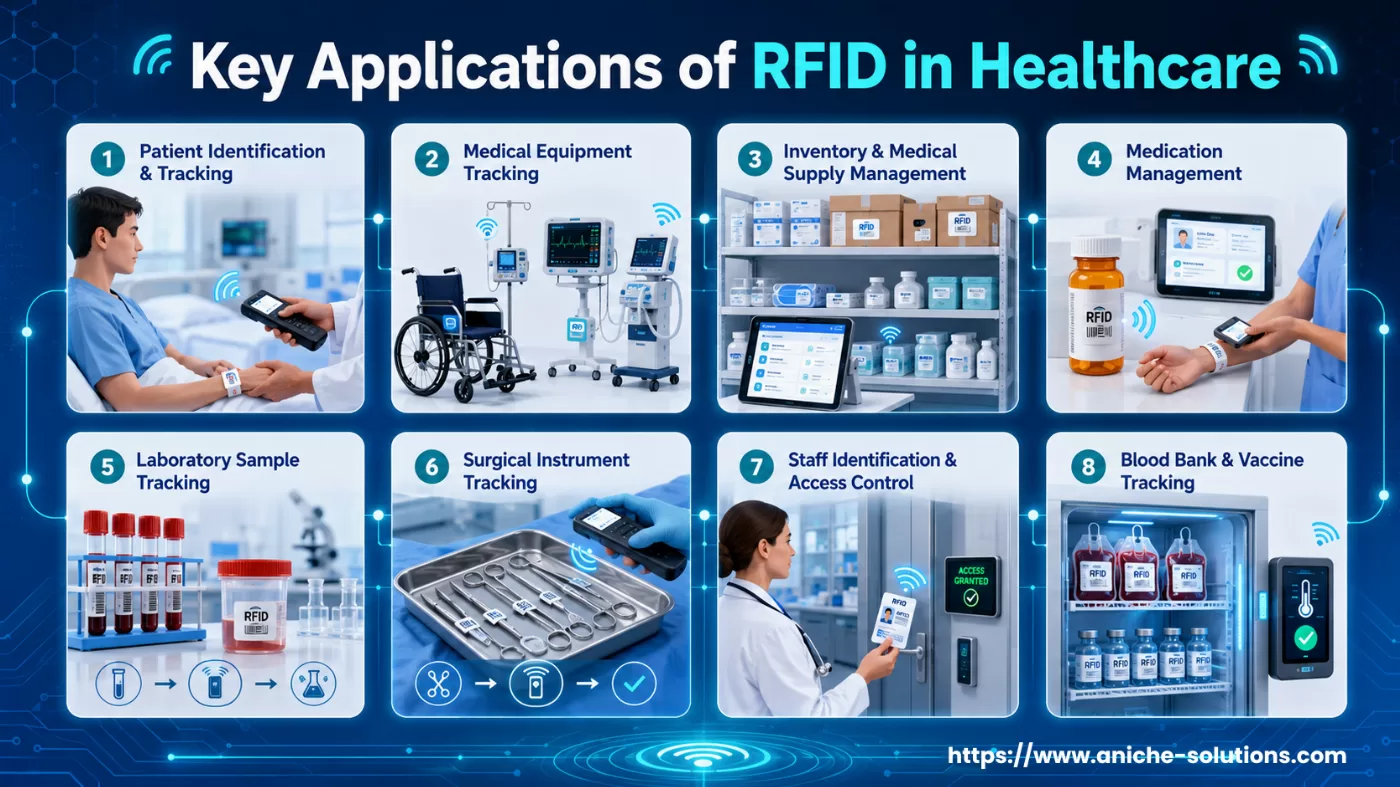
Key Applications of RFID in Healthcare
RFID applications in healthcare cover a wide range of hospital operations, helping healthcare providers improve efficiency, reduce errors, and deliver better patient care. From tracking medical assets to managing patient information, RFID technology supports many critical processes across healthcare facilities.
1. Patient Identification and Tracking
RFID-enabled wristbands help hospitals accurately identify patients throughout their treatment journey. This reduces the risk of patient mix-ups, ensures the correct medication and treatment are provided, and improves patient safety.
2. Medical Equipment Tracking
Hospitals use RFID tags to track the location and availability of medical equipment such as wheelchairs, infusion pumps, ventilators, ECG machines, and portable monitors. This minimizes equipment loss and helps staff quickly locate essential devices when needed.
3. Inventory and Medical Supply Management
Managing medical supplies manually can lead to stock shortages or overstocking. RFID automatically tracks medicines, surgical instruments, gloves, masks, and other consumables, providing real-time inventory updates and improving stock control.
4. Medication Management
RFID helps hospitals track medicines from storage to patient administration. It ensures the right medication reaches the right patient while reducing medication errors and helping monitor expiry dates.
5. Laboratory Sample Tracking
Hospitals and diagnostic laboratories use RFID to label and monitor blood samples, tissue samples, and other laboratory specimens. This reduces the chances of sample misplacement and improves testing accuracy.
6. Surgical Instrument Tracking
RFID technology helps track surgical tools before, during, and after medical procedures. This ensures all instruments are properly accounted for, supports sterilization management, and reduces the risk of retained surgical items.
7. Staff Identification and Access Control
Healthcare organizations use RFID-enabled ID cards to manage employee access to restricted areas such as operating rooms, pharmacies, laboratories, and data centers. This improves security while allowing authorized staff to enter specific locations.
8. Blood Bank and Vaccine Tracking
RFID helps monitor blood bags, vaccines, and temperature-sensitive medical products throughout storage and transportation. Real-time tracking improves inventory accuracy and helps maintain product quality.
These RFID applications in healthcare help hospitals automate routine tasks, improve visibility, and make healthcare services more efficient. As digital transformation continues, the use of RFID technology in healthcare is expected to expand across more hospital departments.
Use Cases of RFID in Healthcare
Healthcare organizations around the world use RFID technology to solve everyday operational challenges. These real-world RFID applications in healthcare help improve patient safety, reduce manual work, and make hospital operations more efficient.
1. Real-Time Asset Tracking
Hospitals often manage thousands of medical devices across different departments. Using RFID tags in healthcare, staff can instantly locate equipment such as infusion pumps, ventilators, wheelchairs, and portable monitors. This reduces search time, prevents equipment loss, and improves asset utilization.
2. Faster Patient Admission and Identification
Many hospitals use RFID-enabled wristbands during patient registration. The wristbands store a unique patient ID, allowing healthcare professionals to quickly verify patient information before treatment, medication, or surgery. This minimizes identification errors and improves patient safety.
3. Automated Pharmacy Management
Pharmacies use RFID to monitor medicine inventory, track stock movement, and identify products nearing their expiry date. Automated inventory updates help reduce wastage, prevent stock shortages, and improve medicine availability.
4. Blood Bag and Laboratory Sample Tracking
Blood banks and diagnostic laboratories use RFID to track blood bags, tissue samples, and laboratory specimens throughout the testing process. This improves traceability, reduces the risk of misplaced samples, and helps maintain accurate records.
5. Surgical Instrument Management
Hospitals use RFID to monitor surgical instruments before and after procedures. The technology helps ensure that all tools are accounted for, supports sterilization tracking, and improves compliance with hospital safety protocols.
6. Hospital Inventory Management
RFID allows hospitals to automatically monitor medical supplies such as gloves, masks, syringes, PPE kits, and surgical materials. Real-time inventory visibility improves inventory accuracy, helping procurement teams maintain optimal stock levels and avoid supply disruptions.
7. Staff Access and Security
RFID-enabled employee ID cards help hospitals control access to restricted areas like operating theatres, laboratories, medicine storage rooms, and data centers. This improves hospital security while ensuring that only authorized personnel can enter sensitive locations.
8. Patient Flow Management
Hospitals can use RFID to monitor patient movement between departments such as emergency care, diagnostic centers, operating rooms, and recovery wards. This provides better visibility into patient flow, reduces waiting times, and supports more efficient resource planning.
How RFID Technology Works in Healthcare?
Understanding what RFID is in healthcare becomes easier when you look at how the technology works. RFID uses radio waves to automatically identify and track patients, medical equipment, medicines, and other hospital assets. Unlike barcode systems, RFID does not require direct contact or a clear line of sight, allowing hospitals to collect information quickly and accurately.
RFID Tags
The process begins with RFID tags in healthcare, which are attached to patient wristbands, medical devices, medicines, blood bags, laboratory samples, surgical instruments, and other hospital assets. Each tag contains a unique identification number that stores or links to important information about the tagged item.
RFID Readers
RFID readers or RFID scanners are installed throughout the hospital to automatically capture information from tagged equipment, medicines, patient wristbands, and medical supplies.
When a tagged item comes within the reader's range, the reader automatically captures the information stored on the tag using radio waves. This allows hospitals to identify and track assets without manual scanning.
Hospital Management Software
Once the RFID reader collects the information, it sends the data to a centralized hospital management system or asset tracking software. The software updates the location, status, and movement of tagged assets in real time. Healthcare staff can access this information through a dashboard, making it easier to locate equipment, monitor inventory, verify patient identification, and manage hospital resources.
Real-Time Monitoring
The software continuously monitors all tagged assets and can generate automatic alerts when equipment is moved without authorization, inventory levels become low, medicines approach their expiry date, or critical devices cannot be located. These real-time updates help hospitals respond quickly and maintain smooth operations.
Improved Hospital Operations
By combining RFID tags, readers, and management software, RFID technology in healthcare provides complete visibility into hospital operations. It reduces manual work, improves data accuracy, speeds up asset tracking, and supports better decision-making. This automated process is one of the key reasons why RFID in the healthcare industry is becoming an essential technology for modern healthcare facilities.
Key Benefits of RFID in Healthcare
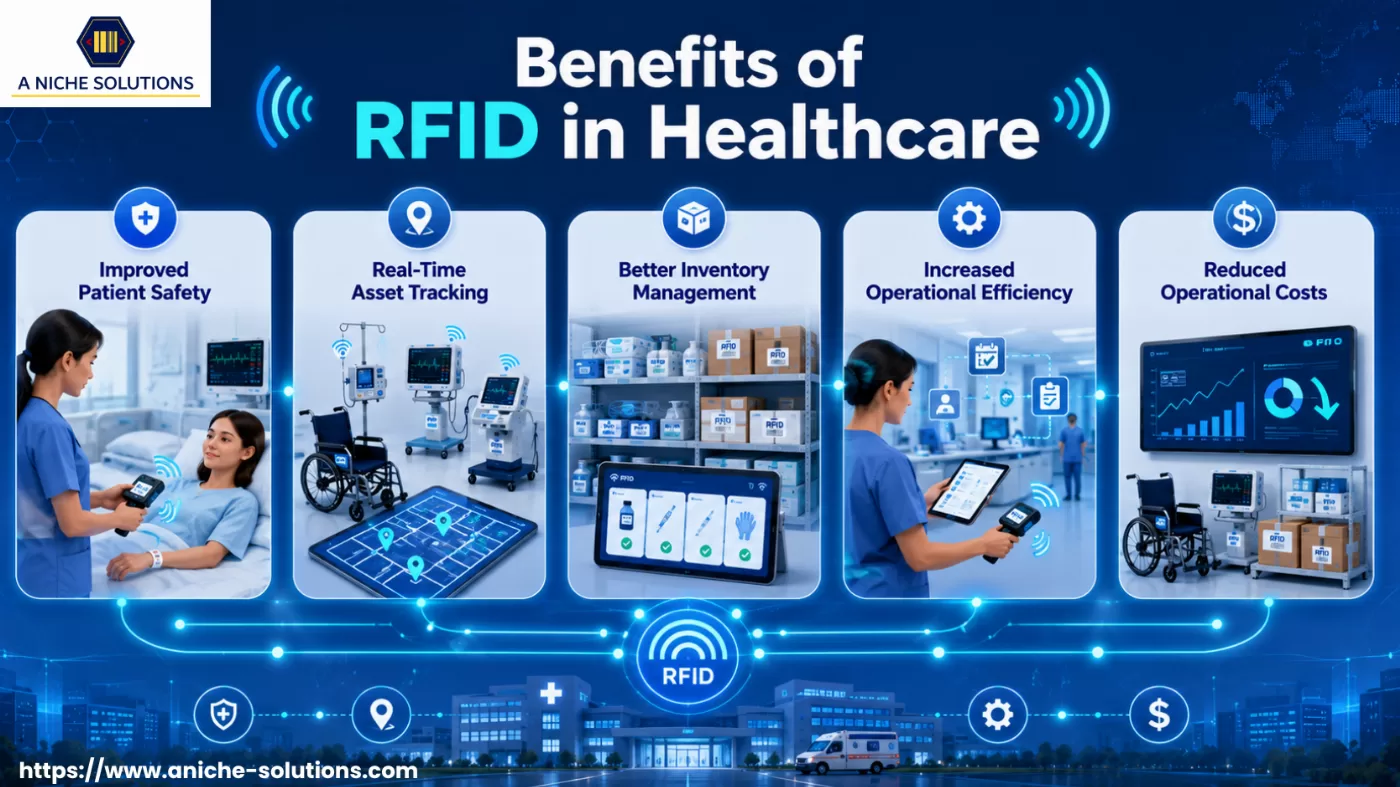
The use of RFID technology in healthcare offers several advantages that help hospitals improve patient care, streamline operations, and manage resources more effectively. Below are five of the most important benefits of RFID in healthcare.
Improved Patient Safety
RFID-enabled patient wristbands help healthcare professionals accurately identify patients before administering medication, performing medical procedures, or providing treatment. This reduces the risk of patient identification errors and ensures safer healthcare delivery.
Real-Time Asset Tracking
Hospitals use RFID tags in healthcare to monitor the location of medical equipment such as ventilators, infusion pumps, wheelchairs, and portable monitors. Real-time tracking helps staff quickly locate assets, prevents equipment loss, and improves equipment availability across departments.
Better Inventory Management
RFID automates the tracking of medicines, surgical supplies, and other hospital inventory. Healthcare facilities can monitor stock levels in real time, reduce stock shortages and excess inventory, and ensure essential medical supplies are always available.
Increased Operational Efficiency
By automating data collection and reducing manual processes, RFID technology in healthcare speeds up daily hospital operations. Healthcare professionals spend less time searching for equipment or updating records, allowing them to focus more on patient care.
Reduced Operational Costs
One of the major benefits of RFID in healthcare is cost savings. Better asset utilization, fewer lost medical devices, reduced inventory waste, and lower manual labor requirements help hospitals optimize resources while maintaining efficient operations.
Common Challenges of RFID in Healthcare and Their Solutions
While RFID in the healthcare industry offers many advantages, hospitals may face certain challenges during implementation. Understanding these challenges and adopting the right solutions helps healthcare organizations maximize the value of RFID technology.
Data Privacy and Security Concerns
RFID systems handle sensitive patient and hospital information, making data security a critical consideration. Hospitals can address this challenge by using data encryption, role-based access controls, secure authentication methods, and regular security audits to protect patient information and comply with healthcare regulations.
Signal Interference
RFID performance may be affected by metal equipment, liquids, or certain medical devices commonly found in hospitals. Choosing the appropriate type of RFID tags and readers, along with proper system planning and installation, helps minimize signal interference and improves tracking accuracy.
Integration with Existing Hospital Systems
Many hospitals already use electronic health records (EHR), hospital information systems (HIS), and inventory management software. Integrating RFID with these existing systems can be complex. Using compatible RFID solutions and working with experienced implementation partners helps ensure smooth integration and efficient data sharing.
Staff Training and User Adoption
Healthcare professionals need proper training to use RFID systems effectively. Without adequate knowledge, employees may hesitate to adopt new technology. Providing hands-on training, clear operating procedures, and ongoing technical support helps staff become comfortable with the system and encourages successful implementation.
FAQ
1. What types of RFID tags are used in healthcare?
Healthcare facilities mainly use passive, active, and semi-passive RFID tags. The choice depends on the tracking range, cost, and application.
2. Can RFID be used to track patients in real time?
Yes. Active RFID systems can track patient movement within a hospital, helping improve patient flow and emergency response.
3. Is RFID technology safe for patients?
Yes. RFID uses low-power radio waves and is generally considered safe for use in hospitals when implemented according to industry standards.
4. Is RFID suitable for small hospitals?
Yes. Small hospitals can start with RFID for asset or inventory tracking and expand the system as their operational needs grow.
5. What is the future of RFID in healthcare?
RFID is expected to become more widely used with AI, IoT, and smart hospital technologies, enabling better automation and real-time visibility.
Conclusion
RFID technology in healthcare is helping hospitals improve efficiency, patient safety, and resource management through automated tracking and real-time visibility. From managing medical equipment and inventory to supporting faster workflows, RFID enables healthcare providers to reduce errors and optimize daily operations.
As hospitals continue to adopt digital technologies, RFID will play an increasingly important role in building smarter and more connected healthcare facilities. By implementing the right RFID solution, healthcare organizations can improve operational performance, reduce costs, and deliver better patient care.