
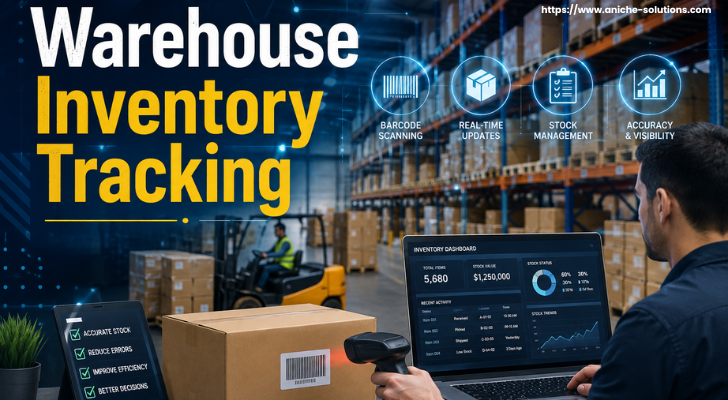
Warehouse inventory tracking is important for businesses that store and move products on a regular basis. It helps teams know what stock is available, where it is stored, and when it needs to be moved or reordered.
Manual stock tracking can lead to data entry errors, misplaced items, and delays in order processing. A warehouse inventory tracking system uses tools such as barcodes, RFID, scanners, and software to keep inventory records accurate and up to date.
A good tracking system gives warehouse teams better control over stock movement and reduces the time spent checking inventory manually. This guide explains how warehouse inventory tracking works, its key benefits, best practices, and how businesses can choose the right tracking solution.
What is Warehouse Inventory Tracking?
Warehouse inventory tracking is the process of monitoring products as they enter, move through, and leave a warehouse. It helps businesses keep accurate records of stock quantity, product location, and inventory movement.
A warehouse inventory tracking system records stock movements and keeps inventory information updated. Businesses can use barcodes, RFID tags, scanners, and software to track products and reduce manual work.
For example, when a product arrives at a warehouse, it can be scanned and assigned to a specific storage location. When the product is picked for an order, the system updates the available stock. This gives warehouse teams a clear view of their inventory.
A proper tracking process also helps reduce issues such as missing products, incorrect stock counts, overstocking, and stockouts. It makes it easier for workers to locate products and process orders on time.
Importance of Warehouse Inventory Tracking
Warehouse inventory tracking is important because businesses need accurate stock information to manage daily warehouse operations. Without proper tracking, it can be difficult to know how much stock is available or where a product is stored.
A reliable tracking process helps warehouse teams reduce stock errors, locate products faster, and keep inventory records updated. It also gives businesses better control over incoming and outgoing stock.
Better Stock Accuracy
Accurate inventory records help businesses maintain the right stock levels. Teams can quickly check available products instead of relying on manual counts or outdated records.
Faster Order Processing
Warehouse staff can find products more easily when their locations are properly recorded. This can reduce picking time and help orders move through the warehouse faster.
Fewer Stock Problems
Proper warehouse inventory tracking helps identify low stock, excess inventory, and misplaced products. Businesses can take action before these issues affect customer orders.
Better Warehouse Control
A warehouse inventory tracking system gives managers a clearer view of stock movement. They can monitor inventory across different storage areas and make better decisions based on current data.
Key Benefits of a Warehouse Inventory Tracking System
A warehouse inventory tracking system helps businesses manage stock with less manual work and fewer errors. It gives warehouse teams accurate information about inventory and makes daily operations easier.
1. Accurate Inventory Records
The system keeps stock information updated as products are received, moved, picked, or shipped. This reduces differences between physical stock and system records.
2. Faster Product Tracking
Employees can quickly check where a product is stored and how much stock is available. This saves time during picking and inventory checks.
3. Reduced Stock Errors
Barcode scanning and RFID technology can reduce mistakes caused by manual data entry. Each stock movement can be recorded at the right time.
4. Better Stock Control
Businesses can monitor low-stock and excess-stock situations more easily. This helps teams plan purchases and avoid unnecessary inventory costs.
5. Improved Order Processing
Accurate product locations and stock counts help workers pick the right items faster. This can support quicker and more accurate order fulfillment.
6. Real-Time Inventory Visibility
A good warehouse inventory tracking software provides up-to-date information about stock levels and movement. Managers can use this data to make better inventory decisions.
How to Select the Best Warehouse Inventory Tracking System?
Choosing the right warehouse inventory tracking system depends on your warehouse size, inventory volume, and daily operations. The system should be easy for employees to use and should support accurate stock tracking.
Check Inventory Tracking Features
Look for features such as stock monitoring, barcode scanning, inventory updates, product location tracking, and reporting. These features can help your team manage daily warehouse activities more efficiently.
Consider Barcode and RFID Support
A system that supports both barcode and RFID technology can provide more options for tracking inventory. RFID warehouse inventory tracking is useful when businesses need to identify and track multiple items quickly.
Look for Real-Time Updates
Choose warehouse inventory tracking software that updates stock information as soon as products are received, moved, picked, or shipped. Real-time data helps teams work with accurate inventory information.
Check Integration Options
The system should work well with other business tools, such as ERP, order management, accounting, or warehouse management system. Good integration reduces the need to enter the same information into different systems.
Focus on Ease of Use
Employees should be able to learn and use the system without complicated training. A simple interface can help reduce mistakes and make daily warehouse tasks easier.
Consider Scalability
Your inventory needs may grow as your business expands. Choose a system that can handle more products, warehouse locations, users, and transactions without creating unnecessary complications.
Best Practices for Effective Warehouse Inventory Tracking
Effective warehouse inventory tracking requires clear processes and regular monitoring. These practices can help businesses keep stock records accurate and reduce common warehouse errors.
Use Barcode Scanning
Barcode scanning makes it easier to record products during receiving, picking, packing, and shipping. It also reduces manual data entry and helps employees work faster.
Keep Product Locations Updated
Every product should have a clear storage location in the system. Updating location details after every stock movement helps workers find items quickly and reduces misplaced inventory.
Conduct Regular Stock Checks
Regular inventory counts can identify differences between physical stock and system records. Businesses can use cycle counting to check selected products without stopping the entire warehouse operation.
Set Reorder Levels
Set minimum stock levels for important products. When inventory reaches the set level, the team can plan a new purchase before the product runs out.
Use RFID When Suitable
RFID warehouse inventory tracking can be useful for warehouses that handle a large number of items. RFID allows products to be identified without scanning each barcode individually, which can make stock checks faster.
Keep Inventory Data Updated
Warehouse inventory tracking software should be updated whenever stock is received, moved, picked, returned, or shipped. Accurate data helps warehouse teams make better decisions and avoid unnecessary stock issues.
How A’Niche Solutions Improves Warehouse Inventory Management
A’Niche Solutions helps businesses manage warehouse inventory with technology that makes stock tracking more accurate and easier to handle. Its solutions can support businesses in monitoring products from receiving and storage to picking, packing, and dispatch.
Barcode scanners can be used to capture product information during different warehouse activities. This reduces manual data entry and helps employees record stock movements with fewer errors. Businesses can also use RFID warehouse inventory tracking when they need to identify and track large numbers of products quickly.
A’Niche Solutions can help businesses maintain updated information about stock levels, product movement, and storage locations. This makes it easier for warehouse teams to identify low stock, excess inventory, or misplaced products and take action at the right time.
The solutions can also be adapted to different warehouse requirements. Businesses can select suitable hardware and software based on their inventory volume, warehouse setup, and daily operations, making it easier to manage inventory as the business grows.
FAQ
1. Why is warehouse inventory tracking important?
It helps businesses reduce stock errors, locate products faster, avoid stockouts, and maintain better control over inventory. It also supports faster and more accurate order processing.
2. How does RFID help with warehouse inventory tracking?
RFID allows businesses to identify and track tagged products without scanning each item individually. This can make inventory checks and stock movement tracking faster, especially in large warehouses.
3. What should businesses look for in warehouse inventory tracking software?
Businesses should consider features such as real-time inventory updates, barcode and RFID support, product location tracking, reporting, integrations, ease of use, and scalability.
4. Can warehouse inventory tracking reduce inventory errors?
Yes. Automated scanning and real-time updates can reduce errors caused by manual data entry. They also help teams maintain more accurate stock records.
Conclusion
Warehouse inventory tracking helps businesses maintain accurate stock records and keep warehouse operations organized. A reliable warehouse inventory tracking system can reduce manual errors, improve product visibility, and make it easier to manage stock movement.
Businesses can use barcode scanning, RFID, and warehouse inventory tracking software based on their operational needs. The right solution can also support faster order processing and better inventory control.
With the right technology and proper tracking practices, businesses can manage warehouse inventory more efficiently and keep their daily operations running smoothly.