
Keeping track of inventory is not always easy. Stock moves in and out every day, and even a small mistake in records can create problems later.
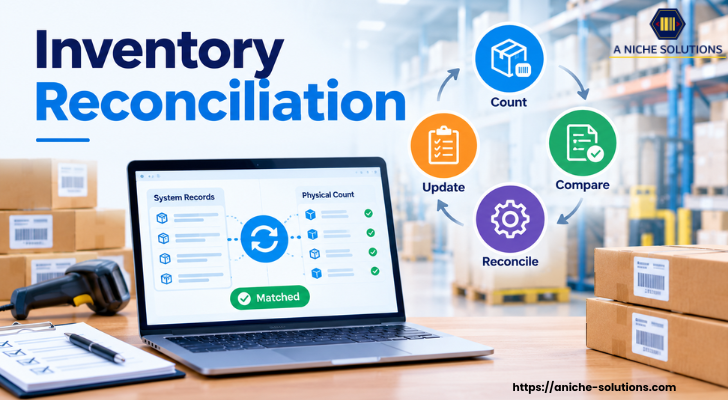
A business may have 100 units in its system, while only 95 are actually available in the warehouse. Inventory reconciliation helps identify such differences by comparing recorded stock with the physical stock.
Regular checks can help businesses find missing, damaged, wrongly recorded, or misplaced items. It also keeps inventory records more reliable and makes day-to-day stock management easier.
In this guide, we will look at how inventory reconciliation works, the different methods businesses use, its key benefits, common challenges, and a practical example.
What is Inventory Reconciliation?
Inventory reconciliation is the process of checking physical stock against the quantities recorded in business records. It helps businesses find differences and understand why the actual stock does not match the recorded numbers.
The process can be done manually by counting items and comparing them with stock records. Businesses can also use inventory management software to track stock movements, compare quantities, and identify differences more quickly.
Differences may occur because of sales, returns, damaged goods, stock transfers, misplaced items, or data entry mistakes. Regular stock reconciliation helps businesses keep their inventory records accurate and up to date.
Core Components of Inventory Reconciliation
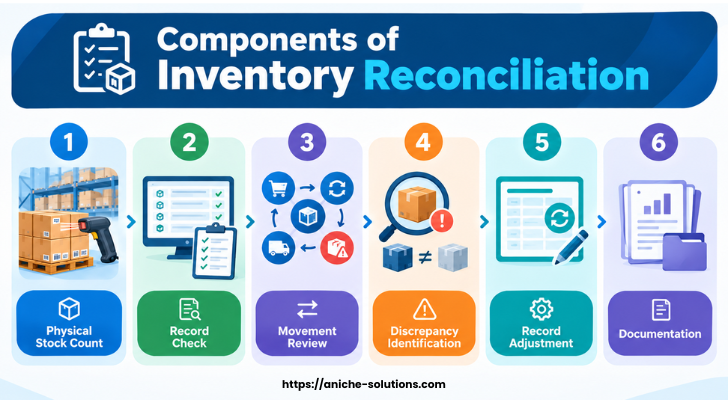
Inventory reconciliation includes a few important checks that help businesses keep their stock records accurate:
Physical Stock Count: Checking the actual quantity of products available in the warehouse.
Inventory Record Check: Comparing physical stock with quantities recorded in the inventory system.
Stock Movement Review: Checking purchases, sales, returns, transfers, and damaged items that may affect stock levels.
Discrepancy Identification: Finding differences between physical and recorded stock and checking the reason behind them.
Record Adjustment: Updating inventory records when a genuine difference is confirmed.
Reconciliation Documentation: Keeping a record of stock counts, differences, and corrections for future reference.
Types of Inventory Reconciliation Methods
Businesses can use different inventory reconciliation methods depending on the size of their stock and how often they need to check it.
Full Inventory Counts
A full inventory count involves checking every item available in the warehouse. Businesses usually perform this type of reconciliation at specific times, such as the end of a financial year or accounting period.
Regular Cycle Counting
Cycle counting involves checking selected groups of inventory at regular intervals instead of counting everything at once. This helps businesses keep their stock records updated throughout the year.
Inventory Spot Checks
Spot checks focus on specific products or storage areas. Businesses may use this method when they notice a stock difference or want to check items that have frequent movements.
ABC-Based Inventory Checks
ABC prioritization divides inventory into different groups based on factors such as value, demand, or importance. High-value or important items can be checked more frequently than low-priority stock.
Combined Reconciliation Methods
A hybrid method combines two or more reconciliation approaches. For example, a business may use cycle counting for regular checks and perform a full physical count at the end of the year.
How Businesses Perform Inventory Reconciliation
Businesses generally follow a few simple steps to compare physical stock with their inventory records.
Step 1: Collect Inventory Records
The process starts by collecting current stock records from the inventory system, warehouse records, purchase records, and sales data.
Step 2: Count the Physical Stock
The team counts the actual products available in the warehouse. Barcode scanners or RFID systems can make this step faster and reduce counting mistakes.
Step 3: Compare Both Records
The physical count is compared with the quantity shown in the inventory records. This helps identify any difference between the two.
Step 4: Find the Reason for Differences
The team checks sales, returns, damaged products, transfers, misplaced items, and data entry errors to understand why the difference occurred.
Step 5: Update the Inventory Records
Once the reason is confirmed, the required changes are made in the inventory system so that the records match the actual stock.
Step 6: Review the Reconciliation
The final step is to review the changes and keep a record of the reconciliation. Regular reviews can help businesses identify repeated stock issues and improve their inventory process.
Key Benefits of Regular Inventory Reconciliation
Regular inventory reconciliation helps businesses keep their stock records accurate and reduce problems caused by differences between physical and recorded inventory.
Better Inventory Accuracy
Regular stock checks help businesses keep physical inventory and system records in sync. Accurate records make it easier for teams to know what products are actually available.
Fewer Stock Errors
Reconciliation helps identify issues such as wrong entries, missing items, damaged products, and unrecorded stock movements. Finding these errors early can prevent them from affecting other inventory records.
Better Stock Planning
Accurate inventory data helps businesses plan purchases and replenishment more effectively. Teams can see which products are available and which items may need to be ordered.
Reduced Inventory Losses
Regular checks can bring attention to missing, misplaced, or damaged products. Businesses can investigate these differences and take suitable steps to reduce unnecessary stock losses.
Smoother Warehouse Operations
Updated inventory records make daily warehouse work easier. Teams can locate products, process orders, and manage stock movements with fewer problems caused by incorrect stock information.
Common Inventory Reconciliation Challenges and Their Solutions
Inventory reconciliation can become difficult when stock moves frequently, or records are maintained across different systems. Here are some common problems businesses may face and practical ways to handle them.
A Practical Example of Inventory Reconciliation
Consider a company that sells electronic products and keeps 1,000 wireless keyboards in its warehouse. Its inventory system shows 1,000 units available, but a physical count finds only 970 units.
The team now needs to identify the reason for the 30-unit difference. They review recent sales, returns, warehouse transfers, damaged products, and stock entries to check whether any transaction was missed or recorded incorrectly.
During the review, they find that 20 damaged keyboards were removed from the warehouse but were not updated in the system. Another 10 units were transferred to a different warehouse without updating the main inventory record.
The inventory records are then corrected to reflect the actual stock position. This simple example shows how stock reconciliation can help businesses identify differences and keep inventory data accurate.
How A’Niche Solutions Helps With Inventory Reconciliation
A’Niche Solutions helps businesses manage inventory through digital tools that connect stock tracking, warehouse activities, and business systems. This gives teams a clearer view of inventory across different operations and locations.
Barcode and RFID technology can make stock counting and tracking easier. Businesses can record product movements more accurately and reduce the amount of manual data entry involved in inventory checks.
A’Niche solutions can also connect inventory data with ERP and other business systems. This helps keep information related to purchasing, sales, warehouse operations, and stock levels more consistent.
With updated inventory information, businesses can identify stock differences sooner and check the reason behind them. Automated tracking also reduces repetitive manual work and supports regular inventory reconciliation.
FAQ
1. What records are needed for inventory reconciliation?
Businesses may need purchase, sales, return, transfer, and stock adjustment records to check inventory differences.
2. Who handles inventory reconciliation?
Warehouse, inventory, finance, or operations teams may handle the process, depending on the business structure.
3. What should businesses do after finding a stock difference?
They should check the related stock records, find the reason for the difference, and update the inventory records if needed.
4. Can businesses reconcile inventory across multiple warehouses?
Yes. Each warehouse can be checked separately, while stock transfers between locations can also be reviewed.
5. How can businesses prepare for inventory reconciliation?
Businesses should update stock records, complete pending transactions, and organize warehouse items before starting the reconciliation.
Conclusion
Inventory reconciliation is an important part of keeping stock records accurate. Regular checks help businesses find differences between physical inventory and recorded stock.
A clear reconciliation process, supported by barcodes, RFID, and inventory management software, can reduce manual errors and make stock tracking easier.
With accurate inventory data and regular checks, businesses can maintain better control over their stock and support smoother warehouse operations.