
Barcode scanning has become an important part of modern healthcare. Hospitals, pharmacies, laboratories, and clinics handle a large amount of patient and medical information every day. A small mistake in this information can affect patient care, inventory, or medication use.
Barcode scanning in healthcare helps staff identify patients, medicines, medical supplies, and laboratory samples quickly and accurately. A simple scan can bring the required information into the system and reduce the need for manual data entry.
Healthcare organizations also use barcode technology to manage inventory, track medical equipment, and improve daily workflows. This makes barcode scanning useful in many areas, from patient admission to pharmacy and laboratory operations.
This guide explains the role, benefits, importance, working process, challenges, and future of barcode scanning in healthcare industries.
The Role of Barcode Scanning in Healthcare Industries
Barcode scanning plays an important role in the day-to-day work of hospitals, pharmacies, laboratories, and other healthcare facilities. It helps staff identify and record information without entering every detail manually.
Patient Identification
Healthcare staff can use barcode wristbands to identify patients before giving medicines, taking samples, or providing other services. Scanning the barcode helps match the patient with the correct information in the hospital system.
Medication Management
Pharmacies and hospital staff use barcode scanners to check medicines before they are given to patients. The barcode can provide details such as the medicine name, batch number, and expiry date.
Laboratory Sample Tracking
Blood samples, urine samples, and other laboratory specimens can be labelled with barcodes. Staff can scan these labels at different stages to help make sure each sample stays linked to the right patient and test.
Medical Inventory Management
Hospitals keep large quantities of medicines, surgical items, gloves, syringes, and other supplies. Barcode scanning helps staff record stock movement, check available quantities, and keep track of items as they are received or used.
Medical Equipment Tracking
Barcode labels can also be placed on medical equipment and devices. Staff can scan these labels to identify equipment, record its location, and maintain service or usage records.
Record Keeping
Barcode scanning reduces the need for repeated manual data entry. Information captured through a scan can be sent to the healthcare management system, helping staff maintain more consistent and organized records.
Overall, barcode scanning in healthcare supports faster identification, better tracking, and more accurate data handling across different departments.
The Benefits of Barcode Scanning in Healthcare
Barcode scanning offers practical benefits for hospitals and healthcare facilities. It helps staff handle information and physical items with fewer manual steps.
Reduces Data Entry Errors
Manual data entry can lead to typing mistakes, wrong product numbers, or incorrect patient details. Barcode scanning captures the information directly from the barcode, which can reduce these common errors.
Saves Time
Staff can scan a barcode instead of entering long product codes, patient numbers, or inventory details manually. This can make routine tasks faster, especially in busy hospital departments.
Improves Patient Safety
The right patient, medicine, and dosage need to be matched before medication is given. Barcode scanning provides an additional check that can help staff identify mismatches before they become a problem.
Makes Inventory Tracking Easier
Healthcare facilities need to know what stock they have and when items are used. Barcode scanning helps record stock movement and gives staff better visibility into available medicines and medical supplies.
Helps Track Medicines
Each medicine can carry important information such as its name, batch number, and expiry date. Scanning helps staff record this information and makes it easier to trace medicines through different stages.
Supports Better Record Management
Scanned information can be connected with hospital or healthcare management systems. This helps keep records more organized and reduces the amount of paperwork involved in daily operations.
Supports Faster Workflows
Barcode scanning can be used across pharmacies, laboratories, inventory rooms, and patient care areas. A common scanning process can help different departments work with the same type of accurate information.
Importance of Barcode Scanning in Healthcare
Healthcare facilities deal with patients, medicines, samples, equipment, and inventory every day. Each item needs proper identification and tracking. Barcode scanning helps staff manage these tasks with a simple and consistent process.
Supports Patient Safety
Correct patient identification is a basic part of safe healthcare. Barcode scanning can help staff confirm a patient's identity before medication, treatment, or sample collection.
Helps Prevent Medication Errors
A wrong medicine or wrong patient can create serious risks. Barcode scanning provides an extra verification step by matching the medicine with the patient's information before administration.
Improves Traceability
Healthcare organizations need to know where medicines, samples, and supplies came from and where they were used. Barcode records can help create a clear history of these items.
Helps Manage Expiry Dates
Medicines and medical supplies often have specific expiry dates. Barcode systems can store product and batch information, making it easier for staff to identify items that need attention before they expire.
Reduces Paperwork
Manual records can take time and require regular updates. Barcode scanning allows information to be captured digitally, which can reduce paperwork and make records easier to maintain.
Supports Better Inventory Control
Hospitals cannot afford to run out of essential supplies. Barcode scanning helps record stock received, issued, and remaining, giving staff better control over inventory levels.
Challenges of Implementing Barcode Technology in Healthcare
Barcode technology can make healthcare processes more organized, but its implementation also comes with some challenges. Hospitals need the right equipment, software, training, and processes to get reliable results.
Initial Setup Cost
Barcode scanners, printers, labels, software, and other equipment require an initial investment. The overall cost can vary based on the size of the healthcare facility and the number of departments using the system.
Staff Training
Healthcare staff need to know how to use barcode scanners and follow the correct scanning process. Proper training is important because a system may not work well if employees skip scans or use the equipment incorrectly.
Integration With Existing Systems
Barcode technology often needs to work with hospital management systems, pharmacy software, laboratory systems, or electronic health records. Poor integration can create delays and may require additional technical work.
Barcode Label Quality
A damaged, faded, or poorly printed barcode may not scan properly. Healthcare facilities need good-quality labels and regular checks to make sure barcodes remain readable.
Workflow Changes
Introducing barcode scanning can change how staff complete daily tasks. Employees may need time to adjust to new scanning steps, especially in busy areas such as emergency departments, pharmacies, and laboratories.
Equipment Maintenance
Barcode scanners and barcode printers require regular maintenance. Damaged devices, battery problems, network issues, or printer failures can interrupt normal work.
Data Security
Healthcare systems handle sensitive patient and medical information. Barcode technology must be connected to secure systems, with suitable access controls and data protection practices.
A clear implementation plan, proper staff training, reliable equipment, and regular system maintenance can help healthcare organizations manage these challenges effectively.
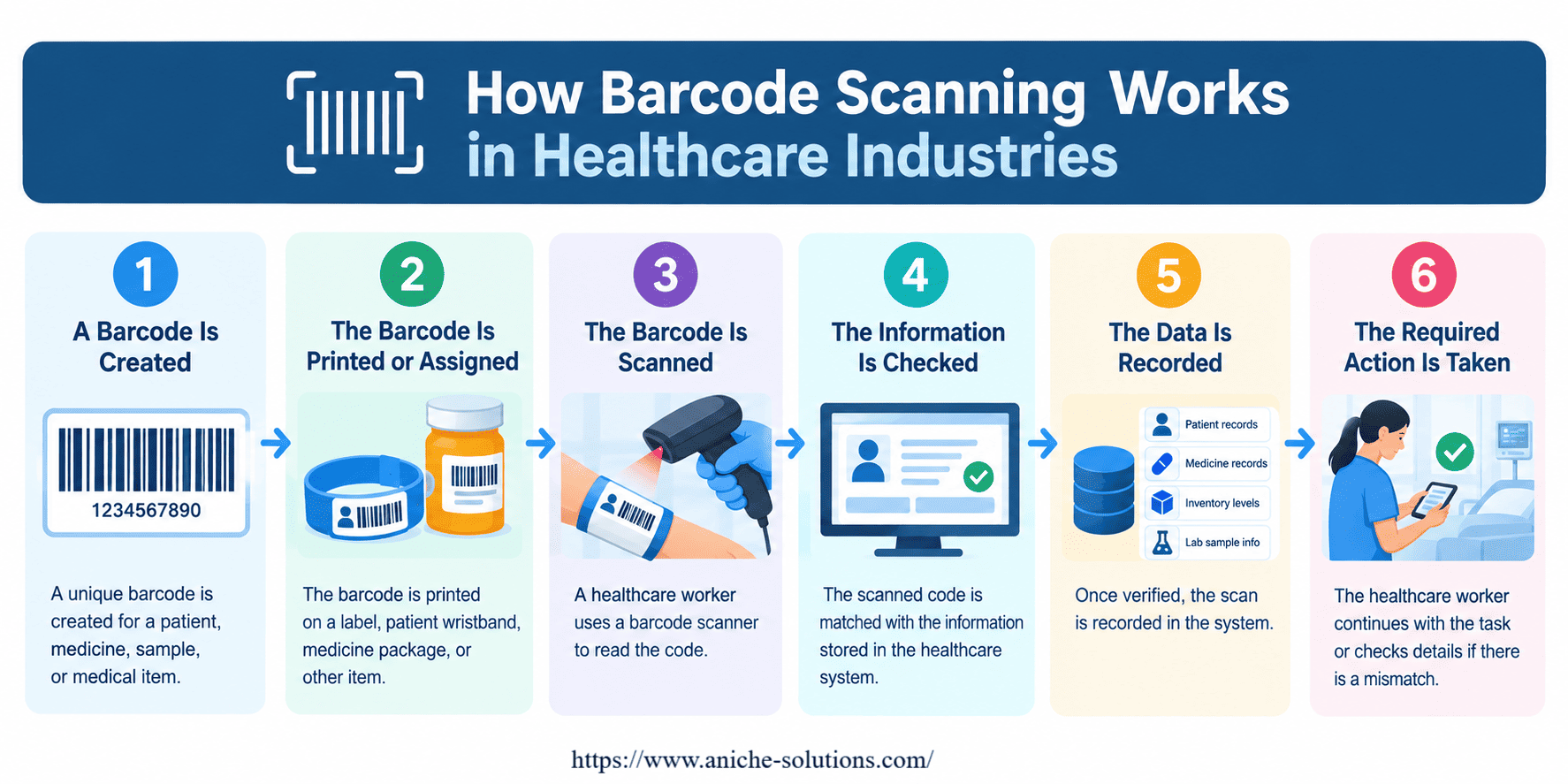
How Barcode Scanning Works in Healthcare Industries
Barcode scanning in healthcare follows a simple process. A barcode is placed on a patient wristband, medicine, laboratory sample, medical supply, or equipment. The scanner reads the code and sends the information to the connected healthcare system.
Step 1: A Barcode Is Created
A unique barcode is created for a patient, medicine, sample, or medical item. The barcode contains an identification number that connects to the related information in the system.
Step 2: The Barcode Is Printed or Assigned
The barcode is printed on a label, patient wristband, medicine package, or other item. The label should be clear and properly placed so the scanner can read it easily.
Step 3: The Barcode Is Scanned
A healthcare worker uses a barcode scanner to read the code. The scanner captures the barcode and converts it into digital information.
Step 4: The Information Is Checked
The scanned code is matched with the information stored in the healthcare system. For example, a medicine barcode can be checked against the patient's medication record.
Step 5: The Data Is Recorded
Once the information is verified, the scan is recorded in the system. Depending on the application, this can update patient records, medicine records, inventory levels, or laboratory sample information.
Step 6: The Required Action Is Taken
The healthcare worker can continue with the required task after the information is confirmed. If the system finds a mismatch, the staff can check the details before proceeding.
This simple process helps healthcare facilities reduce manual data entry, improve tracking, and maintain more accurate records across different departments.
Future Trends in Barcode Technology for Healthcare
Barcode technology is likely to remain an important part of healthcare operations. As hospitals and healthcare facilities use more digital systems, barcode scanning can become more connected with other technologies and software.
2D Barcodes
2D barcodes such as QR codes and Data Matrix codes can store more information than traditional 1D barcodes. Healthcare organizations can use them to manage details such as product information, batch numbers, expiry dates, and identification data.
Mobile Barcode Scanning
Smartphones and mobile computers with built-in scanning capabilities can make barcode scanning easier in different healthcare areas. Staff can scan items while moving between patient rooms, pharmacies, laboratories, and storage areas.
Cloud-Based Systems
Cloud-based healthcare and inventory systems can connect barcode data across different locations. This can help organizations manage information from multiple departments or facilities through a central system.
Integration With Healthcare Software
Barcode scanners can work with electronic health records, pharmacy systems, laboratory software, and inventory management platforms. Better integration can help information move between systems with fewer manual steps.
Automated Inventory Management
Future barcode systems can support more automated inventory processes. Scanning can help update stock levels, identify low-stock items, and record the movement of medicines and medical supplies.
Greater Use of Data Analytics
Barcode data can provide useful information about stock usage, medicine movement, and operational activities. Healthcare organizations can use this data to identify patterns and make better decisions.
Smarter Healthcare Workflows
Barcode technology may also work alongside technologies such as RFID, mobile computing, and artificial intelligence. These technologies can support faster data collection and more connected healthcare operations.
The future of barcode technology in healthcare will focus on better connectivity, faster data capture, and easier integration with digital healthcare systems.
FAQ
1. What types of barcodes are used in healthcare?
Healthcare facilities may use both 1D and 2D barcodes. The choice depends on the application, the amount of information required, and the software or equipment being used.
2. Can barcode scanners track medical inventory?
Yes. Barcode scanners can record items when they are received, stored, moved, or used. This helps healthcare facilities maintain accurate inventory records and monitor stock levels.
3. Is barcode scanning useful in pharmacies?
Yes. Pharmacies can use barcode scanning to identify medicines, check batch numbers and expiry dates, update inventory, and reduce manual data entry.
4. Can barcode scanning be used for laboratory samples?
Yes. Barcodes can be placed on blood, urine, and other laboratory samples. Scanning helps staff identify samples and keep them linked to the correct patient and test.
Conclusion
Barcode scanning has become a useful technology for hospitals, pharmacies, laboratories, and other healthcare facilities. It helps staff identify patients, medicines, samples, medical supplies, and equipment with fewer manual steps.
The technology can reduce data entry errors, support patient safety, improve inventory tracking, and make daily healthcare workflows more organized. Proper staff training, reliable equipment, good-quality labels, and software integration are important for successful implementation.
As healthcare systems become more digital, barcode scanning can continue to support accurate data capture and better tracking across different departments. With the use of 2D barcodes, mobile devices, cloud systems, and connected software, its role in healthcare is expected to grow further.