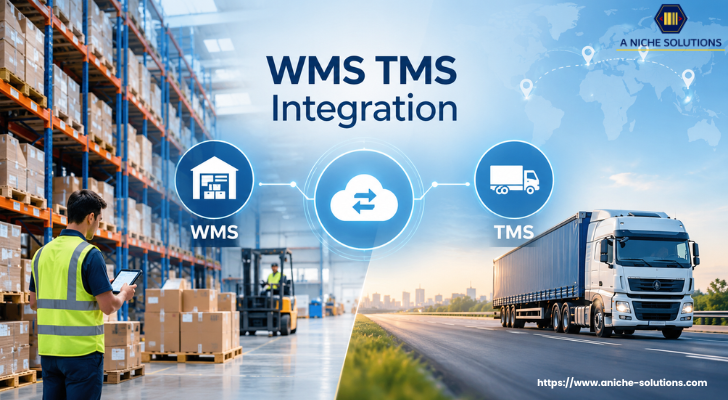
A warehouse and transportation system need to work together for smooth order delivery. A WMS-TMS integration connects the warehouse management system with the transportation management system so that warehouse and delivery activities can share data in real time.
A WMS manages tasks such as inventory, order processing, picking, packing, and dispatch. A TMS manages transportation activities such as shipment planning, carrier selection, route planning, and delivery tracking.
When these systems work together, information can move from the warehouse to the transportation team without repeated manual data entry. This helps businesses coordinate orders, shipments, inventory, and deliveries more efficiently.
This guide covers the basics of WMS TMS integration and explains how it can connect warehouse activities with transportation operations for smoother order fulfillment and delivery.
A warehouse management system (WMS) helps a business control what happens inside its warehouse. It keeps warehouse information in one place, from the time goods arrive until they are packed and sent for delivery.
The system gives warehouse teams a clear view of available stock, product locations, incoming orders, and items ready for dispatch. This makes it easier to plan daily warehouse work and reduce mistakes caused by manual records.
For example, when a new order comes in, the WMS can help the team identify the required products, locate them in the warehouse, and move the order through picking and packing. Once the order is ready, its details can be shared with the transportation process.
A WMS mainly focuses on warehouse operations and inventory control. It manages the activities inside the warehouse, while transportation-related tasks are handled by a TMS. This difference becomes important when both systems are connected.
A transportation management system (TMS) is software used to manage the movement of goods from one location to another. It helps businesses plan shipments, coordinate carriers, track deliveries, and manage transportation-related information.
A TMS brings important shipment details into one system. Teams can use it to plan deliveries based on orders, delivery locations, available vehicles, and carrier details.
For example, once an order is ready to leave the warehouse, the TMS can receive its shipment details and use them for transportation planning. This reduces the need to enter the same information again in a separate system.
The main role of a TMS is to manage transportation activities after goods are ready for shipment. When a TMS works with a WMS, warehouse and transport teams can work with connected information throughout the order fulfillment process.
WMS TMS integration is the process of connecting a warehouse management system with a transportation management system. It allows both systems to exchange important order, inventory, shipment, and delivery information.
A warehouse may know that an order has been picked and packed, while the transportation team needs that information to plan its shipment. With integration, these details can move between the two systems without requiring separate manual updates.
For example, when an order is ready for dispatch, the WMS can send details such as order information, package details, weight, and destination to the TMS. The TMS can then use this data for shipment planning and transportation management.
WMS TMS integration works by allowing the warehouse and transportation systems to exchange data at different stages of the order process. Each system continues to handle its own tasks while sharing the information needed by the other system.
The process usually starts when an order is received in the WMS. The warehouse team picks and packs the required products, and the shipment details are then sent to the TMS.
The TMS uses this information to plan the transportation. It can help with carrier assignment, shipment planning, route management, and delivery tracking based on the available shipment details.
Once the shipment is picked up, transportation updates can be sent back to the WMS. The warehouse team can then see the latest shipment status without checking a separate system.
A connected WMS and TMS brings warehouse and transportation data into one continuous workflow. The exact features can vary by business and software, but some capabilities are commonly used.
Order, shipment, inventory, and dispatch information can move between the WMS and TMS. Teams can work with updated information instead of entering the same details into both systems.
Once an order is packed and ready to leave the warehouse, its shipment details can be passed to the TMS automatically. This helps reduce manual work during the handover process.
The integration connects warehouse order status with transportation status. Teams can check whether an order is being prepared, dispatched, in transit, or delivered.
Shipment information from the warehouse can help the transportation team assign carriers and plan deliveries based on the requirements of each order.
Changes made in the warehouse can be shared with the transportation system. This helps ensure that transportation plans are based on the latest dispatch information.
Important updates such as shipment readiness, dispatch, delays, or delivery status can be shared with the relevant teams automatically.
Data from warehouse and transportation operations can be used for combined reports. Businesses can review order movement, shipment status, delivery performance, and other operational information from connected systems.
When warehouse and transportation systems work together, the impact goes beyond daily task management. Businesses can improve the overall supply chain process and make better use of their resources.
Connected warehouse and transport planning can help businesses avoid unnecessary trips, improve load utilisation, and select suitable transportation options. This can reduce the overall cost of moving goods.
Better coordination between warehouse activities and transportation can reduce waiting time between order preparation and shipment. Orders can move through the fulfillment process with fewer process gaps.
When warehouse and transport teams work with consistent order information, there is less chance of mistakes in shipment details, package information, or delivery instructions.
Businesses can make better use of warehouse staff, vehicles, carriers, and other logistics resources. Better coordination helps reduce idle time and unnecessary use of resources.
A smoother fulfillment process can support more reliable deliveries and fewer shipment-related issues. This helps businesses provide a better experience to customers throughout the order journey.
WMS TMS integration can be used across different supply chain operations where warehouse activities and transportation need to work together. Some common use cases include:
Online businesses handle a large number of orders every day. Integration can connect order picking and packing with shipment planning, helping orders move from the warehouse to customers without unnecessary delays.
Retailers often send products from central warehouses to multiple stores. A connected WMS and TMS can help coordinate store orders, warehouse dispatches, and transportation activities.
Manufacturers need to move raw materials, components, and finished products between different locations. WMS TMS integration can connect warehouse stock movements with transportation planning.
3PL providers manage warehouse and transportation services for multiple clients. Integration can help them coordinate storage, order fulfillment, shipment handling, and delivery activities within a connected process.
FMCG businesses handle products that move frequently through warehouses and distribution networks. WMS TMS integration can support the movement of goods from storage locations to distributors, retailers, and other delivery points.
Warehouse and transportation operations are closely connected. An order cannot reach the customer on time if warehouse preparation and transportation planning aren't properly coordinated.
TMS-WMS integration matters because it connects these two stages of the supply chain. When an order is ready for dispatch, the transportation process can work with the required warehouse information instead of depending on separate manual communication.
This connection becomes more useful as order volumes, warehouse locations, and delivery networks grow. Businesses can manage a more connected fulfillment process without creating separate workflows for warehouse and transportation teams.
It also gives businesses a stronger foundation for improving logistics operations over time. As supply chains become more complex, having connected warehouse and transportation systems can help reduce process gaps and support smoother movement of goods.
Yes. WMS and TMS can be connected with ERP systems to keep orders, inventory, purchasing, and logistics data aligned.
The time depends on the systems, integration method, data volume, and business requirements. Simple integrations may take less time than complex setups.
APIs are commonly used to connect WMS and TMS, but other integration methods such as middleware or file-based data exchange may also be used.
Businesses should review system compatibility, data requirements, integration methods, security, and the workflows that need to be connected.
Yes. An existing WMS can usually be connected to a new TMS if both systems support a suitable integration method and can exchange the required data.
Conclusion
WMS-TMS integration brings warehouse and transportation activities into a connected workflow. It helps businesses manage the movement of goods more smoothly from order preparation to delivery.
The integration can support lower transportation costs, faster fulfillment, fewer shipping errors, better use of resources, and improved customer service. These benefits make connected warehouse and transportation systems useful for businesses managing regular or growing shipment volumes.
A well-planned integration also gives businesses a foundation for managing more complex supply chain operations as their logistics requirements grow.

At A' Niche Solutions, we transform inventory management into a smart, automated, and future-ready process.
Quick Links
Products
Business Solutions
Gallery
Copyright 2025, A'Niche Infotech Solutions Pvt Ltd. All Right Reserved
Managed By