

Warehouse operations have become more complex than ever. Businesses need to manage large volumes of inventory, fulfill orders quickly, and maintain accurate stock records while meeting customer expectations.
Manual processes and disconnected systems often lead to inventory errors, delayed shipments, and reduced productivity. These challenges can impact both operational efficiency and customer satisfaction.
A Warehouse Management System (WMS) helps businesses gain better control over their warehouse operations. It streamlines inventory management, order processing, and stock movement through a centralized platform.
The benefits of a warehouse management system include improved inventory accuracy, faster order fulfillment, better warehouse visibility, and increased productivity. Understanding the benefit of a warehouse management system can help organizations build more efficient and scalable warehouse operations.
What is a Warehouse Management System (WMS)?
A warehouse management system (WMS) is software that helps businesses manage and control daily warehouse operations. It provides visibility into inventory and supports activities such as receiving, storing, picking, packing, and shipping products.
A WMS tracks inventory movement in real time and helps warehouse teams know exactly where products are located. This reduces manual work and improves accuracy across warehouse processes.
The system also helps businesses use warehouse space more effectively, process orders faster, and maintain accurate inventory records. By automating routine tasks and providing real-time data, a WMS helps create a more organized and efficient warehouse environment.
Read More : What is Warehouse Management System
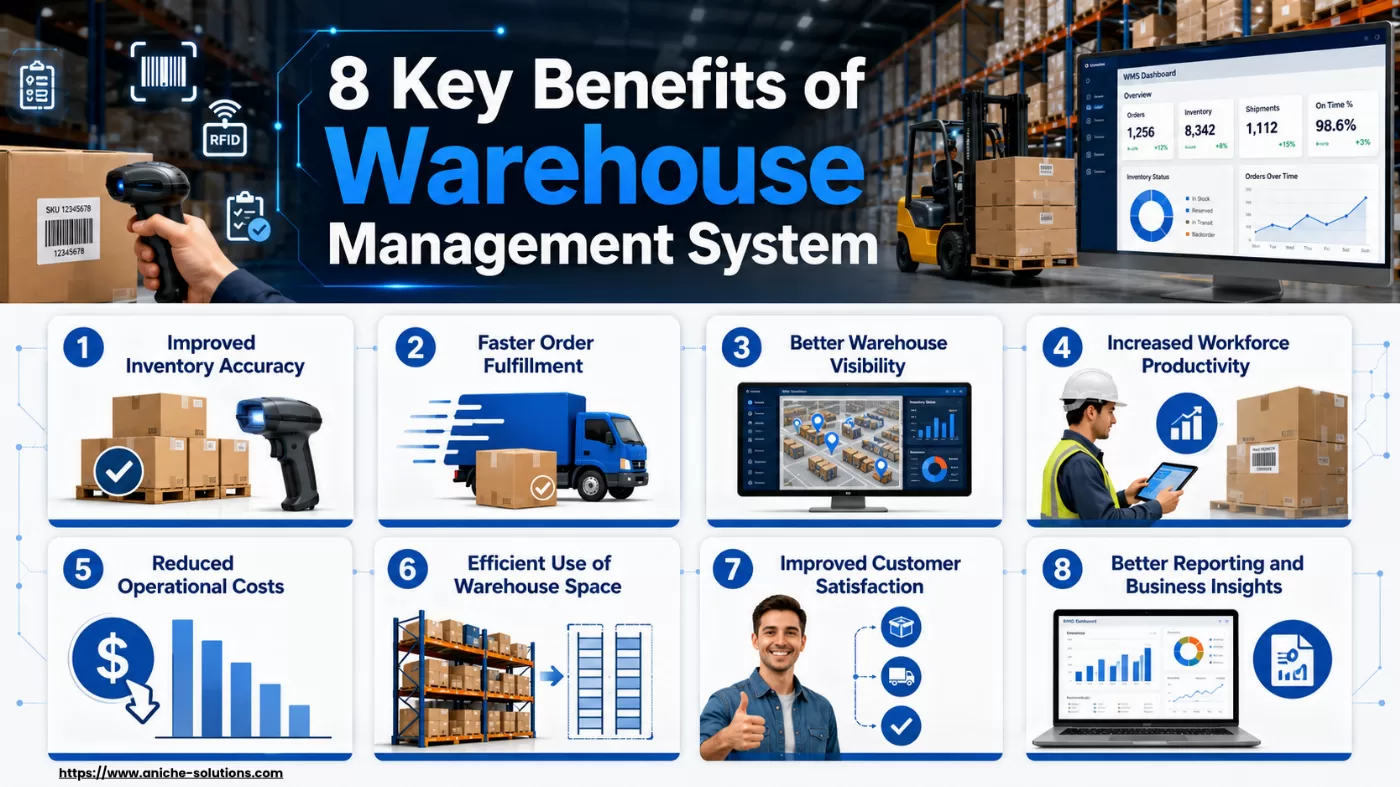
Top 8 Key Benefits of Warehouse Management System
Businesses invest in a WMS to improve warehouse efficiency and gain better control over inventory and order fulfillment. Below are some of the most important benefits of a warehouse management system.
1. Improved Inventory Accuracy
Maintaining accurate inventory records is one of the biggest challenges in warehouse management. A WMS tracks inventory movement in real time, helping businesses keep stock information up to date. This reduces inventory discrepancies and improves stock visibility across the warehouse.
2. Faster Order Fulfillment
Customer expectations for fast deliveries continue to grow. A WMS helps warehouse teams pick, pack, and ship orders more efficiently. Faster processing leads to quicker deliveries and improved customer satisfaction.
3. Better Warehouse Visibility
A WMS provides real-time information about inventory levels, stock locations, and warehouse activities. Managers can monitor operations more effectively and make informed decisions based on accurate data.
4. Increased Workforce Productivity
Manual tasks often consume valuable time and resources. A WMS automates many routine warehouse activities and provides clear task instructions to employees. This helps teams complete their work faster and with fewer mistakes.
5. Reduced Operational Costs
Inventory errors, inefficient processes, and excess labor can increase warehouse expenses. A WMS helps reduce these costs by improving workflow efficiency and minimizing unnecessary inventory handling.
6. Efficient Use of Warehouse Space
Warehouse space is a valuable asset for any business. A WMS helps organize inventory strategically and makes better use of available storage locations. This improves storage capacity without requiring warehouse expansion.
7. Improved Customer Satisfaction
Customers expect accurate orders and timely deliveries. A WMS helps businesses fulfill orders correctly and maintain reliable delivery schedules, creating a better customer experience.
8. Better Reporting and Business Insights
A WMS generates detailed reports on inventory performance, order processing, stock movement, and warehouse productivity. These insights help businesses identify improvement opportunities and support better planning.
The benefit of a warehouse management system extends beyond inventory control. It helps businesses improve efficiency, reduce costs, and build a stronger supply chain operation.
 Key Warehouse Challenges Addressed by WMS
A warehouse management system helps address these challenges by providing better visibility, automation, and control over warehouse operations.
Inventory Inaccuracies
Manual inventory tracking can lead to stock mismatches, misplaced products, and incorrect inventory records. A WMS updates inventory information in real time, helping businesses maintain accurate stock levels and reduce inventory-related errors.
Slow Order Processing
Warehouse teams often spend extra time locating products and processing orders when proper systems are not in place. A WMS streamlines picking, packing, and shipping activities, helping businesses fulfill orders more quickly.
Limited Warehouse Visibility
Many businesses struggle to track inventory movement and warehouse performance. A WMS provides real-time visibility into stock levels, storage locations, and operational activities, making warehouse management more efficient.
Poor Space Utilization
Unorganized inventory storage can waste valuable warehouse space. A WMS helps businesses allocate storage locations effectively and maximize the use of available warehouse capacity.
High Operational Costs
Manual processes, inventory errors, and inefficient workflows can increase warehouse expenses. A WMS helps reduce unnecessary costs by improving accuracy, productivity, and resource utilization.
Difficulty Managing Business Growth
As order volumes and inventory levels increase, warehouse operations become more complex. A WMS supports scalability by helping businesses manage larger inventories and higher order volumes without losing operational efficiency.
Read More: Warehouse Management Challenges
How Aniche Solutions Helps Maximize WMS Value?
Aniche Solutions helps businesses implement warehouse management systems that align with their warehouse processes and operational goals. The team analyzes existing workflows, identifies inefficiencies, and recommends the right WMS solution to improve inventory management, order processing, and warehouse performance.
The company also supports seamless integration between the WMS and other business systems such as ERP, barcode, RFID, and shipping platforms. This helps create a connected warehouse environment where inventory and operational data remain accurate and accessible across departments.
Apart from implementation, Aniche Solutions provides ongoing support and optimization services to help businesses get the maximum value from their investment. With improved visibility, streamlined workflows, and data-driven decision-making, organizations can achieve the full benefits of a warehouse management system while preparing for future growth.
FAQ
1. Can a WMS reduce warehouse costs?
Yes, a WMS helps reduce costs by minimizing errors, improving inventory control, and streamlining warehouse processes.
2. Is a WMS suitable for growing businesses?
Yes, a WMS helps businesses manage increasing inventory and order volumes more efficiently as they grow.
3. Can a WMS integrate with other systems?
Most WMS solutions can integrate with ERP, barcode, RFID, and other business systems for better operational efficiency.
4. Is a Warehouse Management System worth the investment?
Yes, a WMS can help businesses reduce costs, improve operational efficiency, and support long-term growth.
Conclusion
A Warehouse Management System plays an important role in improving warehouse efficiency and inventory control. It helps businesses manage stock accurately, fulfill orders faster, and gain better visibility into daily warehouse operations.
The benefits of a warehouse management system extend beyond basic inventory management. From reducing operational costs to increasing productivity and customer satisfaction, a WMS helps create a more organized and efficient warehouse environment.
As supply chains continue to grow in complexity, investing in the right WMS can help businesses stay competitive and support future growth. Choosing a solution that fits your operational needs can help you achieve the full benefit of a warehouse management system and improve overall business performance.