
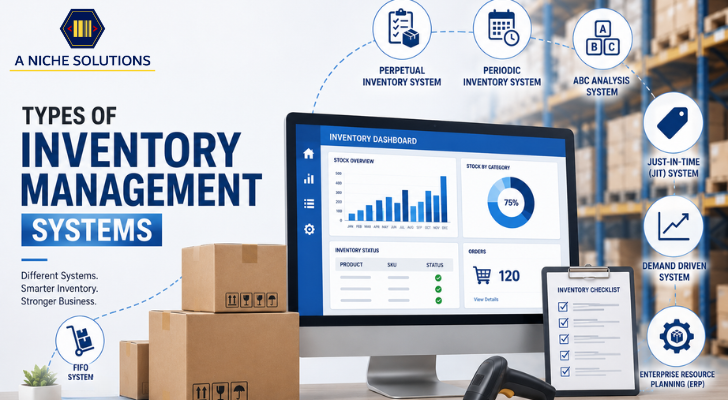
Every business depends on inventory to keep operations running without delays. Whether you sell products online, manage a warehouse, or handle manufacturing, keeping the right stock at the right time is important. Poor inventory control can lead to missed sales, extra storage costs, and unhappy customers.
An inventory management system helps businesses track stock, monitor product movement, and maintain accurate inventory records. It also makes purchasing and replenishment decisions easier.
There are several types of inventory management systems available today, and each one is built to meet different business requirements. Choosing the right system depends on factors like business size, inventory volume, and daily operations.
In this blog, we'll look at the different types of inventory management systems, explain how they work, and help you understand which option is the best fit for your business.
What is an Inventory Management System?
An inventory management system is a software solution that helps businesses keep track of their inventory from the time it is received until it is sold or used. It stores inventory data in one place, making it easier to check stock levels, monitor product movement, and maintain accurate records.
Many businesses still depend on spreadsheets or manual entries to manage inventory. As the number of products increases, this method becomes difficult to maintain. A digital system reduces manual work and gives teams quick access to updated inventory information.
Modern types of inventory management system solutions also support barcode scanning, RFID tracking, automated stock updates, purchase management, and reporting. These features help businesses make faster decisions and reduce inventory errors.
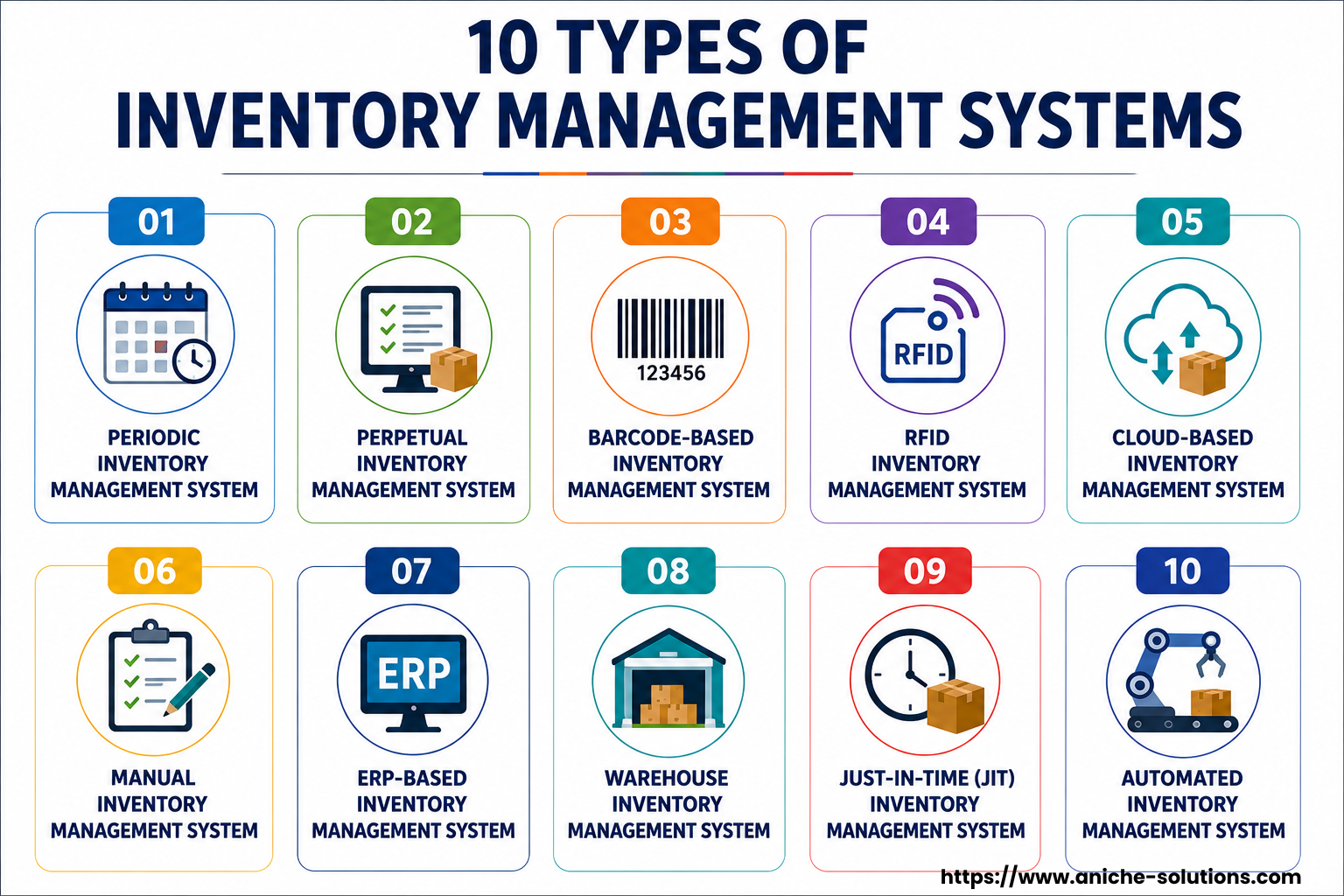
10 Types of Inventory Management Systems
Whether you run a retail store, warehouse, manufacturing unit, or distribution business, an inventory management system helps improve stock control and keeps daily operations organized.
1. Periodic Inventory Management System
A Periodic Inventory Management System is one of the traditional methods businesses use to manage stock. Instead of updating inventory after every sale or purchase, stock levels are checked and recorded at fixed intervals, such as every week, month, or quarter.
Small businesses, local shops, and companies with a limited number of products often choose this system because it is easy to maintain and has a low setup cost. Physical stock counting helps compare actual inventory with business records and identify missing or damaged items. Since inventory is not updated in real time, businesses may face stock shortages or order more products than required.
2. Perpetual Inventory Management System
A Perpetual Inventory Management System updates stock records automatically whenever products are purchased, sold, returned, or transferred. It provides real-time information about available inventory, helping businesses track stock levels accurately.
This system is commonly used in retail stores, warehouses, and manufacturing companies with frequent inventory movements. It reduces manual errors, improves stock visibility, and helps businesses avoid problems like overstocking or product shortages.
3. Barcode-Based Inventory Management System
A Barcode-Based Inventory Management System uses barcode labels and scanners to track products throughout the inventory process. Each product has a unique barcode that stores important information, making stock updates faster and more accurate.
This system is widely used in retail, warehouses, and distribution businesses. It reduces manual data entry, improves inventory accuracy, and helps employees manage receiving, sales, and stock checking more efficiently.
4. RFID Inventory Management System
An RFID Inventory Management System uses RFID tags and readers to identify and track products without direct scanning. It allows businesses to monitor multiple items at the same time, making inventory tracking faster.
This system is useful for large warehouses, manufacturing units, and businesses handling valuable products. RFID improves stock visibility, reduces counting time, and helps maintain accurate inventory records with less manual effort.
5. Cloud-Based Inventory Management System
A Cloud-Based Inventory Management System stores inventory data online, allowing businesses to access stock information from anywhere. It helps teams manage inventory across multiple locations without maintaining separate records. This system supports real-time updates, automated reports, and better collaboration between departments.
It is suitable for growing businesses, retailers, and companies with multiple warehouses. Cloud-based solutions also reduce the need for expensive hardware and make inventory management more flexible.
6. Manual Inventory Management System
A Manual Inventory Management System uses spreadsheets, notebooks, or paper records to track stock details. Businesses manually record purchases, sales, and inventory changes without using automated software.
This method is commonly used by small businesses with limited products and fewer transactions. While it is simple and low-cost, manual tracking can take more time and may lead to errors. As business operations grow, companies often move toward digital inventory solutions.
7. ERP-Based Inventory Management System
An ERP-Based Inventory Management System connects inventory processes with other business operations like sales, purchasing, finance, and production. It provides a centralized platform where businesses can manage and monitor different activities together.
This system is commonly used by medium and large organizations that require better coordination between departments. ERP-based solutions improve data accuracy, support better planning, and help businesses make informed decisions using real-time information.
8. Warehouse Inventory Management System
A Warehouse Inventory Management System is designed to manage stock stored inside warehouses. It helps businesses track product locations, incoming shipments, picking, packing, and dispatch activities. This system improves warehouse organization and reduces the time required to find and move products.
It is widely used by logistics companies, manufacturers, and distributors that handle large volumes of inventory. Better warehouse control helps improve order accuracy and operational efficiency.
9. Just-in-Time (JIT) Inventory Management System
The Just-in-Time (JIT) Inventory Management System focuses on keeping only the required amount of stock based on current demand. Businesses receive products or raw materials when they are needed instead of storing large quantities.
This approach helps reduce storage costs and minimizes inventory waste. It is commonly used in manufacturing industries where timely supply is important. JIT requires accurate demand planning and reliable suppliers to avoid stock shortages.
10. Automated Inventory Management System
An Automated Inventory Management System uses technology such as barcode scanners, RFID, sensors, and inventory software to reduce manual tasks. It automatically records stock movements and provides updated inventory information.
This system helps businesses save time, reduce human errors, and improve inventory accuracy. It is suitable for companies with large product ranges or high transaction volumes. Automation allows teams to focus on better planning instead of spending time on manual stock tracking.
 Key Principles of Inventory Tracking and Control
Effective inventory management is not only about storing products but also about maintaining accurate records and controlling stock movement.
1. Maintain Accurate Inventory Records
Accurate inventory records help businesses know the exact quantity of products available at any time. Regular stock updates reduce mistakes and help teams make better purchasing and sales decisions. Using digital inventory systems, barcode scanning, or RFID technology can improve data accuracy and reduce dependency on manual entries.
2. Monitor Stock Levels Regularly
Keeping track of stock levels helps businesses identify which products are selling quickly and which items are moving slowly. Regular monitoring prevents situations like running out of important products or storing excess inventory that increases storage costs.
3. Use Proper Stock Classification
Organizing inventory into categories makes tracking and management easier. Businesses often classify products based on demand, value, or usage frequency. Methods like ABC analysis help companies focus more attention on high-value or fast-moving items.
4. Track Inventory Movement
Every inventory movement, including receiving, transferring, selling, and returning products, should be recorded properly. Tracking product movement improves visibility and helps identify errors, delays, or missing inventory.
5. Set Minimum and Maximum Stock Levels
Defining minimum and maximum stock limits helps businesses maintain the right inventory balance. Minimum levels prevent stock shortages, while maximum levels avoid unnecessary storage costs. This approach supports better purchasing decisions and smoother operations.
Important Benefits of an Inventory Management System
An inventory management system helps businesses manage stock more efficiently by reducing manual work and improving visibility.Some important benefits include:
1. Better Inventory Accuracy
An inventory management system keeps stock information updated and reduces errors caused by manual tracking. Businesses can easily check available quantities, product locations, and stock movement. Accurate inventory data helps teams avoid incorrect orders and maintain better control over their products.
2. Improves Warehouse Efficiency
Inventory management systems help organize warehouse activities by tracking product locations, stock movement, and order processing. Better warehouse visibility reduces the time spent searching for products and improves picking, packing, and dispatch processes.
3. Supports Better Decision-Making
Accurate inventory reports help businesses understand sales trends, product demand, and stock performance. Managers can use this information to make better decisions about purchasing, storage, and inventory planning.
4. Improves Customer Satisfaction
Having the right products available when customers need them helps improve the overall buying experience. Proper inventory control reduces order delays and helps businesses fulfill customer demands more efficiently.
How Aniche Solutions Supports Smarter Inventory Management?
Aniche Solutions helps businesses manage their inventory with smart and reliable solutions that improve stock visibility and control. The system helps track inventory movement, monitor stock levels, and maintain accurate records, reducing manual efforts and inventory-related errors.
With features like barcode scanning, RFID-based tracking, and automated inventory updates, Aniche Solutions helps businesses improve warehouse operations and make faster decisions. It supports better stock planning by providing clear insights into product availability and movement.
Aniche Solutions offers scalable inventory management solutions that fit the needs of different industries and business sizes. From improving daily inventory tasks to supporting long-term growth, it helps businesses achieve better efficiency and smoother inventory operations.
FAQ
1. How do I choose the right inventory management system for my business?
The right system depends on your business size, inventory volume, budget, and daily operations. Small businesses may need simple solutions, while larger companies may require advanced systems with automation and integrations.
2. Can an inventory management system reduce operational costs?
Yes, it helps reduce costs by preventing overstocking, minimizing inventory errors, improving warehouse efficiency, and reducing manual work.
3. Is an inventory management system suitable for small businesses?
Yes, small businesses can use inventory management systems to maintain accurate stock records, manage orders, and improve daily operations without relying on manual tracking.
4. Can inventory management systems integrate with other business software?
Many modern inventory systems can integrate with ERP, accounting, sales, and warehouse management software to create a connected business workflow.
5. How does automation improve inventory management?
Automation reduces repetitive manual tasks, updates stock information quickly, and helps businesses track inventory movement with better accuracy.
Conclusion
Proper inventory management helps businesses maintain accurate stock levels, reduce losses, and improve daily operations. Every business has different requirements, so selecting the right inventory management system depends on factors like business size, product volume, and workflow.
Understanding the types of inventory management systems helps businesses choose a solution that matches their needs. Aniche Solutions provides smart inventory management solutions that help businesses improve stock visibility and manage their operations more efficiently. With the right technology and processes, companies can create a more organized and reliable inventory system.