
Every business that deals with products needs proper inventory management. Whether you run a retail store, warehouse, manufacturing unit, or distribution business, keeping the right stock level is important. Too much inventory increases storage costs, while too little stock can delay customer orders and affect sales.
Many businesses face inventory management challenges because stock keeps moving every day. Customer demand changes, suppliers may deliver late, and manual tracking often leads to mistakes. These problems make it difficult to maintain accurate inventory records and smooth business operations.
Good inventory management is not only about storing products. Identifying common inventory management challenges early makes it easier to solve them before they affect business growth.
In this guide, we will look at the most common inventory management challenges businesses face and practical solutions that help improve inventory accuracy and overall efficiency.
Why Is Inventory Management Challenging for Businesses?
Inventory management becomes more difficult as a business grows. More products, multiple warehouses, changing customer demand, and supplier delays make stock control harder.
Many businesses still use manual records or spreadsheets. Small mistakes in stock updates can lead to incorrect inventory levels and poor planning. Stock shortages and excess inventory are common problems. Both can increase business costs and affect customer satisfaction.
Customer demand also changes throughout the year. Without accurate inventory data, it becomes difficult to keep the right products in stock. Poor communication between purchasing, warehouse, sales, and delivery teams creates more inventory issues. This often causes delays, order errors, and wasted time.
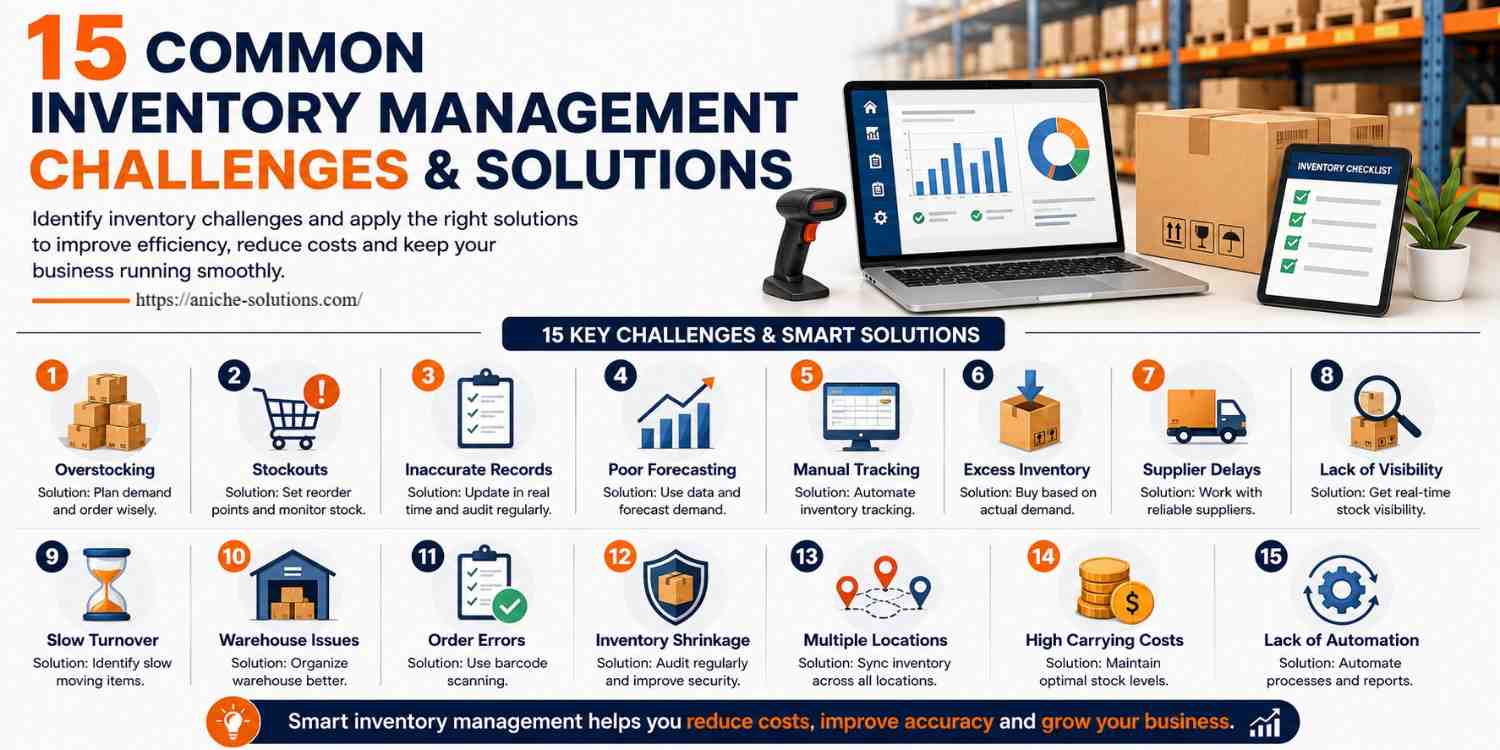
15 Common Inventory Management Challenges and Solutions
Every business faces inventory problems at some point. Some challenges increase costs, while others affect customer satisfaction and daily operations. Knowing these issues and fixing them early helps businesses maintain better stock control and improve overall inventory performance.
1. Overstocking
Overstocking happens when a business keeps more inventory than it actually needs. This ties up working capital, increases storage costs, and raises the risk of products becoming outdated or damaged.
Solution:
Use sales data and demand forecasting to plan purchases. Review stock levels regularly and reorder only when required. An inventory management system helps maintain the right inventory level and avoids unnecessary stock buildup.
2. Stockouts
Stockouts occur when products are unavailable because inventory runs out before new stock arrives. This can happen due to poor planning, unexpected demand, or supplier delays. It often leads to lost sales and dissatisfied customers.
Solution:
Set reorder points and monitor inventory regularly. Use an inventory management system to receive low-stock alerts and reorder products on time, helping maintain stock availability.
3. Inaccurate Inventory Records
Inventory records should always match the actual stock available in the warehouse. Manual entries, missed updates, and counting mistakes often create differences between recorded and physical inventory.
Incorrect inventory data affects purchasing, sales, and order fulfillment. Businesses may order products they already have or fail to restock items that are running low.
Solution:
Update inventory after every stock movement and conduct regular stock audits. An inventory management system records every transaction in real time, helping businesses maintain accurate inventory records.
4. Poor Demand Forecasting
Customer demand does not stay the same throughout the year. Seasonal sales, market trends, and buying patterns make it difficult to estimate how much inventory will be needed.
Poor demand forecasting can result in excess inventory or stock shortages. Both situations increase costs and affect customer satisfaction.
Solution:
Use historical sales data and demand trends to estimate future inventory requirements. Regular forecasting reviews help businesses purchase the right quantity at the right time.
5. Manual Inventory Tracking
Many businesses still rely on spreadsheets or paper records to manage inventory. This process takes more time and increases the chances of human errors during stock updates.
Manual tracking also makes it difficult to access accurate inventory information quickly. As the business grows, managing inventory this way becomes even more challenging.
Solution:
Switch to an inventory management system that automates stock updates and inventory tracking. Automation reduces errors, saves time, and improves inventory accuracy.
6. Excess Inventory
Buying more inventory than required increases storage costs and blocks working capital. Slow-moving products also occupy warehouse space that could be used for fast-selling items.
Excess inventory can lose its value over time because of damage, expiry, or changing market demand. This directly affects business profitability.
Solution:
Review inventory performance regularly and purchase stock based on actual demand. Identify slow-moving products early and clear them through promotional offers or discounts.
7. Supplier Delays
Businesses depend on suppliers to maintain a steady flow of inventory. Late deliveries can interrupt operations and make it difficult to fulfill customer orders on time.
Frequent supplier delays also increase the chances of stockouts and affect customer satisfaction. Businesses may lose sales if products are unavailable for longer periods.
Solution:
Work with reliable suppliers and maintain safety stock for important products. Monitoring supplier performance helps businesses identify delays and improve inventory planning.
8. Lack of Inventory Visibility
Many businesses manage inventory across multiple warehouses or store locations. Without real-time inventory visibility, it becomes difficult to know the exact stock available at each location.
Limited visibility often results in unnecessary purchases, stock shortages, or excess inventory. It also slows down inventory-related decisions.
Solution:
Use a centralized inventory management system that provides real-time stock visibility across all locations. This helps businesses make faster and more accurate inventory decisions.
9. Slow Inventory Turnover
Some products remain in storage for a long time because they sell slowly. This increases inventory holding costs and reduces available warehouse space.
Slow inventory turnover also blocks business capital that could be invested in products with higher demand.
Solution:
Track inventory turnover regularly and identify slow-moving products. Adjust purchasing decisions based on sales performance to maintain healthy inventory levels.
10. Warehouse Organization Issues
A poorly organized warehouse makes it difficult to locate products quickly. Employees spend more time searching for inventory, which slows down daily operations.
Poor warehouse organization also increases picking mistakes and delays customer order processing.
Solution:
Arrange products in dedicated storage locations and use barcode labels for easy identification. A well-organized warehouse improves inventory handling and order accuracy.
11. Order Fulfillment Errors
Order fulfillment errors happen when the wrong products are picked, packed, or shipped to customers. These mistakes usually occur because of incorrect inventory information or manual processes.
Frequent order errors increase return requests, additional shipping costs, and customer complaints. They can also affect the business's reputation.
Solution:
Use barcode scanning during picking and packing to verify every product before dispatch. Accurate inventory data also helps reduce fulfillment mistakes.
12. Inventory Shrinkage
Inventory shrinkage refers to the difference between recorded inventory and actual stock. Theft, damaged products, and counting mistakes are some of the common reasons behind inventory losses.
Even small inventory losses can reduce profits if they happen regularly. Identifying the cause early helps businesses prevent further losses.
Solution:
Perform regular inventory audits and improve warehouse security. Monitoring stock movement closely helps reduce inventory shrinkage and maintain accurate inventory records.
13. Managing Multiple Locations
Managing inventory across different warehouses or business locations can become complicated without a centralized system. Inventory transfers and stock updates may not happen at the right time.
This often creates inaccurate inventory records and makes it difficult to fulfill customer orders efficiently.
Solution:
Use inventory management software that updates inventory across all locations in real time. This keeps stock information accurate and improves inventory control.
14. High Inventory Carrying Costs
Keeping inventory in storage involves expenses such as warehouse rent, insurance, handling, and maintenance. These costs continue to increase when businesses store excess inventory.
Higher carrying costs reduce overall profitability and affect business cash flow. Proper inventory planning helps control these expenses.
Solution:
Maintain optimal inventory levels and review purchasing plans regularly. Reducing excess inventory helps lower carrying costs and improves cash flow.
15. Lack of Automation
Manual inventory processes become difficult to manage as inventory volume increases. Stock updates, reporting, and purchase planning take more time and often lead to errors.
Without automation, businesses may struggle to maintain accurate inventory records and respond quickly to changing demand.
Solution:
Use inventory management software to automate inventory tracking, stock updates, reorder alerts, and reporting. Automation improves efficiency, reduces manual work, and supports better inventory management.
 Solve Inventory Challenges With Aniche Solution's Inventory Management Software
Inventory management becomes easier with the right software. Aniche Solution's Inventory Management Software helps businesses manage stock efficiently, reduce manual work, and maintain accurate inventory records from a single platform.
The software provides real-time inventory tracking, barcode-based stock management, low-stock alerts, purchase order management, and detailed inventory reports. These features help businesses reduce stockouts, avoid excess inventory, and improve inventory accuracy.
Whether you manage a single warehouse or multiple locations, Aniche Solution gives you complete visibility of your inventory. Real-time updates help your purchasing, warehouse, and sales teams work with the same inventory data, reducing errors and improving coordination.
With Aniche Solution's Inventory Management Software, businesses can simplify inventory operations, lower inventory costs, and make faster, data-driven decisions. It is a reliable solution for overcoming common inventory management challenges and supporting business growth.
FAQ
1. How can businesses improve inventory management?
Businesses can improve inventory management by tracking stock regularly, using demand forecasting, and adopting inventory management software.
2. How does inventory management software help?
It automates stock tracking, provides real-time inventory updates, reduces manual errors, and improves inventory accuracy.
3. What causes stockouts?
Poor inventory planning, unexpected demand, inaccurate stock records, or supplier delays usually cause stockouts.
4. Why is inventory accuracy important?
Accurate inventory records help businesses maintain the right stock levels, reduce errors, and fulfill customer orders on time.
5. How can businesses overcome inventory management challenges?
Businesses can overcome inventory challenges by automating inventory processes, monitoring stock in real time, and reviewing inventory regularly.
Conclusion
Inventory management challenges can affect daily operations, increase costs, and impact customer satisfaction. Issues like stock shortages, excess inventory, inaccurate records, and poor planning need proper solutions.
A well-organized inventory process helps businesses maintain the right stock levels and improve overall efficiency. Using inventory management software makes it easier to track inventory, reduce errors, and make better decisions.
With the right tools and strategies, businesses can overcome common inventory management challenges and build a more reliable inventory system.