
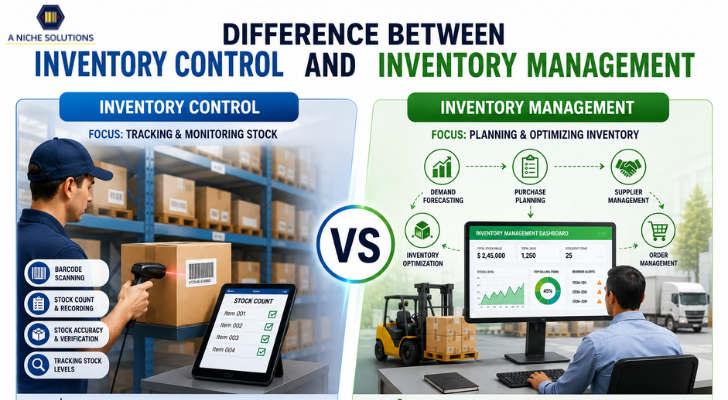
Every business that handles products needs a proper way to manage stock. Whether you run a retail store, warehouse, manufacturing unit, or distribution business, keeping the right quantity of inventory is important. Too much stock increases storage costs, while too little stock can lead to delayed orders and unhappy customers.
Many people think inventory control vs inventory management means the same thing. In reality, they have different roles in managing inventory. Inventory management focuses on the complete process of planning, purchasing, storing, and tracking inventory. Inventory control deals with maintaining the right stock levels and ensuring products are available when needed.
Understanding inventory management vs inventory control helps businesses improve inventory accuracy, reduce waste, and make better decisions. This guide explains both concepts, their differences, and how they work together to improve overall inventory performance.
What Is Inventory Control?
Inventory control is the process of monitoring and maintaining the right quantity of stock in a business. It focuses on tracking inventory, checking stock levels, and ensuring products are available when needed. The main aim is to avoid stock shortages, overstocking, and inventory losses.
A good inventory control process helps businesses know exactly what is in stock and where it is stored. This improves inventory accuracy and makes daily warehouse operations more efficient.
Most businesses use barcode scanners, RFID technology, or an inventory management system to simplify inventory control. These tools provide real-time stock updates and reduce manual errors.
What Is Inventory Management?
Inventory management is the process of handling inventory from the time products are purchased until they are sold or used. It covers every stage, including purchasing, storing, tracking, and replenishing stock. The main goal is to make sure the right products are available in the right quantity whenever the business needs them.
Every business depends on inventory to keep its operations running smoothly. Without proper inventory management, companies may end up with excess stock that takes up valuable warehouse space or run out of products when customers place orders. Both situations can affect business performance and increase operating costs.
A modern inventory management system gives businesses complete visibility of their inventory. It allows teams to check stock levels, monitor inventory movement, and make better purchasing decisions using real-time data. This reduces manual work and improves inventory accuracy.
Inventory management is useful for businesses of all sizes, whether they operate a single warehouse or manage inventory across multiple locations. It helps improve order fulfillment, supports better planning, and keeps the entire supply chain organized.
Differences Between Inventory Control vs Inventory Management
Many businesses use the terms inventory control vs inventory management as if they mean the same thing. Understanding these differences helps businesses improve inventory visibility, reduce costs, and make better operational decisions.
Purpose
Inventory Control: Inventory control focuses on maintaining the right quantity of stock at all times. It ensures products are neither overstocked nor out of stock. The process also helps reduce inventory loss caused by damage, theft, or incorrect stock records, making daily warehouse operations more reliable.
Inventory Management: Inventory management is responsible for managing the complete inventory lifecycle. It includes planning inventory requirements, purchasing products, storing them properly, tracking stock movement, and ensuring products are available to meet customer demand. Its main purpose is to keep inventory moving efficiently while supporting business operations.
Scope
Inventory Control: Inventory control has a more specific role. It deals with monitoring inventory that is already available in storage. The focus is on checking stock quantities, verifying inventory records, organizing products, and ensuring accurate stock availability across warehouse locations.
Inventory Management: The scope of inventory management is broad because it covers every stage of inventory handling. From procurement and warehouse management to inventory tracking, replenishment, reporting, and order fulfillment, it helps businesses manage inventory from start to finish.
Daily Activities
Inventory Control: Inventory control includes routine tasks such as stock counting, cycle counting, inventory verification, stock replenishment, barcode scanning, and monitoring inventory movement. These activities help maintain inventory accuracy and reduce errors during receiving, storage, picking, and dispatch.
Inventory Management: Inventory management involves several activities such as demand forecasting, purchase planning, inventory allocation, warehouse coordination, stock movement tracking, and generating inventory reports. These activities help businesses maintain a smooth supply of products while avoiding unnecessary inventory costs.
Main Objective
Inventory Control: The primary objective of inventory control is to maintain accurate stock levels and improve inventory accuracy. It helps businesses avoid stock shortages, prevent excess inventory, and reduce losses caused by damaged, expired, or misplaced products.
Inventory Management: The main objective of inventory management is to balance inventory availability with business demand. It helps businesses improve planning, reduce carrying costs, avoid unnecessary purchases, and ensure products are available when customers need them.
Technology Used
Inventory Control: Inventory control commonly uses barcode scanners, RFID technology, mobile devices, and stock monitoring tools. These technologies simplify stock verification, improve inventory accuracy, and provide real-time updates whenever inventory is received, moved, or dispatched.
Inventory Management: Businesses use an inventory management system to automate inventory processes, monitor stock across multiple locations, generate reports, and improve inventory visibility. Real-time data helps managers make faster and more informed decisions.
Business Impact
Inventory Control: Strong inventory control creates an organized warehouse, improves stock accuracy, reduces inventory losses, and speeds up order fulfillment. Accurate inventory records also make inventory management more effective, helping businesses operate with greater confidence.
Inventory Management: Effective inventory management helps businesses improve customer satisfaction, optimize purchasing decisions, reduce operational costs, and increase overall productivity. It also supports better planning by providing complete visibility of inventory across the business.
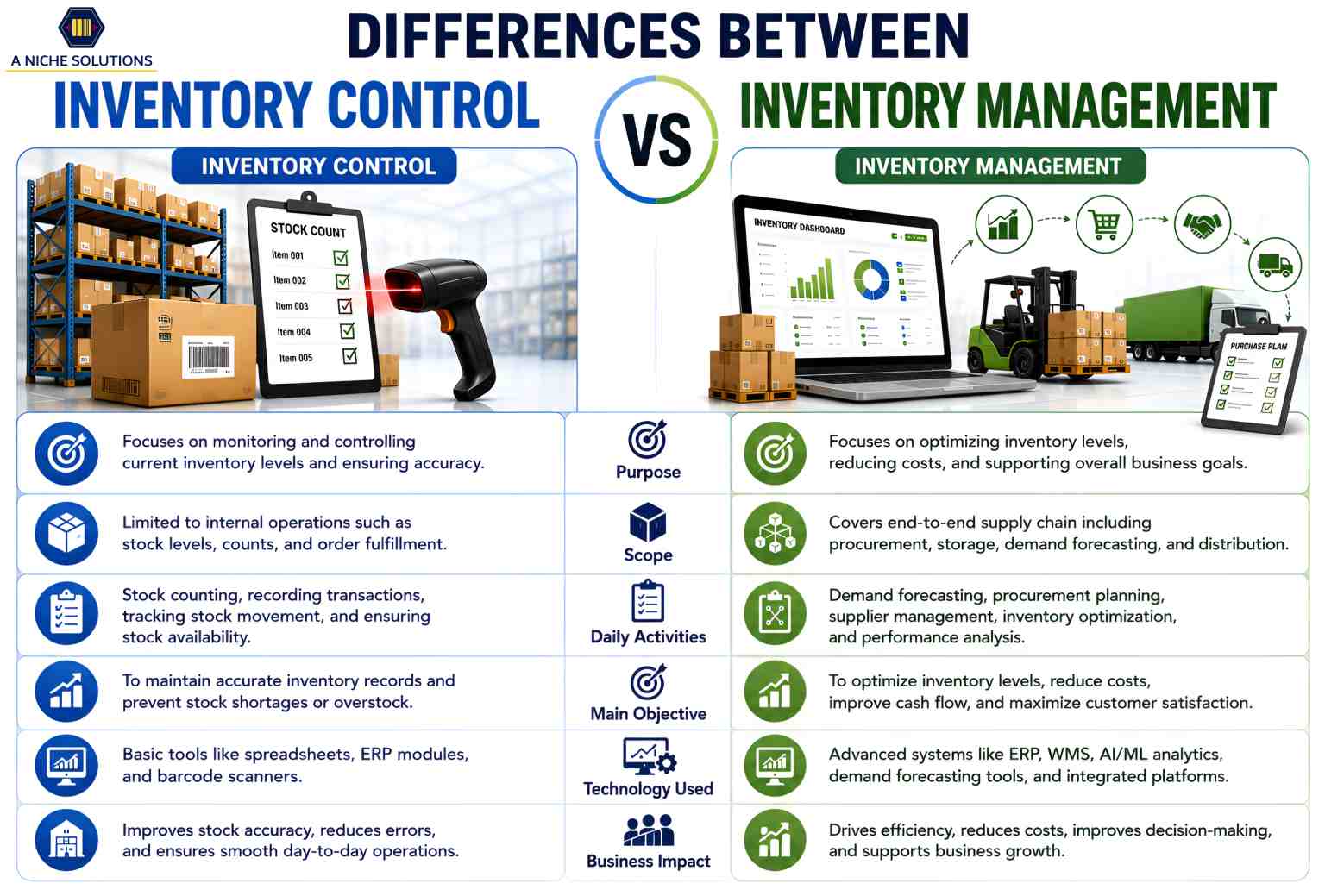
The table below explains the quick differences between inventory management vs inventory control in a simple way.
 How Does Inventory Control Improve Inventory Management Efficiency?
Inventory control plays a key role in making inventory management more effective. Accurate stock records help businesses know exactly what products are available, where they are stored, and when they need to be replenished. This allows teams to make better purchasing decisions, avoid stock shortages, and reduce excess inventory. As a result, the entire inventory management process becomes more reliable and efficient.
A strong inventory control process also improves warehouse operations. Regular stock checks, barcode scanning, and RFID technology help maintain accurate inventory data while reducing manual errors. Well-organized inventory makes receiving, storing, picking, and dispatching products faster, saving time and improving productivity across daily operations.
Better inventory control also leads to improved customer service. When businesses have real-time visibility of inventory, they can fulfill orders on time and avoid delays caused by incorrect stock information. This reduces inventory costs, improves order accuracy, and helps businesses build customer trust while maintaining smooth inventory management.
How to Choose the Best Inventory Management System for Your Business?
The right inventory management system can make daily operations more organized and help businesses maintain accurate inventory records. Before investing in software, it is important to evaluate your business requirements, future plans, and operational challenges.
Understand Your Business Needs
Every business has different inventory processes and operational requirements. Before choosing a solution, identify the challenges you want to solve, such as stock inaccuracies, slow warehouse operations, or difficulty managing inventory across multiple locations. This will help you select software that fits your workflow instead of forcing your team to adjust to a new process.
Plan for Future Growth
Business requirements often change as product lines, customers, and warehouse operations expand. The inventory management system you choose should be able to support additional products, warehouses, and users without affecting performance. Investing in scalable software helps avoid the cost and effort of replacing the system as your business grows.
Focus on Ease of Use
Employees use the inventory management system every day, so it should be simple to understand and operate. A clean interface, easy navigation, and straightforward workflows reduce training time and help employees complete tasks more efficiently.
Check Customization and Integration
The software should allow you to customize workflows, reports, user permissions, and approval processes based on your business requirements. It should also integrate smoothly with ERP, accounting, purchasing, and warehouse systems so information flows automatically between departments without duplicate entries.
Evaluate Vendor Support
A software provider plays an important role in the success of an inventory management system. Before making a decision, check the vendor's industry experience, implementation process, customer support, and software maintenance services. Reliable support helps resolve technical issues quickly, provides regular updates, and ensures the system continues to meet changing business requirements.
How Aniche Solutions Helps Improve Inventory Visibility and Control?
Inventory visibility and inventory control are essential for maintaining efficient business operations. Aniche Solutions offers an advanced inventory management solution that helps businesses monitor inventory, track stock movement, and maintain accurate inventory records from a single platform. With real-time inventory data, businesses can quickly identify stock availability, reduce manual errors, and make informed decisions that support smooth day-to-day operations.
The solution is designed to simplify inventory management across warehouses, distribution centers, retail stores, and manufacturing facilities. Features such as barcode and RFID integration, automated stock updates, and multi-location inventory management help businesses maintain accurate stock levels while reducing the time spent on manual inventory processes. This allows warehouse teams to work more efficiently and improves overall inventory accuracy.
Aniche Solutions also provides detailed inventory reports and real-time dashboards that give businesses complete visibility of their inventory performance. Managers can monitor inventory movement, identify slow-moving or fast-moving products, and plan purchases based on accurate inventory data. By combining inventory visibility with effective inventory control, Aniche Solutions helps businesses reduce operational costs, improve order fulfillment, and build a more efficient inventory management process.
FAQ
1. Which businesses should use an inventory management system?
Retail, manufacturing, warehousing, healthcare, e-commerce, and distribution businesses can all benefit from an inventory management system.
2. How does Aniche Solutions help businesses manage inventory?
Aniche Solutions helps businesses improve inventory visibility, track stock in real time, and maintain better inventory control across multiple locations.
3. What are the benefits of combining inventory management and inventory control?
Using both together improves inventory accuracy, reduces operational costs, supports faster order fulfillment, and increases overall business efficiency.
4. Can inventory management software improve inventory accuracy?
Yes. It automates inventory tracking, provides real-time stock updates, and reduces manual errors.
Conclusion
Inventory management and inventory control are both essential for maintaining an efficient inventory process. While inventory management focuses on overall planning and movement of inventory, inventory control ensures stock levels remain accurate and well organized. Together, they help businesses reduce inventory errors, improve warehouse operations, and maintain the right stock at the right time.
Understanding the difference between inventory control vs inventory management helps businesses choose the right processes and technology for better inventory performance. With the right inventory management solution from Aniche Solutions, businesses can gain better inventory visibility, improve stock control, and support long-term operational growth.