

Every business depends on accurate inventory data to run smoothly. Whether you manage a warehouse, retail store, manufacturing unit, or distribution center, knowing the exact quantity of stock available is important for daily operations.
Inventory accuracy means the stock recorded in your system matches the actual stock available in storage. When inventory records are correct, businesses can fulfill orders on time, avoid stock shortages, reduce excess inventory, and make better purchasing decisions.
Poor inventory accuracy can lead to delayed shipments, lost sales, unhappy customers, and higher operating costs. Even small inventory errors can create bigger problems across the supply chain if they are not corrected quickly.
In this blog, we will explain what inventory accuracy is, why it matters, the key inventory accuracy KPI metrics businesses should track, and how to improve inventory accuracy using proven methods and the right inventory accuracy solution.
What is Inventory Accuracy?
Inventory accuracy refers to how closely the inventory records in a system match the actual stock available in a warehouse, store, or distribution center. It shows whether the quantity of products recorded in the inventory management system is correct.
For example, if your system shows 1,000 units of a product and a physical count also confirms 1,000 units, your inventory accuracy is 100%. If the actual count is different, it means there is an inventory discrepancy that needs attention.
Inventory accuracy is one of the most important indicators of inventory performance. Businesses rely on accurate inventory data to process orders, manage replenishment, plan purchases, and maintain smooth warehouse operations.
Many companies measure inventory accuracy regularly to identify errors before they affect customers. A high inventory accuracy rate helps reduce stockouts, prevent overstocking, and improve overall operational efficiency.
As businesses grow and handle larger volumes of inventory, maintaining accurate stock records becomes more challenging. This is why many organizations use an inventory accuracy solution such as barcode scanning, RFID technology, and inventory management software to keep inventory records updated and reliable.
Importance of Inventory Accuracy
Inventory accuracy plays a major role in keeping business operations running smoothly. When stock records are correct, employees can quickly locate products, process orders without delays, and maintain proper stock levels. Accurate inventory data also helps businesses make better purchasing decisions and avoid unnecessary inventory costs.
Customer satisfaction is directly connected to inventory accuracy. When a system shows incorrect stock quantities, customers may place orders for products that are actually unavailable. This can lead to order cancellations, delayed deliveries, and loss of trust. Accurate inventory records help businesses fulfill orders on time and provide a better customer experience.
Financial performance also improves when inventory accuracy is high. Businesses can reduce losses caused by missing stock, counting errors, and excess inventory. Accurate inventory information supports forecasting, planning, and inventory control. Companies that focus on improving inventory accuracy often achieve better productivity, lower operating costs, and more efficient supply chain management.
Key Metrics for Measuring Inventory Accuracy
Businesses usually track a few important metrics to understand how well their inventory is being managed. These metrics help identify stock issues, improve decision-making, and maintain accurate inventory records.
Inventory Accuracy Rate
This is the primary inventory accuracy KPI used by most businesses. It measures how closely the inventory recorded in the system matches the actual physical stock available in the warehouse.
Formula:
Inventory Accuracy (%) = (Physical Count Matching System Records ÷ Total Items Counted) × 100
A higher percentage means inventory records are more reliable and inventory control processes are working effectively.
Stock Variance
Stock variance shows the difference between the quantity recorded in the system and the quantity found during a physical count. Businesses use this metric to identify inventory discrepancies and investigate the reasons behind them.
Order Accuracy
Order accuracy measures how often the correct products and quantities are shipped to customers. Incorrect inventory records can lead to picking mistakes and shipment errors, making this metric an important indicator of inventory performance.
Stockout Frequency
This metric tracks how often items become unavailable when customers place orders. Frequent stockouts can indicate inventory inaccuracies, poor planning, or delays in replenishment.
Cycle Count Accuracy
Many businesses perform regular cycle counts instead of counting the entire inventory at once. Cycle count accuracy measures how closely these counted quantities match the inventory records. Consistently high accuracy levels show that inventory processes are being maintained properly.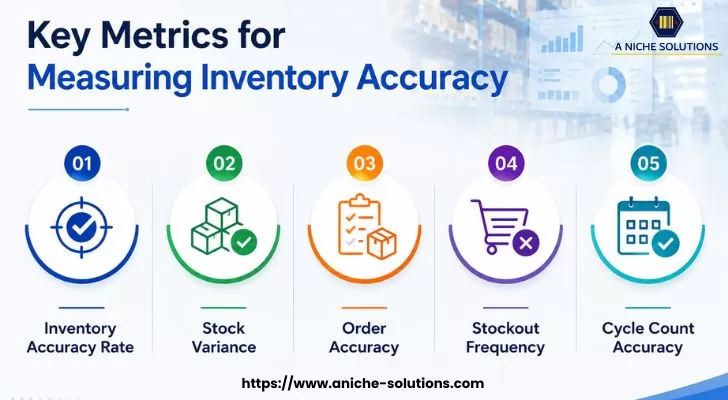
What Is a Good Inventory Accuracy Rate?
There is no single inventory accuracy rate that fits every business. The ideal rate depends on factors such as inventory volume, product variety, and operational requirements. In general, higher accuracy leads to better inventory control and fewer stock-related issues.
Below 90% Accuracy – Indicates significant inventory problems. Businesses at this level may experience frequent stock discrepancies, stockouts, overstocking, and order fulfillment issues.
90% to 95% Accuracy – Considered average performance. Inventory records are reasonably reliable, but there is still room for improvement to reduce errors and operational inefficiencies.
95% to 98% Accuracy – Considered a good inventory accuracy rate. Most businesses target this range because it supports efficient inventory management and smooth order processing.
98% to 99% Accuracy – Represents excellent inventory control. Businesses with this level of accuracy typically use standardized processes, regular cycle counts, and technology-driven inventory tracking.
Above 99% Accuracy – Considered best-in-class performance. This level is often achieved by organizations using advanced inventory accuracy solutions such as barcode scanning, RFID systems, and automated inventory management tools.
How to Improve Inventory Accuracy?
Businesses that want to improve inventory accuracy need a combination of good warehouse practices, clear processes, and the right technology. While software helps maintain accurate records, daily warehouse operations also play an important role in preventing inventory errors.
Cycle Counting
Cycle counting is one of the most effective ways to improve inventory accuracy. Instead of counting all inventory at once, businesses regularly check selected products or storage locations. This approach helps identify discrepancies early and allows teams to correct errors before they affect operations.
Standardized Procedures
Well-defined processes for receiving, storing, picking, packing, and shipping inventory help maintain consistent inventory records. When employees follow the same procedures for every inventory transaction, the chances of recording mistakes and stock discrepancies are reduced.
Workforce Training
Warehouse employees interact with inventory every day, making proper training essential. Staff should understand inventory handling procedures, data entry requirements, and inventory control practices. A well-trained workforce can significantly improve inventory accuracy and reduce operational errors.
Barcode and RFID Technology
Barcode scanners and RFID systems help businesses track inventory more accurately. These technologies reduce manual data entry, improve product identification, and provide better visibility into inventory movements throughout the warehouse.
Warehouse Management System (WMS)
A warehouse management system acts as a powerful inventory accuracy solution by tracking inventory locations, recording stock movements, and updating inventory records in real time. With better inventory visibility and automated processes, businesses can reduce discrepancies and maintain higher inventory accuracy levels.
Common Causes of Inventory Inaccuracy
Inventory inaccuracies can occur for many reasons. Even small mistakes in daily operations can create differences between physical inventory and system records. Identifying the root causes is the first step toward improving inventory accuracy.
Manual Data Entry Errors
Employees may enter incorrect quantities, product codes, or transaction details while updating inventory records. These mistakes can accumulate over time and lead to inventory discrepancies.
Receiving and Shipping Mistakes
Errors during receiving or shipping can affect inventory records. Products may be counted incorrectly, entered into the system with the wrong quantity, or shipped without being properly recorded.
Misplaced Inventory
Items are sometimes stored in the wrong location within the warehouse. When products cannot be found where the system says they should be, inventory accuracy suffers even though the stock is physically present.
Lack of Regular Inventory Checks
Businesses that do not perform cycle counts or inventory audits may fail to identify discrepancies for long periods. Small errors can grow into larger inventory problems if they remain unnoticed.
Damaged, Lost, or Stolen Inventory
Damaged products, misplaced stock, and inventory theft can create differences between actual inventory and recorded inventory levels. If these incidents are not reported promptly, inventory records become inaccurate.
Poor Inventory Management Processes
Unclear procedures for inventory handling, storage, and stock movement can lead to inconsistent recordkeeping. Without proper controls, inventory errors become more frequent and difficult to track.
How Inventory Accuracy Is Measured
Inventory accuracy is measured by comparing the quantity recorded in the inventory system with the actual quantity found during a physical inventory count. This comparison helps businesses determine whether their inventory records accurately reflect the stock available in the warehouse.
The most common method is to conduct a physical count or cycle count and then match the results against system records. If the physical inventory and recorded inventory are the same, the inventory is considered accurate. Any difference is recorded as a discrepancy and investigated further.
Inventory Accuracy Formula
Inventory Accuracy (%) = (Number of Accurate Inventory Records ÷ Total Inventory Records Checked) × 100
Example
Suppose a warehouse checks 1,000 inventory records during a cycle count. Out of those, 970 records match the actual inventory quantities.
Inventory Accuracy = (970 ÷ 1,000) × 100 = 97%
This means the warehouse has an inventory accuracy rate of 97%.
Businesses usually measure inventory accuracy regularly through cycle counts, physical audits, and warehouse management systems. Tracking this inventory accuracy KPI helps identify trends, reduce inventory errors, and improve overall inventory control over time.
Real-World Inventory Accuracy Case Study
A consumer goods company managing thousands of products across its warehouse was struggling with inventory accuracy issues. The inventory records in its system often did not match the actual stock available on warehouse shelves. This created challenges in order processing, inventory planning, and stock replenishment.
After reviewing its operations, the company found that most discrepancies were caused by manual data entry errors, missed inventory updates, and irregular stock verification. To address these issues, the company started performing weekly cycle counts, implemented barcode scanning for inventory transactions, and established standard procedures for receiving and shipping goods.
The results were noticeable within a short period. Inventory records became more reliable, stock discrepancies decreased, and warehouse teams spent less time searching for misplaced products. The company also improved order fulfillment performance because employees could trust the inventory data available in the system.
This case highlights how regular inventory checks, accurate inventory tracking, and strong warehouse processes can improve inventory accuracy and support better business operations.
Improve Inventory Accuracy With A'Niche Solutions
Maintaining accurate inventory records becomes much easier when businesses have access to the right inventory management tools. A'Niche Solutions Inventory Management helps organizations gain better control over stock by providing real-time visibility into inventory movements, quantities, and storage locations. This allows teams to make faster decisions based on accurate and up-to-date inventory data.
The solution supports automated inventory tracking, barcode-based operations, inventory monitoring, and detailed reporting capabilities. By reducing dependence on manual processes, businesses can minimize recording errors, improve stock visibility, and maintain more reliable inventory records across warehouses and distribution centers.
Inventory accuracy is not just about keeping numbers correct in a system. It directly affects order fulfillment, inventory planning, customer satisfaction, and operational efficiency. With the right processes and technology in place, businesses can reduce inventory discrepancies, improve productivity, and build a stronger foundation for long-term growth.
FAQ
1. Why is inventory accuracy important for customer satisfaction?
Accurate inventory records help businesses confirm product availability and process orders correctly. This reduces order cancellations, shipping delays, and backorders, leading to a better customer experience.
2. What industries benefit the most from inventory accuracy?
Inventory accuracy is important for many industries, including retail, e-commerce, manufacturing, wholesale distribution, healthcare, and logistics. Any business that stores and manages inventory can benefit from accurate stock records.
3. How often should inventory accuracy be checked?
The frequency depends on business size and inventory volume. Many organizations perform cycle counts weekly or monthly, while others conduct full inventory audits quarterly or annually.
4. Can inventory inaccuracies affect business profitability?
Yes. Inventory inaccuracies can lead to lost sales, excess inventory, emergency purchases, wasted labor, and higher operational costs. Accurate inventory data helps businesses control expenses and improve profitability.
5. What role does automation play in inventory management?
Automation reduces manual work and helps maintain accurate inventory records. Technologies such as barcode scanning, RFID, and warehouse management systems can track inventory movements and update stock levels automatically.
6. What should businesses do when inventory discrepancies are found?
Businesses should investigate the cause of the discrepancy, correct the inventory records, and review warehouse processes to prevent similar issues from occurring in the future.
Conclusion
Inventory accuracy is a key part of effective inventory management. Accurate inventory records help businesses maintain optimal stock levels, fulfill customer orders on time, reduce operational costs, and make informed business decisions. Even small improvements in inventory accuracy can have a positive impact on overall warehouse and supply chain performance.
Businesses can improve inventory accuracy by implementing regular cycle counts, standardizing warehouse processes, training employees, and using technologies such as barcode scanning, RFID, and warehouse management systems. By focusing on accurate inventory tracking and continuous process improvement, companies can reduce discrepancies and build a more efficient inventory management operation.