
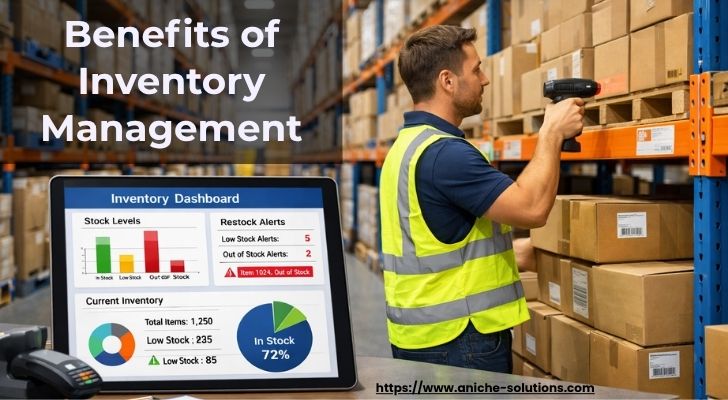
Inventory plays a very important role in any business. Whether you are dealing with raw materials, finished goods, or daily stock, proper tracking is necessary. Without a clear system, businesses often face problems like overstocking, stock shortages, and delays in order fulfillment.
A well-planned inventory management system helps businesses keep control over their stock. It gives clear visibility of what is available, what needs to be ordered, and what is moving fast. This is why many companies are now focusing on the benefits of inventory management system to improve their daily operations.
With the use of modern tools, businesses can also reduce manual work and avoid errors. In this blog, we will understand how inventory management systems work and why they are important for different types of businesses.
What Is Inventory Management?
Inventory management is the process of handling and controlling a company’s stock. It includes tracking raw materials, work-in-progress items, and finished goods from the time they enter the warehouse until they are sold or used.
A proper system helps businesses know the exact quantity of stock at any given time. It also helps in updating stock levels after every sale, purchase, or return. This keeps the records accurate and avoids confusion.
Businesses use inventory management to maintain the right balance of stock. Too much stock can block money and storage space, while too little stock can lead to missed sales and unhappy customers. Today, many companies use software-based systems instead of manual methods. These systems make it easier to track inventory in real time and reduce human errors.
Top 10 Benefits of Inventory Management
A strong inventory system is not just about tracking stock. It helps in managing daily operations, reducing losses, and improving overall business performance. Below are the detailed benefits of inventory management software explained in a clear and practical way.
1. Better Stock Control
Stock control becomes much easier when everything is recorded in one system. Businesses can see the exact quantity of each item without checking physically every time.
It also helps in tracking stock movement from purchase to sale. Every entry like goods received, items sold, damaged stock, or returned products is recorded properly. This creates a clear flow of information.
Multi-location businesses get even more value. They can track stock across different warehouses or stores from a single dashboard. This avoids confusion and keeps operations smooth.
2. Reduces Overstock and Stock Shortage
Many businesses lose money because of poor stock balance. Extra stock increases storage cost and blocks working capital. Low stock leads to missed sales and unhappy customers.
Inventory systems solve this problem by giving alerts and reorder suggestions. Businesses can set minimum stock levels, so they get notified before stock runs out.
It also helps identify slow-moving items. This allows businesses to stop ordering such products or run offers to clear them. At the same time, fast-moving items can be restocked quickly to avoid shortages.
3. Saves Time and Improves Work Efficiency
Manual stock handling takes a lot of time. Staff need to update records, check stock levels, and match physical stock with data.
Inventory software automates most of these tasks. Stock updates happen instantly after every transaction. Reports can be generated in seconds instead of hours.
Employees can focus on more important work like customer service or sales. This improves overall productivity and reduces workload pressure.
4. Improves Accuracy and Reduces Errors
Manual systems often lead to mistakes like wrong entries, duplicate records, or missing data. These errors can create serious problems in order processing and stock planning.
Inventory systems reduce such risks by automating data entry and using barcode scanning. Each product is tracked properly, and chances of error are very low.
Accurate data helps in smooth operations. It also avoids confusion between teams like sales, warehouse, and accounts.
5. Better Demand Forecasting and Planning
To understand customer demand is essential for business growth. Inventory software keeps past sales data and shows clear trends.
Businesses can check which products sell more during certain months or seasons. This helps in planning purchases in advance.
It reduces dependency on guesswork. Companies can order the right quantity based on actual demand, which leads to better stock management and improved sales.
6. Faster Order Processing and Fulfillment
Order processing becomes faster when stock information is updated in real time. Teams can quickly check product availability and confirm orders.
Warehouse staff can pick and pack items faster because everything is organized. This reduces delays and improves delivery speed.
Customers receive their orders on time, which builds trust. Fast service also increases the chances of repeat purchases.
7. Better Cost Management
Inventory systems help control different types of costs. Businesses can track spending on purchasing, storage, handling, and transportation.
It reduces unnecessary buying and avoids overstocking. It also helps in identifying products that are not generating profit.
Dead stock can be cleared before it causes major loss. This improves cash flow and ensures money is used in the right way.
8. Real-Time Visibility and Tracking
One of the biggest advantages is real-time tracking. Businesses can check stock levels anytime without waiting for reports.
Every transaction is updated instantly, whether it is a sale, return, or purchase. This gives a clear and current view of inventory.
Owners and managers can monitor stock from anywhere. This is very useful for businesses with multiple locations or large operations.
9. Improved Warehouse Operations
A well-managed inventory system helps in organizing the warehouse properly. Products are stored in fixed locations, which makes them easy to find.
It improves picking, packing, and dispatch processes. Staff do not waste time searching for items.
It also reduces handling errors and improves coordination between teams. This leads to faster operations and better use of warehouse space.
10. Data-Driven Business Decisions
Inventory systems provide detailed reports and insights. Businesses can analyze sales trends, stock movement, and product performance.
These insights help in making better decisions related to purchasing, pricing, and stock planning. It also helps in identifying profitable products.
Good data supports long-term planning and business growth. It allows business owners to take decisions with confidence instead of relying on assumptions.
Benefits of ERP-Integrated Inventory Management Software
Inventory management works much better when it is connected with an ERP system. It brings all business functions together and removes the gap between different departments. Below are the key benefits explained in detail.
1. Centralized Data and Single System Control
All business data stays in one system when inventory is integrated with ERP. There is no need to maintain separate records for stock, sales, or purchase.
This makes it easy to access information anytime. Everyone in the business works on the same data, which reduces confusion and improves overall control. It also helps management get a complete view of operations without checking multiple systems.
2. Real-Time Updates Across All Departments
Every transaction updates the system instantly. When a sale is made, stock levels change automatically. When new stock is purchased, it gets updated without delay.
These updates are visible to all departments at the same time. Sales teams, warehouse staff, and finance teams all see the same information. This avoids data mismatch and helps in faster decision-making.
3. Better Coordination Between Teams
Different departments depend on inventory data to perform their tasks. Sales teams need stock availability, purchase teams need reorder data, and warehouse teams manage stock movement.
ERP integration connects all these teams in one system. This improves communication and ensures that everyone is working with correct information. It also reduces delays caused by manual communication or data sharing.
4. Improved Financial Management
Inventory is directly linked with accounting in an ERP system. Every purchase and sale automatically updates financial records.
Businesses can track stock value, cost of goods, and profit margins easily. This gives a clear understanding of where money is being spent. It also helps in preparing financial reports and managing cash flow more effectively.
5. Better Planning and Forecasting
ERP systems store detailed data related to sales and inventory. This helps businesses understand demand patterns and plan accordingly.
Companies can decide how much stock to order and when to order it. This reduces the chances of overstocking or stock shortages. It also supports long-term planning and helps businesses stay prepared for future demand.
6. Reduced Manual Work and Higher Efficiency
Manual data entry is reduced because all processes are connected. Once data is entered in one place, it is updated across the system automatically.
This saves time for employees and reduces chances of errors. Teams can focus more on important tasks instead of handling repetitive work.
How to Select the Right Inventory Management System
The right inventory management system ensures smooth business operations. Start by understanding your business needs. Small businesses may require basic features, while larger operations might need advanced tracking, reporting, and multi-location support. Pick a system that matches the type of inventory, number of products, and scale of operations. A simple and easy-to-use interface helps employees work efficiently without errors.
Real-time tracking and system integration make operations faster and more accurate. Stock levels update instantly after each sale or purchase. Integration with ERP, accounting, and sales software reduces manual work and ensures all teams have the same accurate information. This improves coordination and supports better decision-making.
Scalability, reporting, and support play a key role in long-term use. The system should handle more products, users, and locations as your business grows. Clear reports provide insights into stock movement, sales trends, and overall business performance. Reliable customer support and proper training help your team use the system effectively and resolve any issues quickly.
Industry Applications of Inventory Management Systems
Inventory management systems play a vital role across many industries. They help businesses track stock accurately, reduce losses, improve operations, and make better decisions. Here are some common applications in detail:
Retail Industry
Retail stores and supermarkets use inventory management systems to handle both shelves and warehouse stock. The system tracks fast-selling products, prevents stockouts, and ensures that popular items are always available for customers. It also helps in planning promotions, seasonal sales, and restocking, reducing lost sales and increasing customer satisfaction.
Manufacturing
Factories rely on inventory systems to manage raw materials, work-in-progress items, and finished goods. This ensures production lines are never halted due to missing materials. The system also helps in planning production schedules, reducing waste, and optimizing storage space. By monitoring inventory levels, manufacturers can improve efficiency and reduce operational costs.
E-commerce
Online businesses depend heavily on real-time inventory data. Inventory systems update stock across multiple sales channels automatically, helping businesses process orders faster and handle returns efficiently. They also prevent overselling, manage backorders, and allow better coordination between warehouses and shipping partners, ensuring timely delivery to customers.
Healthcare
Hospitals, clinics, and pharmacies use inventory systems to manage medicines, medical equipment, and supplies. Accurate tracking prevents shortages of essential items, ensures compliance with regulations, and maintains safety standards. It also helps in managing expiration dates, automating reorder alerts, and reducing wastage of critical supplies.
Food and Beverage
Restaurants, catering services, and food suppliers use inventory management to monitor perishable items. The system helps plan purchases, track consumption trends, and minimize waste by alerting staff about approaching expiration dates. This ensures fresh ingredients are always available and reduces losses from expired or unused stock.
How Aniche Solutions Improves Inventory Management Efficiency
Aniche Solutions provides inventory management systems that help businesses track stock accurately and reduce mistakes. The system shows real-time stock levels across multiple locations, preventing overstocking, shortages, and lost sales. Automated alerts also make it easy to maintain the right inventory without constant manual checks.
Integration with sales, purchasing, and accounting ensures all departments work with the same accurate data. This improves coordination, reduces repetitive tasks, and keeps operations smooth. Real-time updates allow faster decisions and better management of daily operations.
Detailed reports and analytics give insights into stock movement, sales trends, and product performance. Businesses can plan purchases effectively, control storage costs, and increase efficiency. The system is scalable, supporting more products, users, and locations as the business grows.
FAQ
1. Why is inventory management important?
Proper inventory management prevents stock shortages and overstocking. It helps reduce costs, improve efficiency, and ensures smooth operations.
2. Can inventory management software integrate with other systems?
Yes. Most systems can integrate with ERP, accounting, and sales software. This allows all departments to work with the same accurate data.
3. How does inventory management save time?
Automated updates, alerts, and reports reduce manual work. Employees spend less time checking stock or entering data, allowing them to focus on other tasks.
4. Is inventory management useful for small businesses?
Absolutely. Even small businesses benefit from accurate stock tracking, reduced errors, and better planning, which saves money and improves efficiency.
Conclusion
An effective inventory management system helps businesses stay organized, reduce costs, and improve efficiency. It provides real-time stock visibility, accurate tracking, and better planning for purchases and sales.
Integration with other business processes, like sales, purchasing, and accounting, makes operations smoother by connecting departments, reducing manual work, and giving detailed insights into stock and sales trends. Businesses can avoid overstocking, prevent shortages, and make smarter decisions based on accurate data.
Overall, using the right inventory management system supports growth, improves customer satisfaction, and strengthens operational control. It is an essential tool for businesses of all sizes to manage their stock efficiently and run operations smoothly.