
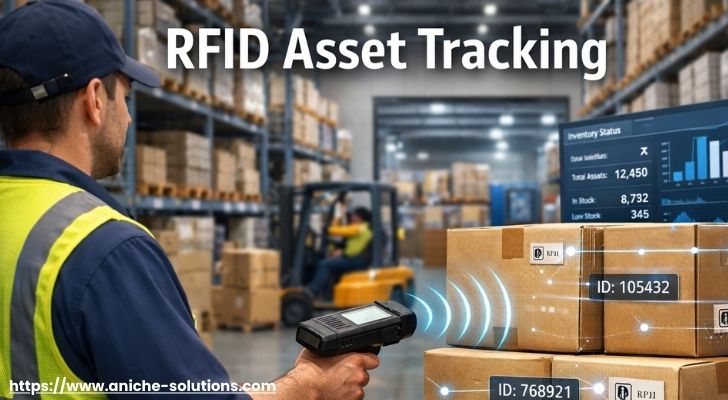
Many businesses struggle to keep track of their assets. Equipment, inventory, and tools can get lost or misplaced, causing delays and extra costs. An RFID asset tracking system provides a reliable way to monitor assets at all times.
RFID asset tracking software helps businesses know the exact location and condition of every item. It reduces mistakes, prevents theft, and saves time spent on manual checks. Companies across industries like healthcare, logistics, and manufacturing use RFID for asset tracking to improve efficiency and maintain accurate records.
In this blog, you will understand what RFID asset tracking is, how it works, the key components of a system, and how it can benefit your business. You will also learn how to choose the right RFID asset tracking solutions and see examples of its uses in real business settings.
What Is RFID Asset Tracking?
RFID asset tracking is a method to monitor and manage business assets using radio frequency identification technology. Each asset gets an RFID tag that stores information about the item. A reader scans the tag to identify and track the asset automatically.
This system allows businesses to know the location, movement, and status of their assets in real-time. RFID for asset tracking is more efficient than manual checks and reduces errors. With RFID asset tracking software, companies can maintain accurate records, prevent losses, and make better decisions about asset use.
RFID asset tracking solutions are used in warehouses, offices, hospitals, and factories. They help businesses save time, reduce costs, and keep operations organized without constant manual monitoring.
How RFID Tracking Works?
RFID tracking uses tags, readers, antennas, and software to monitor assets in real-time. Each asset receives an RFID tag that stores a unique identification code and information about the item. Tags can be passive, which get power from the reader, active with their own battery, or semi-passive, which uses a battery for the chip but relies on the reader for communication.
When an asset comes within range, the antenna detects the tag’s signal. The RFID reader collects the information from the tag through the antenna and sends it to the asset tracking software. This software records the data in a database, showing the asset’s location, movement, and status. Businesses can access this information easily to manage resources, generate reports, and make informed decisions.
Using RFID for asset tracking makes monitoring assets faster and more accurate than manual methods. It reduces human errors, prevents loss, and helps businesses save time. Choosing the right combination of tags, readers, antennas, and software ensures the system works efficiently and meets specific business needs.
Key Components of an RFID Asset Tracking System
An RFID asset tracking system works effectively only when all its components function together. The main parts include:
1. RFID Tags
Tags are small devices attached to assets. They store information like a unique ID, item type, or location history. Passive tags rely on readers for power, active tags have their own battery, and semi-passive tags combine both features. Choosing the right type of tag depends on the asset and tracking needs.
2. Antennas
Antennas send and receive radio signals from RFID tags. They play a key role in detecting and reading the tags. The placement and type of antenna affect the accuracy and range of asset tracking.
3. RFID Readers
Readers gather data from the tags through the antenna. They can be fixed at specific points, like entry gates, or portable to scan assets in different areas. Readers transmit collected data to the software for processing.
4. Asset Tracking Software
This software stores all asset data collected by readers. It allows businesses to view real-time asset locations, track movement, generate reports, and manage inventory efficiently. Using RFID asset tracking software reduces manual work and improves accuracy.
5. Database
A secure database keeps all information organized and accessible. It stores the history of asset movements, usage, and current status. Integration with other systems, like warehouse management or inventory control, adds extra value.
Benefits of RFID Asset Tracking Software
Keeping track of assets manually can take a lot of time and can cause mistakes. RFID asset tracking software helps businesses check all their assets quickly and accurately. It also helps save time, keep items safe, and plan work better.
Accurate Asset Records
RFID asset tracking software keeps exact records of all assets. Each item has a unique RFID tag, which the system reads automatically. This reduces mistakes that happen with manual tracking and keeps information up-to-date. Managers can see which assets are in use, stored, or under repair.
Faster Work
With RFID for asset tracking, managers can see where assets are and their status without checking each item by hand. This saves time and lets employees do other tasks. Tracking items quickly helps work run smoothly in warehouses, offices, and factories.
Better Security
The system helps keep assets safe from theft or loss. It can send alerts if an item moves from its place or leaves a certain area. Valuable tools and equipment can be watched easily, giving managers control over company property.
Easier Planning
Knowing where assets are and how they are used helps businesses plan maintenance and use resources correctly. It avoids unnecessary purchases, reduces downtime, and makes daily work easier to manage.
Useful Information for Decisions
The software shows reports about asset use and movement. Businesses can see which items are used most, which are idle, and make decisions based on real data. This helps in keeping work organized and saving money.
What Are the Different Types of RFID Tags?
RFID tags are small devices attached to assets to store information. They play a key role in RFID asset tracking systems, and different types of tags suit different needs.
Passive RFID Tags
Passive tags do not have their own power source. They get energy from the RFID reader to send information. These tags are small, lightweight, and cost-effective. They are suitable for tracking items over short distances, like in warehouses or offices.
Active RFID Tags
Active tags have their own battery, which allows them to send signals continuously. They work over longer distances and are used for high-value or large assets. Active tags are ideal for tracking vehicles, machinery, or items that move across large areas.
Semi-Passive RFID Tags
Semi-passive tags have a battery for powering the chip but rely on the reader for communication. They combine features of passive and active tags. These tags are often used in environments where assets need both longer detection range and lower costs.
Specialty RFID Tags
Some tags are designed for specific conditions. For example, there are tags that can withstand heat, water, or chemicals. Specialty tags are used in industries like manufacturing, healthcare, and agriculture where assets may face harsh conditions.
RFID vs Other Asset Tracking Methods (Barcode, NFC, BLE, GPS)
There are several ways to track assets, and RFID is just one option. Comparing it with other methods helps businesses choose the best solution.
1. RFID vs Barcode
Barcodes need to be scanned manually and must be visible to the scanner. RFID for asset tracking does not require line-of-sight. It can read multiple items at once and works even if the tag is hidden or dirty. This makes RFID faster and more efficient than barcodes.
2. RFID vs NFC (Near Field Communication)
NFC tags work only over very short distances, usually a few centimeters. RFID tags, especially active ones, can be read from several meters away. RFID asset tracking systems are better for monitoring assets across larger areas.
3. RFID vs BLE (Bluetooth Low Energy)
BLE tracking uses battery-powered beacons and works over medium distances. It is good for tracking people or high-value items indoors. RFID asset tracking software can work with both short-range and long-range tags, giving more flexibility and real-time monitoring.
4. RFID vs GPS
GPS works well outdoors and for mobile assets like vehicles. It does not work well indoors and can be expensive. RFID for asset tracking works both indoors and outdoors, making it suitable for warehouses, offices, and factories.
How to Choose the Right RFID Tracking System for Assets
Selecting the right RFID tracking system is important to get accurate results and save costs. Not all systems work the same, and the choice depends on the type of assets, environment, and business needs.
Identify Your Asset Types
The first step is to know what assets you want to track. Small items, heavy machinery, or mobile equipment may need different types of RFID tags. Knowing the asset type helps decide whether to use passive, active, or semi-passive tags.
Consider the Environment
The system should work well in your workplace. For example, warehouses, factories, and outdoor areas may have dust, heat, or metal that can affect RFID signals. Choosing a system that suits your environment ensures reliable tracking.
Decide the Tracking Range
Some assets move only within a small area, while others travel long distances. Passive tags work for short ranges, and active tags are better for longer distances. The range will affect which readers and antennas you need.
Check Software Features
The RFID asset tracking software should provide real-time monitoring, reports, and easy access to data. Look for features like alerts for missing assets, inventory management, and integration with other business systems.
Evaluate Costs
Consider both hardware and software costs. Active tags may cost more but are needed for large or high-value assets. Passive tags are cheaper and work for smaller items. Balancing cost and functionality is key to a good system.
Different Uses of RFID Asset Tracking
RFID asset tracking is a versatile solution used in many industries to manage assets efficiently, reduce errors, and save time. Its applications vary depending on the type of business and the assets being tracked.
Warehouses and Inventory Management
Warehouses use RFID for asset tracking to monitor stock levels in real-time. RFID tags attached to products help managers find items quickly and reduce the risk of misplaced or missing stock.
Many businesses connect RFID asset tracking software with their warehouse management system. This connection allows automatic stock updates, faster order processing, and better control over inventory movement. As a result, warehouse teams can manage large volumes of products more efficiently without depending on manual stock checks.
Manufacturing and Production
In manufacturing plants, RFID tags track equipment, machinery, and raw materials throughout the production process. This ensures that assets are in the right location at the right time. With RFID asset tracking systems, managers can monitor tool usage, schedule maintenance, and reduce downtime caused by missing or unavailable resources.
Healthcare and Medical Equipment
Hospitals and clinics use RFID asset tracking solutions to manage medical devices, surgical instruments, and patient care equipment. The system helps locate critical items quickly, ensuring that doctors and nurses have the tools they need. It also tracks usage history and maintenance schedules, which improves safety and operational efficiency.
Office Equipment and IT Assets
Companies use RFID for asset tracking to manage office assets like laptops, printers, servers, and furniture. The system provides a clear record of who is using each asset and where it is located. This reduces the risk of loss, prevents unnecessary purchases, and helps IT teams maintain accurate hardware inventories.
Transportation and Logistics
RFID asset tracking is widely used to monitor shipments, vehicles, and cargo in transit. Businesses can track the exact location of shipments in real-time, ensuring timely deliveries and reducing the risk of lost or delayed goods. Integrating RFID asset tracking software with logistics systems also helps optimize routes and manage fleets more efficiently.
Agriculture and Livestock Management
Farmers use RFID tags to track livestock, equipment, and crops. Tags can store information about an animal’s health, location, and movement. This helps farmers monitor growth, manage breeding programs, and prevent loss of livestock. Similarly, farm equipment can be tracked for maintenance and usage history, making operations more organized.
Libraries and Retail
Libraries use RFID asset tracking to manage books, media, and equipment. It allows quick check-in/check-out and prevents misplaced items. Retail stores use RFID to track products on shelves, reduce theft, and manage inventory more efficiently.
How A’ Niche Solutions’ RFID Asset Management System Supports Businesses
A’ Niche Solutions provides a complete RFID asset tracking system that helps businesses manage assets easily. Using RFID tags, readers, antennas, and asset tracking software, the system gives real-time information about the location and status of every asset. Businesses can track equipment, inventory, and office items, reducing the risk of loss and ensuring smooth daily operations.
The system automatically updates records as assets are used or moved, keeping information accurate without manual effort. Alerts notify staff if items move outside designated areas or need maintenance. Managers can also generate reports to check asset usage, schedules, and availability, making it easier to plan and control resources effectively.
This solution works across multiple industries, including manufacturing, healthcare, logistics, offices, agriculture, and retail. It can track everything from small tools to large machinery accurately. Using A’ Niche Solutions’ RFID asset tracking software, businesses save time, prevent errors, maintain control over assets, and make better decisions with real-time data.
FAQ
1. Can RFID be used for tracking?
Yes, RFID can be used to track assets, inventory, and equipment. It helps businesses know the exact location and status of items at all times.
2. Can RFID track items in real-time?
Yes, RFID asset tracking systems provide real-time updates. Managers can see asset movements instantly without manual checks.
3. Which is better, RFID or NFC?
RFID is better for tracking multiple items over longer distances, while NFC works well for short-range or individual item tracking.
4. Why is RFID so expensive?
RFID systems can be costly because they require tags, readers, antennas, and software. The setup ensures accurate and automated asset tracking.
5. What will replace RFID?
Technologies like GPS, BLE, and IoT sensors may complement or replace RFID in certain situations. They work well for mobile assets and larger networks.
Conclusion
RFID asset tracking systems make managing assets easier and more reliable for businesses. Using RFID for asset tracking, companies can monitor inventory, equipment, and resources in real-time, reducing errors and saving time.
The system combines RFID tags, readers, antennas, and asset tracking software to provide accurate data about every asset. Businesses across industries like manufacturing, healthcare, logistics, offices, and agriculture benefit from improved control and visibility of their resources.
A good RFID asset tracking system helps businesses monitor assets efficiently, plan maintenance, and make decisions based on real data. With RFID asset tracking solutions, businesses can save costs, prevent losses, and manage operations more effectively.