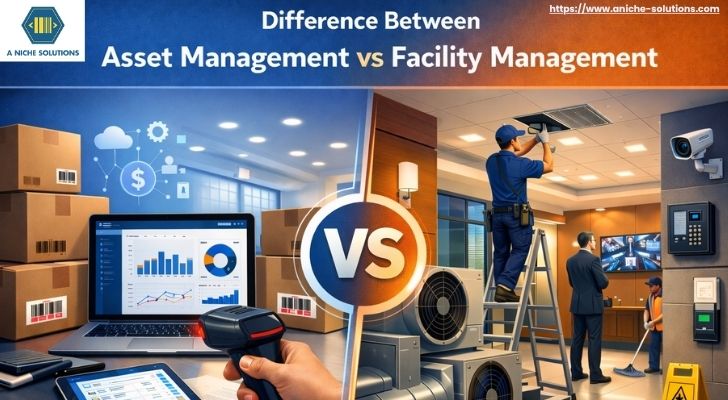
Businesses today manage many things at the same time buildings, equipment, people, and daily operations. In this process, two terms are often used: asset management and facility management. Many people think both are the same, but they serve different purposes.
Asset management focuses on tracking and maintaining valuable items like machines, tools, and IT systems. It helps companies get the best value from these assets over time. On the other side, facility management looks after the workplace itself. It deals with buildings, maintenance, safety, and making sure everything runs smoothly for employees.
Understanding the difference between asset management vs facility management helps businesses plan better, reduce costs, and avoid confusion in operations.
What is Asset Management?
Asset management is the process of handling a company’s physical and digital assets in a proper way. These assets can include machines, equipment, vehicles, computers, and even software. The main goal is to use these assets in the best possible way and get maximum value from them using an asset management system.
Every business depends on its assets for daily work. If these assets are not tracked or maintained properly, it can lead to breakdowns, delays, and extra costs. Asset management helps in keeping a clear record of what assets are available, where they are located, and what condition they are in.
It also includes planning for repairs, maintenance, and replacement. This helps companies avoid sudden failures and keeps operations running without interruption. In simple words, asset management makes sure that all important resources are used efficiently and last longer.
Key Component of Asset Management
Asset management includes several important parts that help businesses keep control over their assets and use them properly.
Asset Tracking : Companies keep a record of all assets, including their location and usage. This helps avoid loss and confusion.
Asset Lifecycle Management : Every asset has a life cycle, from purchase to disposal. Managing each stage properly helps in better planning and cost control.
Maintenance Management : Regular maintenance keeps assets in good condition. It reduces the chances of sudden breakdowns and increases asset life.
Inventory Control : Proper tracking of spare parts, materials, and equipment ensures that nothing is missing when needed. This also works better when connected with an inventory management system for accurate stock tracking and availability.
Risk Management : Assets can face risks like damage or failure. Planning in advance helps reduce losses and keeps operations stable.
Data and Reporting : Reports help businesses understand asset performance. This makes decision-making easier and more accurate.
Types of Asset Management
Asset management can be divided into different types based on the kind of assets a business handles. Each type focuses on managing specific resources in a proper way.
Physical Asset Management : This includes machines, equipment, vehicles, and tools. Businesses track their usage, condition, and maintenance to avoid breakdowns and delays.
IT Asset Management : This type deals with computers, software, servers, and other digital systems. It helps in tracking software licenses, system updates, and overall IT performance.
Financial Asset Management : This focuses on investments like stocks, bonds, and funds. Companies use it to manage their financial growth and reduce risks.
Infrastructure Asset Management : This includes roads, buildings, power systems, and other large structures. It is mainly used by industries like construction and public services.
Enterprise Asset Management (EAM) : This is a complete system that manages all types of assets in one place. It helps businesses handle operations, maintenance, and asset tracking together.
Benefits of Asset Management
Asset management gives better control over all business resources and helps in smooth operations. When assets are handled properly, companies can save money and avoid many common issues.
Better Use of Assets : Asset management helps businesses understand how their assets are being used. It becomes easier to identify unused or underused equipment. With proper tracking, companies can make sure every asset is used in the right way and at the right time. This improves overall productivity and avoids waste.
Lower Maintenance and Repair Costs : Regular monitoring and planned maintenance reduce the chances of sudden breakdowns. Small issues can be fixed early before they turn into bigger problems. This helps in saving repair costs and also avoids emergency expenses that can affect the budget.
Longer Asset Life : When assets are maintained properly, they last longer. Regular servicing, proper handling, and timely upgrades keep assets in good condition. This reduces the need for frequent replacements and helps businesses get full value from their investments.
Better Planning and Decision Making : Asset management provides clear data about asset performance, condition, and usage. This information helps managers make better decisions related to purchase, replacement, or upgrades. It also supports future planning and budget management in a more accurate way.
What is Facility Management?
Facility management is the process of managing and maintaining a company’s physical workspace. It includes buildings, office spaces, infrastructure, and all the services required to keep the workplace running smoothly.
Every business needs a safe and well-managed environment for employees and daily operations. Facility management takes care of things like cleaning, security, maintenance, electricity, and space planning. It makes sure that everything inside the workplace works properly without any interruption.
It also focuses on creating a comfortable and safe environment for employees. When facilities are managed well, employees can focus on their work without facing issues like equipment failure or unsafe conditions.
Key Component of Facility Management
Facility management includes different activities that help keep the workplace safe, clean, and fully functional. Each component plays an important role in daily operations.
Maintenance Management : Regular maintenance of buildings, electrical systems, plumbing, and equipment is very important. It helps in avoiding sudden issues and keeps everything working properly.
Space Management : Companies need to use their office space in the best way. Proper planning of seating, work areas, and storage helps improve productivity and avoids overcrowding.
Safety and Security : Workplace safety is a major concern. Facility management includes fire safety, emergency planning, and security systems like CCTV and guards to protect people and assets.
Cleaning and Housekeeping : Clean workplaces create a better working environment. Regular cleaning, waste management, and hygiene practices are part of facility management.
Utility Management : Managing electricity, water supply, air conditioning, and other utilities is important for smooth operations. It also helps in controlling costs and reducing wastage.
Types of Facility Management
Facility management can be divided into different types based on the kind of services involved. Each type focuses on maintaining the workplace in a proper and organized way.
Hard Facility Management : This type deals with physical infrastructure and technical systems. It includes maintenance of electrical systems, plumbing, HVAC (heating, ventilation, and air conditioning), and building structure. These services are necessary for the basic functioning of any facility.
Soft Facility Management : This focuses on services that improve the working environment. It includes cleaning, housekeeping, security, catering, and waste management. These services support employee comfort and day-to-day operations.
Integrated Facility Management (IFM) : In this type, all facility services are managed under one system or provider. It helps businesses handle everything from maintenance to support services in a more organized way.
Benefits of Facility Management
Facility management plays an important role in keeping the workplace organized and running without issues. It helps businesses manage their space, services, and daily operations in a better way.
Safe and Comfortable Workplace: Facility management ensures that the office or work environment is clean, safe, and well-maintained. Proper lighting, ventilation, fire safety systems, and regular inspections reduce risks. Employees feel more comfortable working in a space where everything is managed properly, which also supports their focus and performance.
Smooth Daily Operations : Daily business activities depend on basic services like electricity, water, internet, and equipment. Facility management makes sure all these services work without interruption. Timely maintenance and quick issue handling prevent delays and keep work on track.
Better Cost Control : Planned maintenance and proper resource usage help in reducing unnecessary expenses. Facility management avoids sudden repair costs by fixing small issues early. It also helps in managing energy usage, which lowers utility bills over time.
Improved Space Utilization : Proper use of available space is very important for any business. Facility management helps in planning office layout, seating arrangements, and storage areas. This avoids overcrowding and ensures that every part of the workspace is used effectively.
Asset Management vs Facility Management : Key Differences
Many businesses use both systems, but there is still confusion around asset management vs facility management. Both are important, but they work in different areas. Understanding this difference helps in better planning and avoiding operational gaps.
Here are the key differences explained in a more detailed way:
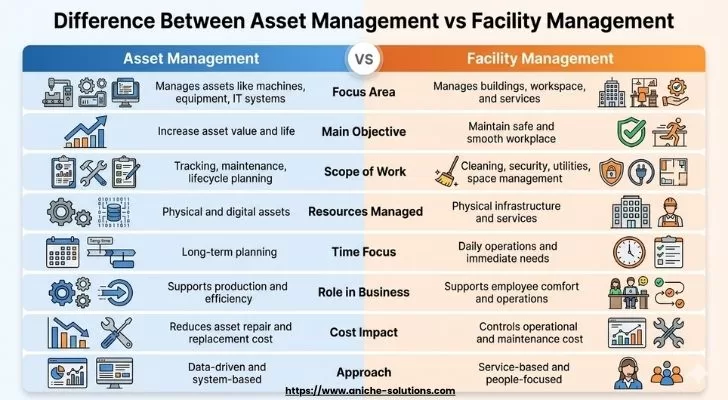
1. Focus Area
Asset management focuses on assets such as machines, tools, vehicles, and IT systems. It tracks their performance, condition, and usage. Facility management focuses on the overall workplace, including buildings, office space, and support services like cleaning and security.
2. Main Objective
The main goal of asset management is to get maximum return from assets. It ensures assets are used properly and last longer. Facility management focuses on maintaining a safe and comfortable environment so employees can work without any issues.
3. Scope of Work
Asset management includes asset tracking, lifecycle management, maintenance planning, and performance analysis. It deals with when to repair or replace assets. Facility management includes services like housekeeping, space planning, utility management, and infrastructure maintenance. It ensures the workplace stays functional every day.
4. Type of Resources Managed
Asset management handles both physical assets (machines, equipment) and digital assets (software, IT systems). Facility management mainly handles physical infrastructure like buildings, furniture, electrical systems, and workplace services.
5. Time Perspective
Asset management focuses more on long-term planning. It looks at the full life cycle of assets, from purchase to disposal. Facility management focuses more on daily operations. It deals with immediate needs like maintenance, cleanliness, and safety.
6. Role in Business Operations
Asset management supports production and efficiency by making sure assets are always ready for use. It reduces downtime and improves performance. Facility management supports employees by providing a smooth working environment, which helps in better productivity.
7. Cost Impact
Asset management helps control costs by reducing asset failure and improving asset life. Facility management helps control operational costs like utilities, maintenance, and service expenses.
8. Approach and System Use
Asset management is more data-driven and uses systems like asset tracking software and Enterprise Asset Management (EAM). Facility management is more service-oriented and often uses Facility Management Systems (FMS) to manage daily tasks and services.
A quick comparison table makes it easier to understand the difference between facility management vs asset management at a glance.
Integrating Asset and Facility Management for Smarter Operations
Businesses get better results when both systems work together instead of working separately. Many companies now focus on combining asset management vs facility management to improve control and reduce confusion.
Asset management gives detailed information about equipment, machines, and their condition. Facility management handles the workplace, maintenance, and support services. When both are connected, it becomes easier to manage everything from one place.
For example, if a machine in a building needs repair, asset management can show its history and condition. At the same time, facility management can handle the maintenance team and schedule the repair quickly. This reduces delays and keeps operations running smoothly.
Integration also helps in better planning. Businesses can track asset performance along with facility usage. This makes it easier to plan budgets, maintenance schedules, and resource allocation.
It also improves communication between teams. Instead of working in silos, both teams can share data and updates. This avoids duplication of work and reduces errors.
Importance of Asset Management
Asset management plays a key role in keeping business operations stable and cost-effective. Without proper control over assets, companies may face frequent breakdowns, delays, and unexpected expenses.
One of the main reasons asset management is important is that it helps in tracking every asset properly. Businesses know what assets they have, where they are located, and what condition they are in. This reduces chances of loss and misuse.
It also supports better maintenance planning. Regular checks and timely servicing keep assets in good condition. This reduces downtime and ensures that work does not stop due to equipment failure.
Asset management also helps in financial planning. When companies have clear data about asset performance and life cycle, they can plan repairs, upgrades, or replacements in advance. This avoids sudden large expenses.
Another important point is improved efficiency. When assets are working properly, employees can complete their tasks without delay. This increases productivity and keeps operations smooth.
Importance of Facility Management
Facility management is important because it keeps the workplace safe and properly maintained. Regular checks of electrical systems, fire safety equipment, and building structure help in reducing risks. Employees can work without facing safety issues, which creates a secure environment for daily operations.
It also helps in maintaining a clean and organized workspace. Proper cleaning, waste management, and hygiene practices improve the overall working conditions. A well-maintained office supports employee focus and reduces chances of health problems, which helps in better productivity.
Facility management also ensures smooth daily operations by managing services like electricity, water, and air conditioning. When these services work without interruption, work continues without delays. It also helps in controlling costs through planned maintenance and better use of resources, which supports overall business performance.
Streamline Asset and Facility Management with A’Niche Solutions
Managing both assets and facilities separately can create confusion and delays in operations. A’Niche Solutions helps businesses bring both systems together in one platform, making it easier to manage everything in a more organized way. It reduces manual work and gives better control over daily activities.
The system helps in tracking assets, planning maintenance, and managing facility services from a single dashboard. This means businesses can monitor equipment condition, schedule repairs, and handle services like cleaning and security without switching between different tools. It saves time and improves coordination between teams.
A’Niche Solutions also provides clear data and reports, which support better planning and decision-making. Businesses can reduce downtime, control costs, and improve overall efficiency. With a connected approach to asset management and facility management, companies can run operations smoothly and avoid unnecessary problems.
FAQ
1. Can asset management and facility management work together?
Yes, both can work together. When integrated, they help businesses manage assets and workplace services in a more organized way, which improves efficiency and reduces delays.
2. What services are included in facility management?
Facility management includes maintenance, cleaning, security, space management, and utility services like electricity and water.
3. Which industries need facility management the most?
Almost every industry needs it, especially offices, hospitals, factories, warehouses, and commercial buildings where daily operations depend on proper facility support.
4. How does facility management help in cost saving?
It reduces unnecessary expenses by planning maintenance, managing resources properly, and avoiding sudden repair costs.
Conclusion
Both asset management and facility management play an important role in running a business smoothly. One focuses on keeping equipment, machines, and systems in good condition, while the other ensures the workplace and its services are properly maintained.
When both are managed in a proper way, businesses can avoid breakdowns, reduce unnecessary costs, and improve daily operations. It also helps employees work in a safe and comfortable environment, which improves overall productivity.
In the end, a balanced approach to both areas helps any organization stay organized, efficient, and better prepared for long-term growth.